Modern dog training often focuses heavily on obedience — teaching dogs to sit, stay, walk politely, and respond quickly to cues. While these skills are important, many behavior challenges today are not caused by a lack of obedience. Instead, they come from something deeper: a dog’s ability to regulate their emotions.
Obedience teaches a dog what to do. Emotional regulation teaches a dog how to feel while doing it.
This article explores the difference between emotional regulation and obedience in modern dog training, why highly intelligent and sensitive dogs often struggle when only obedience is emphasized, and how balancing both approaches creates calmer, more stable behavior in everyday life.
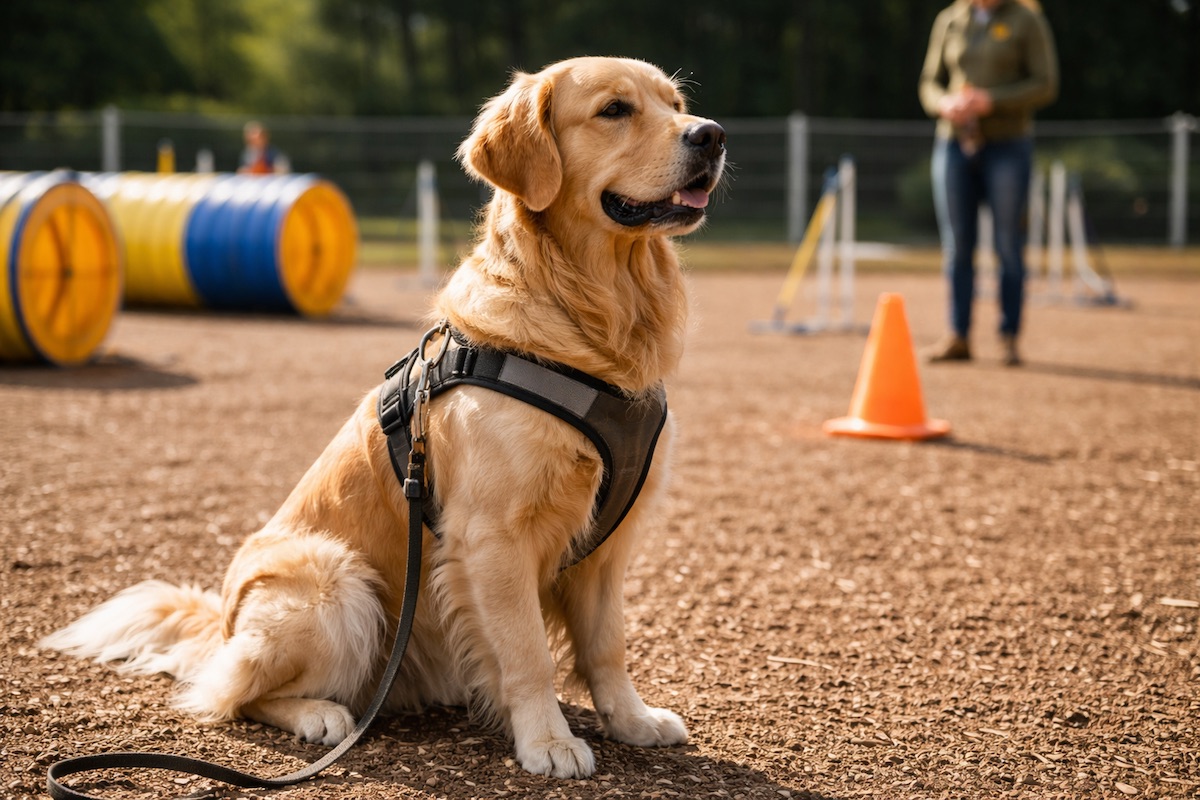
What Is Obedience Training?
Obedience training focuses on teaching specific behaviors in response to cues. These skills help create structure and communication between the dog and owner.
- Sit, down, stay, and recall
- Loose-leash walking
- Waiting politely
- Responding to commands in different environments
Obedience builds clarity and predictability. It helps dogs understand expectations and allows owners to guide behavior safely.
Clear communication through obedience reduces confusion — but it does not automatically reduce stress.
What Is Emotional Regulation in Dogs?
Emotional regulation refers to a dog’s ability to manage internal arousal, recover from stimulation, and transition between different states of activity and calmness.
Instead of asking “Does the dog perform the behavior?”, emotional regulation asks:
- Can the dog relax after excitement?
- Do they recover quickly from stress?
- Can they observe without reacting immediately?
- Are they able to disengage from stimulation?
Dogs with strong emotional regulation may not look perfectly obedient at every moment — but they often show greater long-term stability and confidence.
A dog that feels calm learns faster than a dog that performs under pressure.
Why Modern Dogs Need Emotional Skills More Than Ever
Many dogs today live in environments very different from the working roles they were originally bred for. Busy streets, unpredictable routines, constant social interaction, and continuous stimulation create emotional demands that obedience alone cannot solve.
Common modern challenges include:
- Difficulty relaxing indoors
- Overreaction to small environmental changes
- Loss of focus during walks
- Restlessness despite training
In these situations, increasing obedience exercises without addressing emotional regulation may increase pressure rather than improve behavior.
Emotional Regulation vs Obedience: Key Differences
| Aspect | Obedience Training | Emotional Regulation |
|---|---|---|
| Main Goal | Behavioral response | Emotional balance |
| Focus | External performance | Internal state |
| Training Style | Structured cues and repetition | Rhythm, recovery, and calm exposure |
| Long-Term Impact | Clear communication | Resilience and stability |
The most effective training combines both — structure from obedience and stability from emotional regulation.
When Obedience Without Emotional Balance Creates Problems
Rigid Focus Instead of Flexible Attention
Dogs trained to maintain constant engagement may struggle to relax or disengage naturally.
Delayed Recovery After Activity
A dog may perform commands perfectly yet remain mentally activated long after training ends.
Increased Pressure During Learning
When performance becomes the only goal, sensitive dogs may begin to feel responsible for staying “on” at all times.
Perfect obedience in a stressed dog is not the same as true emotional stability.
Signs a Dog Needs More Emotional Regulation Work
- Restlessness after training sessions
- Difficulty settling indoors
- Hard staring or rigid posture during engagement
- Loss of focus in busy environments
- Whining or pacing despite knowing commands
These behaviors often appear in highly intelligent or sensitive breeds that process large amounts of information throughout the day.
How Emotional Regulation Supports Obedience
Ironically, improving emotional balance often strengthens obedience naturally.
- Calmer dogs respond faster to cues
- Reduced pressure improves learning speed
- Flexible attention allows better decision-making
- Recovery time prevents mental fatigue
When a dog feels emotionally safe, obedience becomes a choice rather than a struggle.
Practical Ways to Build Emotional Regulation
Teach Calm Transitions
Slow down at the end of walks or training sessions. Clear endings help the nervous system switch states.
Reward Soft Attention
Notice relaxed eye contact or calm observation instead of reinforcing only intense focus.
Balance Structure With Freedom
Combine short obedience exercises with quiet exploration or rest periods.
Create Predictable Daily Rhythm
Dogs regulate emotions more easily when routines feel consistent and understandable.
Emotional regulation grows through lifestyle patterns — not through a single training technique.
Common Misconceptions About Emotional Regulation
“Calmness Means Less Training”
In reality, emotional skills make training more effective by reducing internal tension.
“A Calm Dog Is a Bored Dog”
Balanced dogs remain capable of engagement — they simply do not stay activated all day.
“More Commands Solve Emotional Problems”
Sometimes reducing pressure and increasing recovery improves behavior faster than adding new cues.
Why the Future of Dog Training Is Moving Toward Balance
Modern training philosophy increasingly recognizes that dogs are not just performers — they are emotional beings navigating complex environments.
Instead of focusing solely on control, many trainers now emphasize:
- Building resilience
- Encouraging flexible thinking
- Reducing chronic arousal
- Helping dogs learn when to disengage
This shift does not replace obedience. It expands it into a more complete understanding of canine behavior.
Final Thoughts
Obedience creates structure. Emotional regulation creates stability. Together, they form the foundation of balanced modern dog training.
A dog that understands commands but cannot relax is not truly balanced. And a dog that feels calm but lacks guidance may struggle with clarity.
The goal is not to choose between emotional regulation and obedience — it is to integrate both. When training supports how a dog feels as much as what they do, behavior becomes more natural, more reliable, and far more sustainable in everyday life.
Author: XPETSI Editorial Team