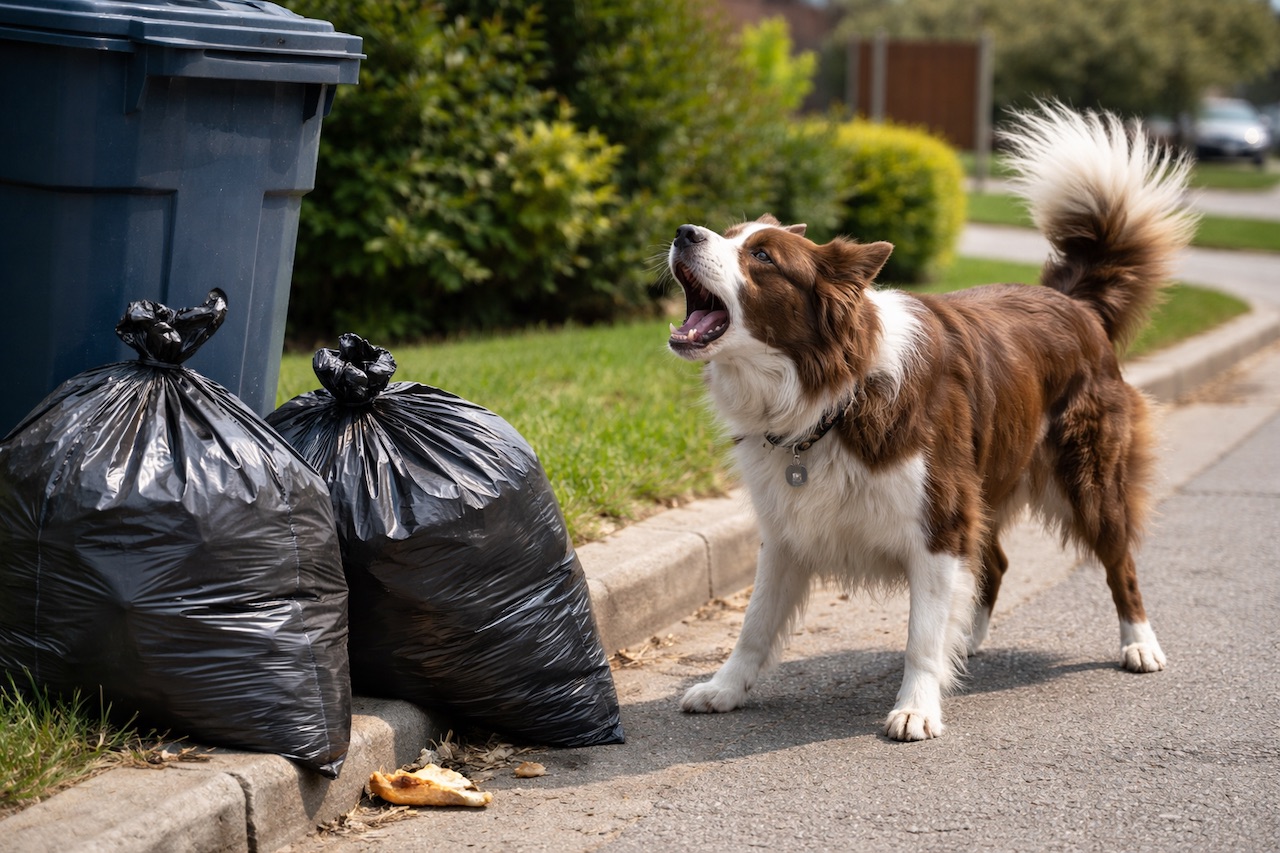
If your dog barks, growls, or backs away the moment they notice a trash bag, you’re not alone. Many dogs react strongly to garbage bags—at home, on the sidewalk, or when you take the trash out. To us it’s just plastic. To a dog, it can look, sound, and smell unpredictable.
Below are the most common reasons dogs bark at trash bags, how to tell whether it’s normal or a sign of stress, and what you can do to help.
Quick Answer
Dogs often bark at trash bags because they move in odd ways, make sudden crinkly noises, carry strong smells, and don’t have a familiar shape. Barking is a normal “warning” response when a dog isn’t sure whether something is safe.
1) Trash Bags Move Unpredictably
Plastic bags can shift, inflate, slide, and flutter. Outdoors, wind makes them move like something living. Many dogs react to unpredictable motion with barking because it triggers an instinctive “alert” response.
2) The Crinkling Sound Can Be Startling
Trash bags make sharp, irregular noises. Dogs hear higher frequencies than humans and can be more sensitive to sudden sounds. If the bag crinkles unexpectedly, your dog may bark to create distance from the scary noise.
3) Strong Smells Create Confusion
Trash bags often smell like food scraps, cleaners, perfumes, or other animals. A mix of intense odors can overwhelm a dog’s nose and make the object feel suspicious. Your dog may bark because they can’t quickly “explain” what they’re smelling.
4) The Shape Looks Unnatural (or “Alive”)
Dogs recognize objects by outline and consistency. A trash bag is irregular, shiny, sometimes tall, and can change shape. Some dogs interpret that as a potential threat and bark to warn it off.
5) Past Experiences Can Create a Lasting Fear
If your dog has ever been startled by a bag popping, sliding, brushing their legs, or falling over, they may remember that moment. Dogs learn by association, and one bad surprise can make trash bags a long-term trigger.
6) Protective or Territorial Instincts
Some dogs bark at anything unfamiliar near the home, yard, porch, or car. If your dog tends to be watchful, they may treat a trash bag like an intruder and bark to “guard” their space.
7) Puppies Can Be in a Fear Phase
Puppies go through developmental stages where ordinary objects suddenly seem scary. During these periods, a puppy might bark at bags, boxes, hats, umbrellas, or anything that moves unexpectedly. With calm exposure, many puppies grow out of it.
Normal vs. Concerning Reactions
| What You See | Usually Normal | May Be Concerning |
|---|---|---|
| One or two barks, then moving on | Yes | No |
| Barks but can take treats and listen | Yes | No |
| Freezing, trembling, trying to escape | No | Yes |
| Lunging, snapping, or intense guarding | No | Yes |
| Panic reactions that worsen over time | No | Yes |
Should You Worry?
In most cases, barking at trash bags is not dangerous—it’s simply your dog’s way of saying, “I’m not sure about that.” However, if your dog looks panicked, can’t calm down, or reacts to many everyday objects, it can be a sign of anxiety that’s worth addressing.
How to Help Your Dog Stop Barking at Trash Bags
1) Don’t Force a Close Encounter
Dragging your dog toward something they find scary often makes fear worse. Start from a distance where your dog can notice the bag and still stay calm.
2) Reward Calm Observation
When your dog looks at the bag without barking (or stops barking), reward with a treat. You are teaching: “Trash bags predict good things.” Keep sessions short and positive.
3) Make the Bag Less Scary (Controlled Setup)
At home, place an empty trash bag on the floor and let it sit still. Reward calm behavior. Over days, you can gently move it a little, always staying below your dog’s fear threshold.
4) Teach a Simple Alternative Behavior
Train a cue like “look at me” or “touch” (nose to hand). When you spot a trash bag on a walk, use the cue before barking starts, then reward. This gives your dog a job to do instead of reacting.
5) Avoid Punishment
Yelling or correcting barking can increase fear and make the object seem even more dangerous. The goal is confidence, not suppression.
Why Some Dogs React More Than Others
Dogs vary in sensitivity. Some are naturally more cautious with new sights and sounds. Others may have had limited exposure to weird objects as puppies. Breed traits, personality, and past experiences all play a role.
Final Thoughts
Trash bags combine everything dogs often dislike: unpredictable motion, sudden noise, strong smells, and an unfamiliar shape. For many dogs, barking is a normal warning response. With calm handling and positive exposure, most dogs improve and become less reactive over time.
FAQ
Is it normal for dogs to be afraid of trash bags?
Yes. It’s very common, especially in puppies and dogs that are sensitive to sound or movement.
Why does my dog bark at trash bags outside but not inside?
Outside, bags move more due to wind, appear suddenly, and often smell stronger. The surprise factor is usually higher on walks.
Should I let my dog sniff the trash bag?
If it’s safe (no food, chemicals, or sharp objects nearby), controlled sniffing can help. Don’t force it—let your dog choose.
Can I train this behavior away?
In most cases, yes. Use distance, rewards for calm behavior, and gradual exposure. If your dog panics or the behavior is worsening, consider working with a qualified trainer.
When should I talk to a vet?
If the reaction is extreme, sudden, or paired with other anxiety signs (constant pacing, not eating, fear of many objects), a vet can help rule out medical issues and discuss anxiety support.
Author: XPETSI Editorial Team