Popping boba has become a popular topping in bubble tea, frozen desserts, and sweet drinks. These small, colorful pearls burst in your mouth and release flavored juice, which makes them fun and appealing — not just for people, but sometimes for curious dogs as well.
If your dog has ever stared at your bubble tea or managed to grab a popping boba pearl off the floor, you may be wondering: can dogs eat popping boba, or is it dangerous for them?
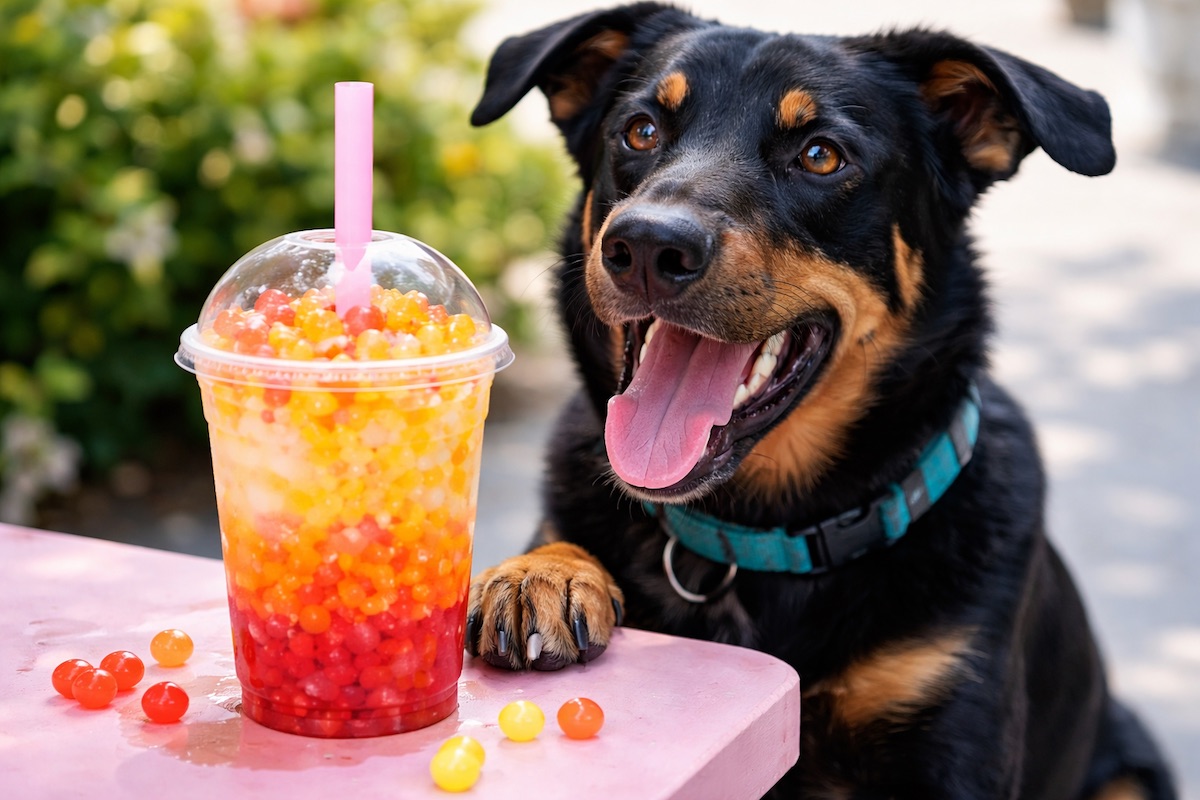
The short answer is: popping boba is not a safe food for dogs and should be avoided. While it’s not usually toxic in the strict sense, it comes with several risks that make it a poor and potentially dangerous choice for dogs.
What Is Popping Boba?
Popping boba (sometimes called juice pearls) is a type of bubble tea topping made from flavored liquid encased in a thin, gel-like membrane. When bitten, the outer shell bursts and releases juice.
Unlike traditional tapioca pearls, popping boba is usually made using:
- Fruit juice or flavored syrup
- Sugar or sweeteners
- Water
- Additives that create the thin outer shell
It is designed purely as a sweet treat for humans, not as a nutritious food.
Why Dogs Are Interested in Popping Boba
Dogs are naturally curious, especially about sweet smells and small, round foods. Popping boba often smells fruity and sweet, and its size makes it easy to swallow. Unfortunately, that is also part of what makes it risky.
Can Dogs Eat Popping Boba?
Dogs should not eat popping boba. While popping boba is not usually classified as toxic, it is very high in sugar, highly processed, and can be a choking hazard. It may also trigger digestive upset, especially in small dogs.
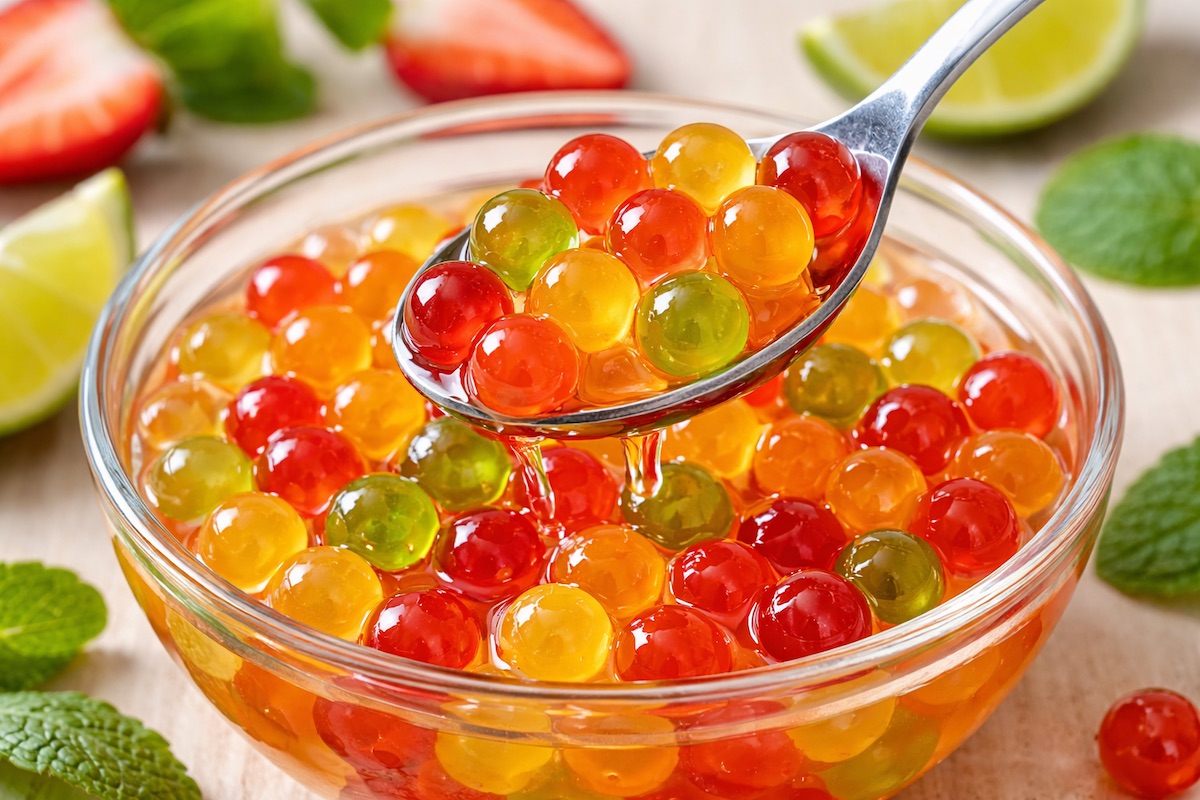
Is Popping Boba Toxic to Dogs?
In many cases, popping boba is not technically toxic. However, “not toxic” does not mean “safe.” Popping boba can still cause choking, stomach upset, and discomfort due to sugar, additives, and its slippery gel-like texture.
Ingredients in Popping Boba and Why They Matter
Sugar and Syrups
Most popping boba pearls contain a lot of sugar or sweetened syrup. Sugar has no nutritional benefit for dogs and can lead to digestive upset. Repeated sugary treats can also contribute to unwanted weight gain over time.
Artificial Flavorings and Colors
Many popping boba products rely on artificial colors and flavorings. These ingredients may not cause problems for every dog, but they can irritate sensitive stomachs and increase the chance of diarrhea or vomiting.
The Gel-Like Outer Shell
The thin membrane that holds the flavored liquid is a major concern. It can be slippery and may be swallowed whole. If it doesn’t break properly, it can be difficult for a dog to handle, increasing the risk of choking and stomach upset.
Sugar-Free or “Low-Calorie” Popping Boba
Some products are marketed as sugar-free. These may contain artificial sweeteners. Ingredient lists vary widely, and sugar-free versions are not safer for dogs. They may still cause significant digestive upset.
Can Dogs Eat Popping Boba From Bubble Tea?
No. Bubble tea often contains caffeine, sugar, milk or non-dairy creamers, and other additives. Even if the popping boba itself doesn’t contain caffeine, it is typically served in drinks that do. Because of this, bubble tea toppings and drinks should be kept away from dogs.
Popping Boba vs Traditional Tapioca Pearls
Neither popping boba nor traditional tapioca pearls are good choices for dogs. Tapioca pearls are dense and chewy, which can be a choking hazard. Popping boba is slippery, sugary, and heavily processed. Both should be avoided.
Risks of Feeding Popping Boba to Dogs
Choking Hazard
Popping boba pearls are small, round, and slippery. Dogs may swallow them whole, especially if they eat quickly. This can be a choking risk, especially for small breeds and puppies.
Digestive Upset
Even a few pearls can cause digestive issues in some dogs, including gas, diarrhea, vomiting, or stomach discomfort.
Intestinal Blockage (Rare but Possible)
While popping boba is soft, swallowing multiple pearls can still cause digestive problems, particularly for small dogs or dogs that gulp food. Because of the gel-like shell, some dogs may struggle to digest it comfortably.
Sugar Overload
Popping boba is very sweet. Too much sugar can lead to stomach upset and makes it an unhealthy treat choice overall.
Can Dogs Eat One Popping Boba Pearl by Accident?
If your dog eats one popping boba pearl, it is usually not an emergency. In most cases, you can monitor your dog and watch for signs of choking or stomach upset.
Problems are more likely if:
- Your dog eats several pearls
- Your dog is very small
- Your dog has a sensitive stomach
Signs Your Dog Didn’t Tolerate Popping Boba
After eating popping boba, watch for:
- Coughing, gagging, or repeated swallowing
- Vomiting
- Diarrhea
- Excessive drooling
- Lethargy
If symptoms are mild, they often pass. If symptoms persist or worsen, seek professional guidance.
Is Popping Boba Safe for Puppies?
No. Puppies have smaller airways and more sensitive digestion, and they are more likely to swallow food without chewing. Because of that, popping boba is not safe for puppies.
Is Popping Boba Safe for Senior Dogs?
Senior dogs may have dental issues and slower digestion, making hard-to-chew or highly processed foods more risky. Popping boba can also be difficult to digest and poses a choking risk. It’s best avoided entirely for senior dogs.
Can Dogs Eat Homemade Popping Boba?
Even homemade popping boba is not a good idea for dogs. It still has a slippery gel-like texture and usually contains sugar. It provides no nutritional benefit and is not worth the risk.
Why Popping Boba Is Not Worth the Risk
Popping boba provides no nutritional value for dogs. It doesn’t support dental health and doesn’t meet any dietary need. Instead, it introduces unnecessary risks from sugar, additives, and choking hazards.
Safer Alternatives to Popping Boba for Dogs
If you want to give your dog a fun and safer treat, consider:
- Small pieces of apple(no seeds)
- Blueberries
- Plain cooked carrots
- Dog-approved training treats
- Simple dog-safe snacks recommended for your dog
Common Myths About Dogs and Popping Boba
“It’s just juice, so it must be safe.”
Popping boba may contain juice, but it also includes sugar, additives, and a gel shell that is not designed for dogs.
“My dog likes sweet things, so it’s fine.”
Dogs often enjoy foods that are not good for them. Taste does not mean a food is safe.
“One won’t hurt.”
One pearl may not cause serious problems, but it also offers no benefit. It’s best not to make it a habit.
FAQ
Can dogs eat popping boba every day?
No. Popping boba should not be part of a dog’s regular diet.
Is popping boba poisonous to dogs?
Usually it is not considered poisonous, but it is still unsafe and not recommended.
Can dogs eat popping boba candy?
No. Candy versions are often higher in sugar and additives and should be avoided.
What if my dog swallowed popping boba whole?
Monitor your dog for signs of choking or digestive upset. Avoid offering more.
Is popping boba safer than jelly candy?
No. Both are sweet, processed products that can cause digestive upset and pose choking risks.
Final Verdict: Can Dogs Eat Popping Boba?
No, dogs should not eat popping boba. While it’s not usually toxic, it is high in sugar, heavily processed, and can be a choking risk. If your dog accidentally eats one pearl, it’s usually not a reason to panic, but popping boba should never be offered intentionally as a treat.
When it comes to dogs, simple dog-approved foods are always a safer choice than trendy human snacks.
Author: XPETSI Editorial Team