Many dog owners look for light, healthy evening snacks that won’t upset their dog’s stomach or interfere with sleep. Yogurt often comes up as an option because it’s associated with probiotics, digestion and calming effects in humans. But can dogs safely eat yogurt before bedtime, and is it actually beneficial?
This guide explains when yogurt is safe for dogs, which types are best, how much to serve, and when yogurt before sleep can become a problem.
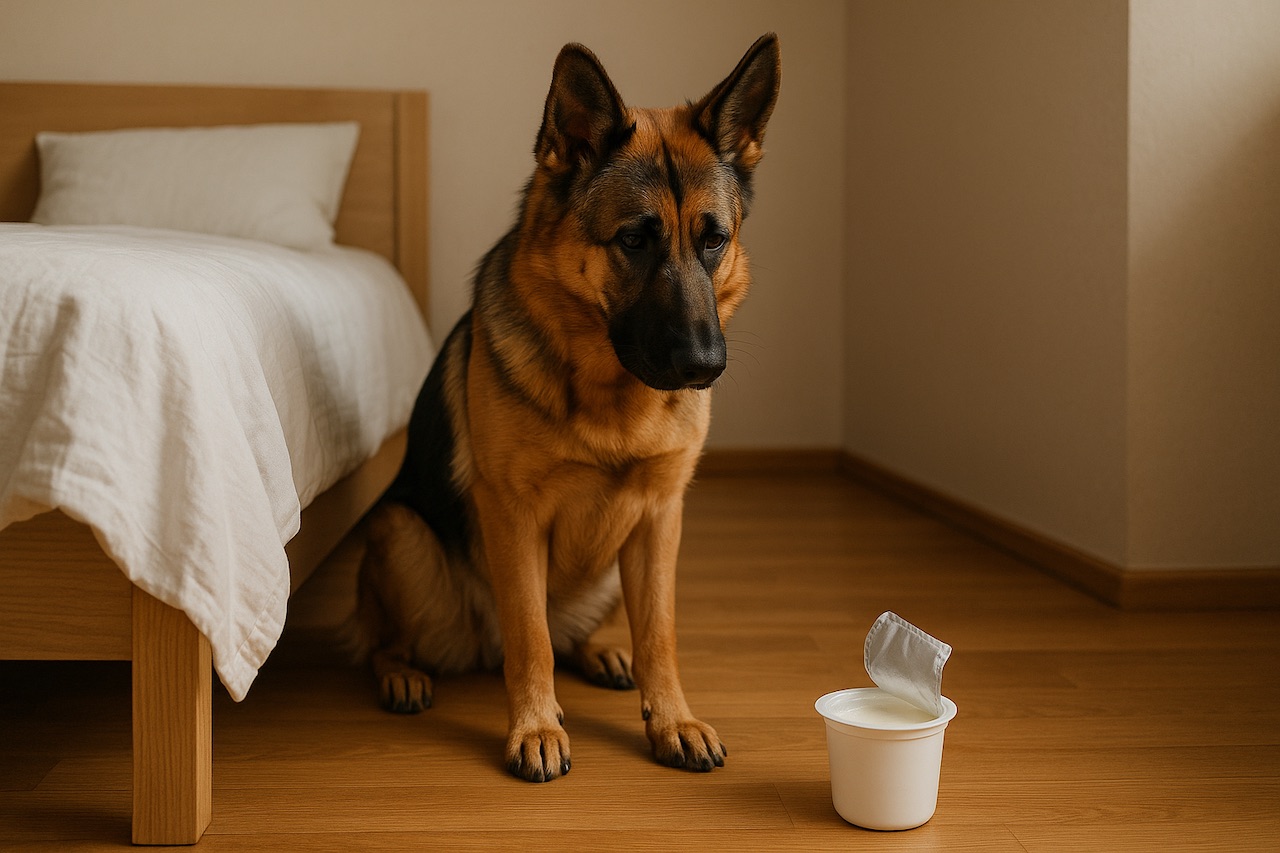
Is Yogurt Safe for Dogs?
Yes, yogurt can be safe for dogs — but only under the right conditions. Plain yogurt contains protein, calcium and beneficial probiotics that may support digestion. However, not all dogs tolerate dairy well, and not all yogurts are dog-safe.
Safety depends on:
lactose tolerance of your dog
ingredients in the yogurt
portion size
timing (day vs night)
Read also: AKC: Is Yogurt Safe for Dogs?
Why Some Owners Give Yogurt at Night
Yogurt is sometimes given before bed because:
it’s light and not greasy
probiotics may support overnight digestion
it can help hide supplements or medications
it feels like a calming treat before sleep
For some dogs, a small amount of the right yogurt can be fine — but bedtime feeding needs extra caution.
Benefits of Yogurt for Dogs (When Given Correctly)
1. Supports Gut Health
Plain yogurt with live cultures may help balance gut bacteria, especially after antibiotics or mild digestive upset.
2. Provides Calcium and Protein
Yogurt contains nutrients that support bones and muscles, though it should never replace a complete dog diet.
3. May Help Sensitive Stomachs (Some Dogs)
In dogs that tolerate dairy, yogurt can be gentler than milk.
Why Yogurt Before Bed Can Be Risky
Feeding yogurt at night is not ideal for every dog. Potential issues include:
Lactose intolerance causing gas or diarrhea overnight
Nighttime stomach activity leading to restlessness
Added sugars or sweeteners in flavored yogurt
Late calories contributing to weight gain
If digestive upset happens at night, it can disrupt both your dog’s sleep and yours.
Best Types of Yogurt for Dogs Before Sleeping
If you decide to offer yogurt at night, only choose safe options:
Plain yogurt — no flavorings
Unsweetened
No artificial sweeteners (especially xylitol)
Low-fat or non-fat
Greek yogurt can be acceptable in very small amounts, but it’s higher in protein and thicker, which may be heavy before bed.
Yogurt Types Dogs Should NEVER Eat
flavored yogurt (vanilla, strawberry, fruit-on-the-bottom)
yogurt with added sugar or honey
yogurt with chocolate or cocoa
yogurt containing xylitol
full-fat dessert yogurts
How Much Yogurt Is Safe at Night?
| Dog Size | Safe Portion Before Bed | Frequency |
|---|---|---|
| Small dogs (under 20 lbs) | 1–2 teaspoons | Occasional |
| Medium dogs (20–50 lbs) | 1 tablespoon | Occasional |
| Large dogs (50+ lbs) | 1–2 tablespoons | Occasional |
Yogurt should be a treat, not a nightly habit.
Best Time to Give Yogurt
For most dogs, yogurt is better given:
earlier in the evening
as part of dinner, not right before sleep
after active hours, not immediately before lying down
This reduces the risk of nighttime digestive discomfort.
Signs Yogurt Doesn’t Agree With Your Dog
gas or bloating
loose stools
restlessness at night
licking lips or swallowing repeatedly
vomiting
If you notice these signs, stop feeding yogurt.
When Yogurt Becomes a Problem for Dogs
While plain yogurt can be a healthy bedtime snack for some dogs, it isn’t suitable for every situation. In certain cases, yogurt may cause digestive discomfort or other health issues.
Lactose intolerance. Many dogs have trouble digesting lactose. Signs include gas, bloating, diarrhea or stomach noises after eating yogurt.
Added sugars or sweeteners. Flavored yogurts often contain sugar, artificial sweeteners or syrups. Xylitol, in particular, is extremely toxic to dogs and should always be avoided.
High-fat content. Full-fat or Greek-style yogurts may be too rich for dogs with sensitive stomachs, pancreatitis history or weight issues.
Dairy allergies. Some dogs are allergic to dairy proteins, which can cause itching, ear infections, vomiting or chronic digestive upset.
Late-night overeating. Giving too much yogurt before bed can lead to restlessness, nighttime bathroom needs or mild nausea.
Underlying medical conditions. Dogs with gastrointestinal disorders, diabetes or immune issues should only eat yogurt if approved by a veterinarian.
Rule of thumb: Always choose plain, unsweetened yogurt, start with a very small portion and observe your dog’s reaction. If any negative symptoms appear, discontinue use and consult your vet.
Healthier Bedtime Alternatives to Yogurt
a small piece of plain boiled chicken
a spoon of pumpkin puree (plain, unsweetened)
a calming chew approved by your vet
nothing at all — many dogs sleep best without snacks
FAQ: Dogs, Yogurt and Bedtime Feeding
Is it safe to give dogs yogurt before bedtime?
Yes, plain unsweetened yogurt can be safe for most dogs in small amounts before bedtime. It may help some dogs feel full and relaxed, but it should never replace a balanced meal or be given in large portions.
What type of yogurt is best for dogs?
The best option is plain, unsweetened yogurt with no artificial sweeteners, flavorings or added sugar. Greek yogurt is often preferred because it contains more protein and less lactose than regular yogurt.
Can yogurt help dogs sleep better at night?
Yogurt itself is not a sleep aid, but a small portion may help calm dogs who feel hungry before bed. The protein and probiotics can support digestion, which may reduce nighttime discomfort.
How much yogurt can I give my dog at night?
Small dogs should get 1–2 teaspoons, medium dogs 1–2 tablespoons, and large dogs up to 2–3 tablespoons. Start with less to see how your dog reacts.
Is yogurt good for a dog’s digestion at night?
Yes, yogurt with live active cultures can support gut health. However, dogs that are lactose intolerant may experience gas or diarrhea, especially if yogurt is given late in the evening.
Can puppies eat yogurt before sleeping?
Puppies can have yogurt in very small amounts, but only after they are fully weaned. Always choose plain yogurt and introduce it slowly, as puppies have more sensitive digestive systems.
Should dogs with sensitive stomachs eat yogurt at night?
It depends. Some dogs benefit from probiotics, while others may experience bloating or loose stools. If your dog has a sensitive stomach, try a very small portion earlier in the day first.
Can yogurt cause nighttime accidents or diarrhea?
Yes, especially if your dog is lactose intolerant or eats too much. Nighttime diarrhea or the need to go outside urgently can occur if yogurt does not agree with your dog.
Is flavored or sweetened yogurt safe for dogs?
No. Flavored yogurts often contain sugar, artificial sweeteners or xylitol, which is toxic to dogs. Always avoid fruit-on-the-bottom, vanilla or diet yogurts.
How often can I give my dog yogurt before bed?
Yogurt should be an occasional treat, not a nightly habit. Giving it 1–2 times per week is usually sufficient to avoid digestive issues and unnecessary calorie intake.
Final Thoughts
Dogs can eat yogurt before sleeping, but it’s not ideal for every dog and should never be a daily habit. If your dog tolerates dairy well, a very small amount of plain, unsweetened yogurt earlier in the evening is generally safe.
When in doubt, skip late-night snacks altogether. A consistent routine, proper dinner timing and calm environment matter far more for good sleep than any bedtime treat.
Author: XPETSI Editorial Team