You might be wondering if it's safe to share jicama with your dog if you've ever cut it up for a salad or snack and seen your dog watching closely. People like jicama because it tastes fresh and has a crunchy texture. But does that mean it's safe for dogs?
The short answer is: dogs can eat jicama in very small amounts, but only the edible root and only when prepared correctly. There are also important parts of the jicama plant that dogs should never eat.
What Is Jicama?
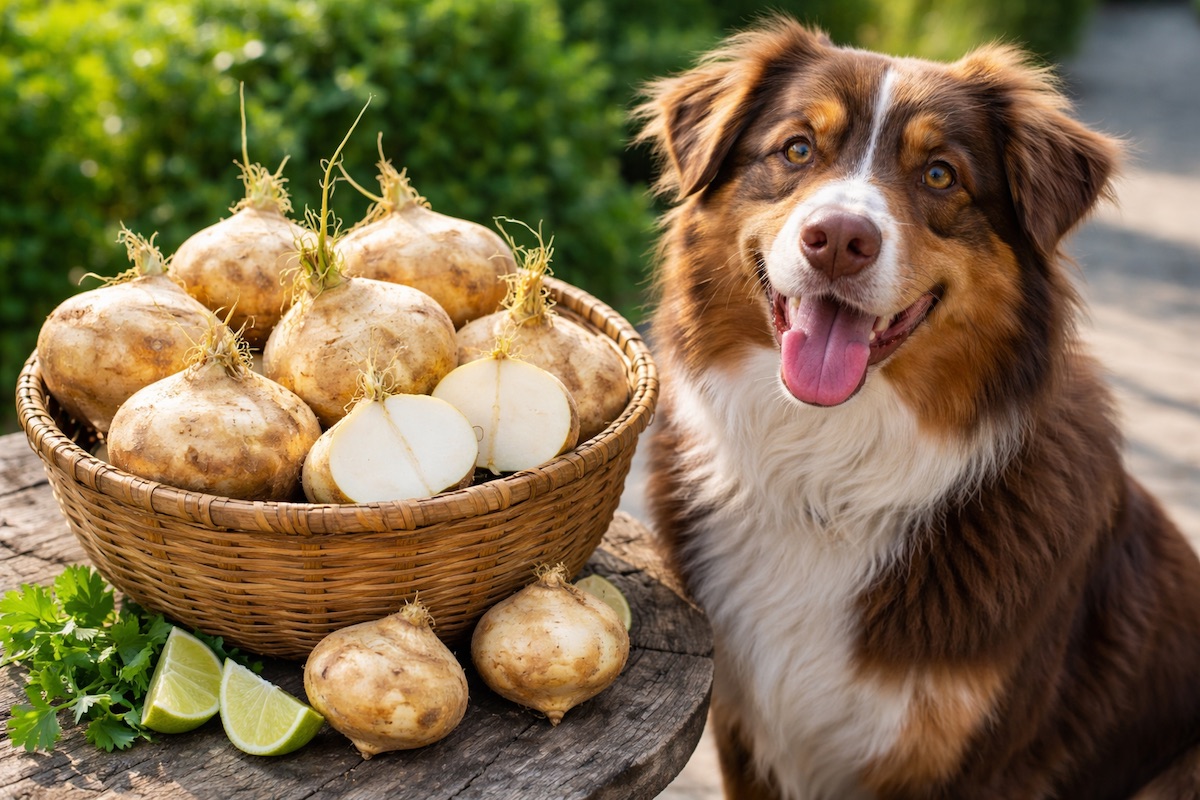
Jicama is a root vegetable with a brown outer skin and a crisp, white interior. People often eat it raw in salads or as a crunchy snack. While the root itself is edible, not all parts of the jicama plant are safe.
Is Jicama Safe for Dogs?
The white inner flesh of jicama (the root) can be safe for dogs when given in small amounts and prepared properly.
However, this comes with an important rule:
Only the peeled root is considered safe. The skin, leaves, stems, and seeds should never be fed to dogs.
Potential Benefits of Jicama for Dogs
Jicama isn’t necessary for a dog’s diet, but it may offer a few mild benefits when used as an occasional treat.
High Water Content
Jicama is mostly water, which can make it a refreshing snack, especially in warm weather.
Low in Calories
Because it’s low in calories, jicama may be an option for dogs who need lighter treats.
Crunchy Texture
Some dogs enjoy the crunchy texture, which can make jicama an interesting change from softer treats.
Risks of Feeding Jicama to Dogs
Even though the peeled root is not considered toxic, there are a few risks to keep in mind.
Toxic Parts of the Plant
Only the inner root should be used. Other parts of the jicama plant contain a natural toxin called rotenone.
- The skin, seeds, stems, and leaves are not safe for dogs
- Rotenone can cause vomiting, diarrhea, and more serious reactions
- Jicama must always be fully peeled before serving
Choking Hazard
Raw jicama is firm and crunchy. Large or thick pieces can be difficult to chew, especially for small dogs or fast eaters.
Digestive Upset
Jicama contains fiber that some dogs may not tolerate well. Too much can lead to gas, loose stools, or stomach discomfort.
Can Dogs Eat Raw or Cooked Jicama?
Raw Jicama
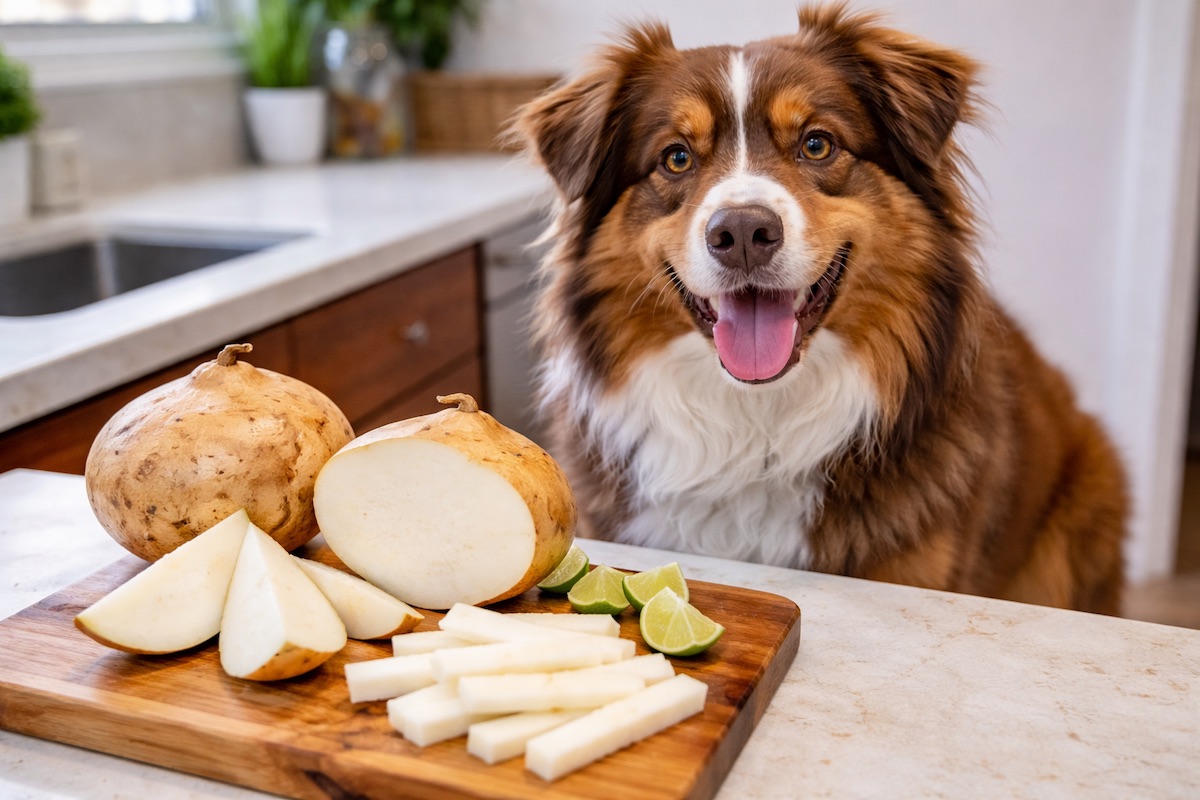
Raw jicama is not toxic when fully peeled, but it’s harder to chew and may be harder to digest. If offered raw, it should be cut into very small pieces to reduce choking risk.
Cooked Jicama (Safer Option)
Lightly cooking jicama softens it, making it easier to chew and easier to digest. Steamed or boiled jicama served plain is generally the safest option for dogs.
Can Dogs Eat Jicama Skin or Seeds?
No. Dogs should never eat:
- Jicama skin
- Jicama seeds
- Jicama leaves or stems
Only the peeled white root should be used.
How to Feed Jicama to Dogs Safely
If you decide to offer jicama to your dog, follow these safety tips:
- Use only the white inner root
- Peel it completely
- Cook it to soften the texture (recommended)
- Serve it plain (no salt, oil, or spices)
- Cut into small, bite-size pieces
- Offer only a small amount
Jicama should be an occasional treat, not a regular food.
How Much Jicama Can Dogs Eat?
Only a small taste is appropriate. Think of jicama as a rare snack, not a meal. Most of your dog’s nutrition should come from a balanced dog food made for their life stage and needs.
Jicama should not make up more than about 10% of your dog’s daily calorie intake.
Can Puppies Eat Jicama?
Puppies often have more sensitive stomachs and are more likely to choke on hard foods. Because of this, it’s usually best to avoid feeding jicama to puppies. If offered at all, it should only be a tiny amount of well-cooked, peeled jicama.
Is Jicama Safe for Senior Dogs?
Senior dogs often have more sensitive digestive systems and dental issues that can make hard, crunchy foods more difficult to handle. While jicama is not toxic to dogs, it is not an ideal treat for senior dogs, especially when served raw.
Raw jicama is firm and can be hard to chew, which may pose a choking risk or cause discomfort for older dogs with worn or missing teeth. In addition, the fiber in jicama can be harder for senior dogs to digest, increasing the chance of gas or loose stools.
If jicama is offered to a senior dog at all, it should be fully peeled, well-cooked, plain, and given in very small amounts. Even then, it should be considered an occasional treat rather than a regular food.
For most senior dogs, softer and easier-to-digest vegetables or dog-approved treats are a safer and more comfortable choice than jicama.
Signs Your Dog Didn’t Tolerate Jicama
If jicama doesn’t agree with your dog, you may notice mild digestive upset such as gas, diarrhea, vomiting, or reduced appetite. If that happens, stop feeding jicama and return to your dog’s normal diet.
Watch for Reactions After First Feeding
Even though jicama is not commonly allergenic, some dogs may react to new foods.
- Monitor your dog for 24–48 hours after first serving
- Watch for itching, swelling, or digestive upset
- If symptoms appear, avoid feeding jicama again
Jicama Compared to Other Vegetables
Compared to other dog-friendly vegetables, jicama is crunchier and may be harder to digest than options like cooked carrots or pumpkin. It can still be safe when prepared correctly, but it’s not the most useful vegetable for most dogs.
FAQ
Can dogs eat jicama every day?
No. Jicama should only be an occasional treat.
Is jicama poisonous to dogs?
The peeled root is not considered poisonous, but other parts of the plant are unsafe and should not be eaten.
Can dogs eat jicama from salads?
Usually not. Salads often include seasonings or other ingredients that are not dog-safe.
What if my dog ate jicama skin?
Remove access to more and monitor your dog. Avoid offering jicama again and stick to your dog’s regular food.
Is jicama better raw or cooked for dogs?
Cooked jicama is generally safer and easier to digest.
Final Verdict: Can Dogs Eat Jicama?
Yes, dogs can eat jicama — but only the peeled root, only in small amounts, and preferably cooked. Jicama isn’t toxic when prepared properly, but it comes with more risks than many other vegetables. If you share it, keep it plain, minimal, and occasional.
Author: XPETSI Editorial Team