Golden Retrievers are often described as naturally friendly and social dogs. Because of this, many owners feel confused or concerned when their dog becomes nervous around strangers. Instead of approaching confidently, the dog may hesitate, avoid interaction, or show subtle signs of discomfort.
Nervous behavior around strangers does not mean something is “wrong” with your dog. In many cases, it reflects sensitivity, uncertainty, or how the dog processes new social situations.
Understanding why your Golden Retriever reacts this way can help you respond with more clarity and support, rather than pressure or confusion.
Is It Normal for Golden Retrievers to Be Nervous Around Strangers?
While Golden Retrievers are generally sociable, not every individual reacts the same way to new people. Personality, early experiences, and environment all influence how a dog feels in unfamiliar situations.
Some dogs are naturally more cautious. Others may become temporarily unsure during certain developmental stages or after changes in routine.
Friendliness is a tendency, not a guarantee. Emotional comfort depends on context, not breed expectations.
Common Reasons Golden Retrievers Feel Nervous Around Strangers
Lack of Early Social Experience
Dogs that had limited exposure to different people during early development may feel uncertain when encountering unfamiliar individuals later in life.
Without varied positive experiences, the dog may not know how to interpret new social situations.
Overstimulation in Social Environments
Crowded places, fast movement, and unpredictable human behavior can overwhelm sensitive dogs. Nervousness may increase when the environment feels too intense to process comfortably.
Sometimes the issue is not the stranger — but the amount of stimulation surrounding the interaction.
Past Negative Experiences
Unpleasant interactions, sudden movements, or overwhelming attention can create lasting impressions. Even a single stressful experience may influence future reactions.
Emotional Sensitivity
Golden Retrievers are highly attuned to human emotions and body language. If a person appears tense, unpredictable, or overly direct, the dog may respond with caution.
Unclear Expectations
If the dog does not understand whether they are expected to interact, avoid, or remain neutral, uncertainty can lead to hesitation.
Developmental Phases
Young dogs often go through periods of increased sensitivity, during which new experiences may feel more intense than usual.
Signs Your Golden Retriever Feels Nervous Around Strangers
- Hesitation or slowing down when approaching people
- Avoiding eye contact or turning the head away
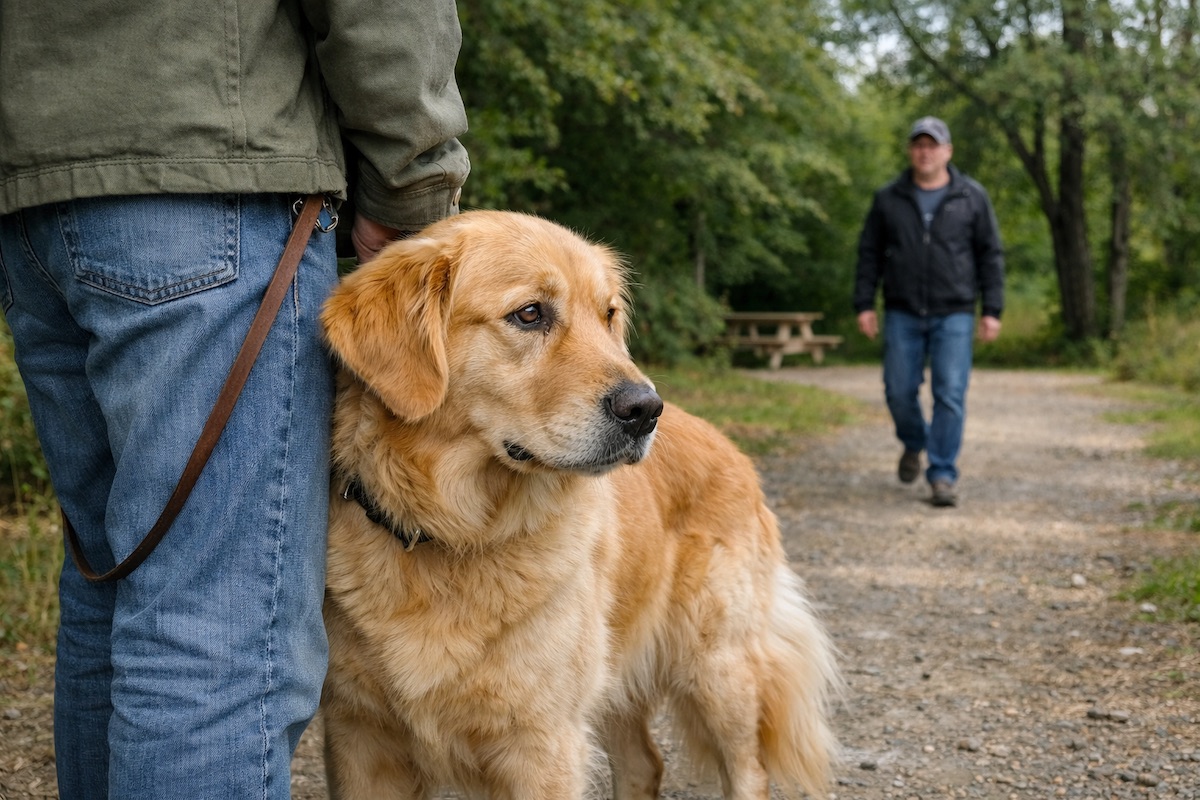
- Staying close to the owner or hiding behind them
- Stiff body posture or reduced tail movement
- Backing away or refusing to approach
Nervousness is often quiet. Subtle avoidance and tension are early signals that the dog feels unsure.
Normal Caution vs Social Anxiety
| Behavior | Healthy Caution | Possible Anxiety |
|---|---|---|
| Approach | Slow but curious | Avoidant or retreating |
| Recovery | Warms up over time | Remains tense |
| Body language | Loose | Rigid or withdrawn |
| Interaction | Voluntary | Reluctant or forced |
Recognizing this difference helps guide the right approach.
How to Help a Golden Retriever Feel More Comfortable Around Strangers
Allow Choice in Interaction
Giving your dog control over social interaction is one of the most effective ways to build confidence. Instead of guiding them directly toward people or encouraging immediate greetings, allow space for observation first. Many dogs feel safer when they can approach on their own terms.
When a Golden Retriever chooses to move closer, even slightly, it signals growing comfort. Respecting hesitation is just as important as rewarding curiosity. This balance helps the dog learn that interaction is optional, not expected.
Reduce Social Pressure
Busy environments, multiple people, and unpredictable movement can overwhelm sensitive dogs. Starting in quieter settings — such as calm parks or low-traffic areas — allows the dog to process new social experiences without overload.
Gradual exposure is key. Introducing one calm person at a time is often more effective than large gatherings. Lower intensity creates a sense of control and makes positive experiences more likely.
Use Positive Associations
Pairing the presence of strangers with calm rewards helps reshape emotional responses. This does not mean forcing interaction — instead, the dog can receive treats, gentle praise, or relaxed engagement simply for remaining calm in the presence of new people.
Over time, the dog begins to associate unfamiliar individuals with neutral or positive outcomes rather than uncertainty. Timing matters: reward calm observation, not only direct interaction.
Maintain a Calm Presence
Dogs are highly sensitive to human body language and emotional tone. If you become tense, overly reassuring, or reactive, your dog may interpret the situation as something to worry about.
Staying relaxed, moving naturally, and avoiding sudden changes in behavior helps communicate safety. Your calm presence becomes a reference point that the dog can rely on in uncertain situations.
Build Confidence Through Routine
Emotional stability in social situations often depends on overall daily balance. Predictable routines — including regular walks, consistent feeding times, and structured rest periods — reduce background anxiety and improve resilience.
A dog that feels secure in everyday life is better able to handle unfamiliar people without becoming overwhelmed.
Allow Observation Before Interaction
Some dogs need time to watch and process before feeling comfortable enough to engage. Standing at a distance where the dog remains relaxed allows them to gather information without pressure.
This observation phase is an important part of building confidence. Rushing past it can increase hesitation or avoidance.
Guide, Don’t Control
Instead of directing every movement, provide gentle structure. Position yourself between the dog and the stranger if needed, create space, and allow the dog to adjust gradually.
Clear but soft guidance helps the dog feel supported without losing autonomy.
Watch for Early Signs of Discomfort
Recognizing subtle signals — such as turning away, slowing down, or tightening body posture — allows you to respond before stress escalates. Increasing distance or reducing interaction at the right moment prevents negative experiences from building.
Early intervention is often more effective than correcting behavior after it intensifies.
Confidence grows when the dog feels safe enough to choose interaction — not when interaction is expected. Respecting pace, reducing pressure, and supporting calm experiences create lasting social comfort.
Common Mistakes Owners Make
- Forcing the dog to greet strangers
- Allowing overwhelming attention from unfamiliar people
- Interpreting nervousness as stubbornness
- Increasing exposure too quickly
Pressure often increases nervousness. Space and predictability usually reduce it.
When to Seek Professional Help
Consult a trainer or veterinarian if nervousness escalates into fear, aggression, or persistent avoidance that interferes with daily life.
Final Thoughts
A Golden Retriever that feels nervous around strangers is not being unfriendly — they are communicating uncertainty.
With patience, clear structure, and respectful exposure, many dogs become more comfortable over time. Instead of expecting immediate friendliness, focus on helping your dog feel safe enough to explore social situations at their own pace.
Confidence is built gradually — through positive experiences, not pressure.
Author: XPETSI Editorial Team