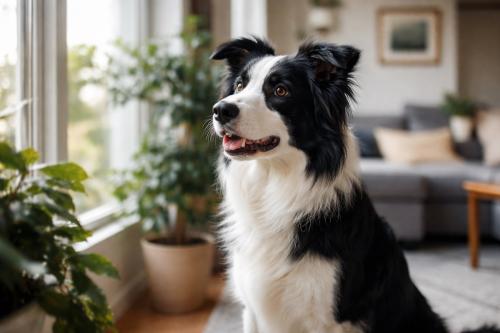
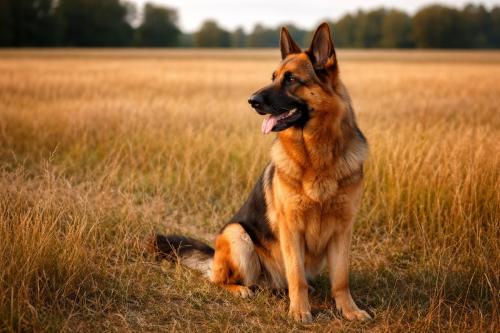
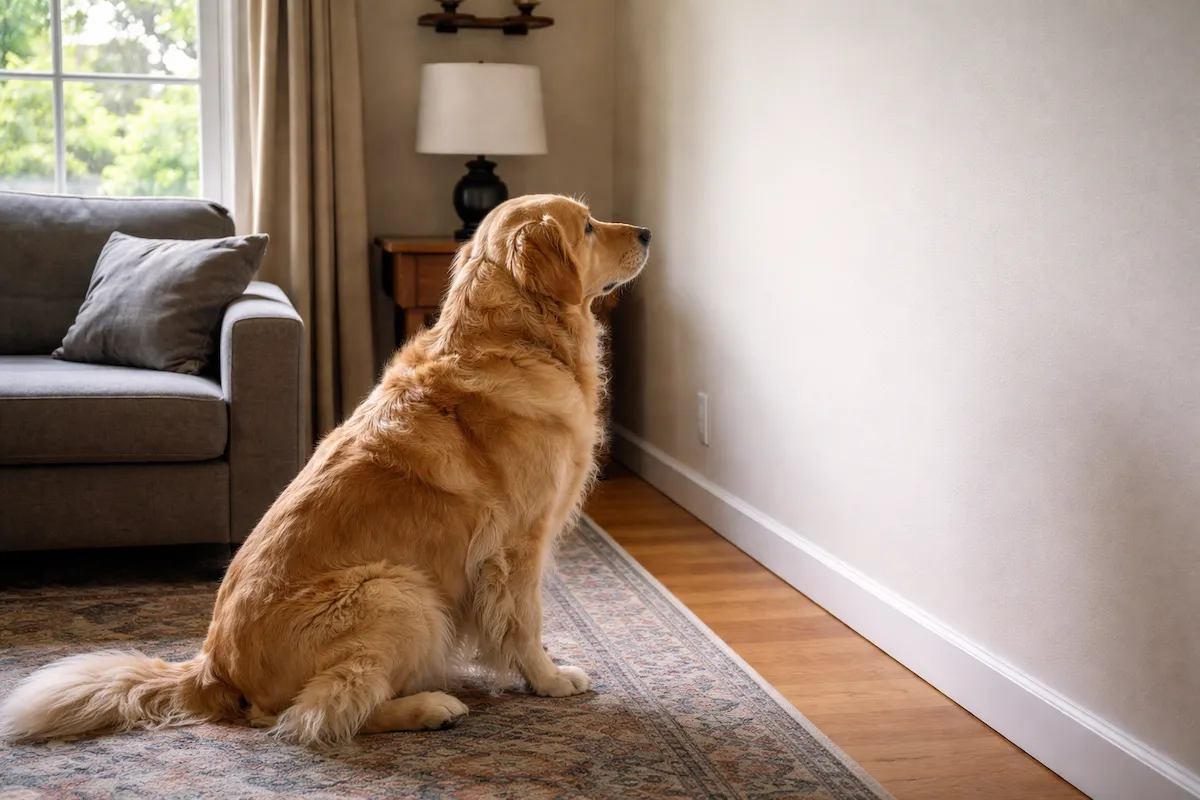
A lot of Golden Retriever owners have seen their dog suddenly stop and stare into space. There is no clear cause—no object, sound, or other thing that seems to explain the behavior. The dog might stay still, focused, and quiet, as if it is watching something that isn't there.
This can feel strange or even unsettling. But in most cases, this behavior is not mysterious — it reflects how dogs perceive and process the world around them.
When a dog appears to be staring at nothing, it is usually reacting to something that is subtle, distant, or not noticeable to humans.
Understanding why this happens requires looking at how dogs experience their environment differently.
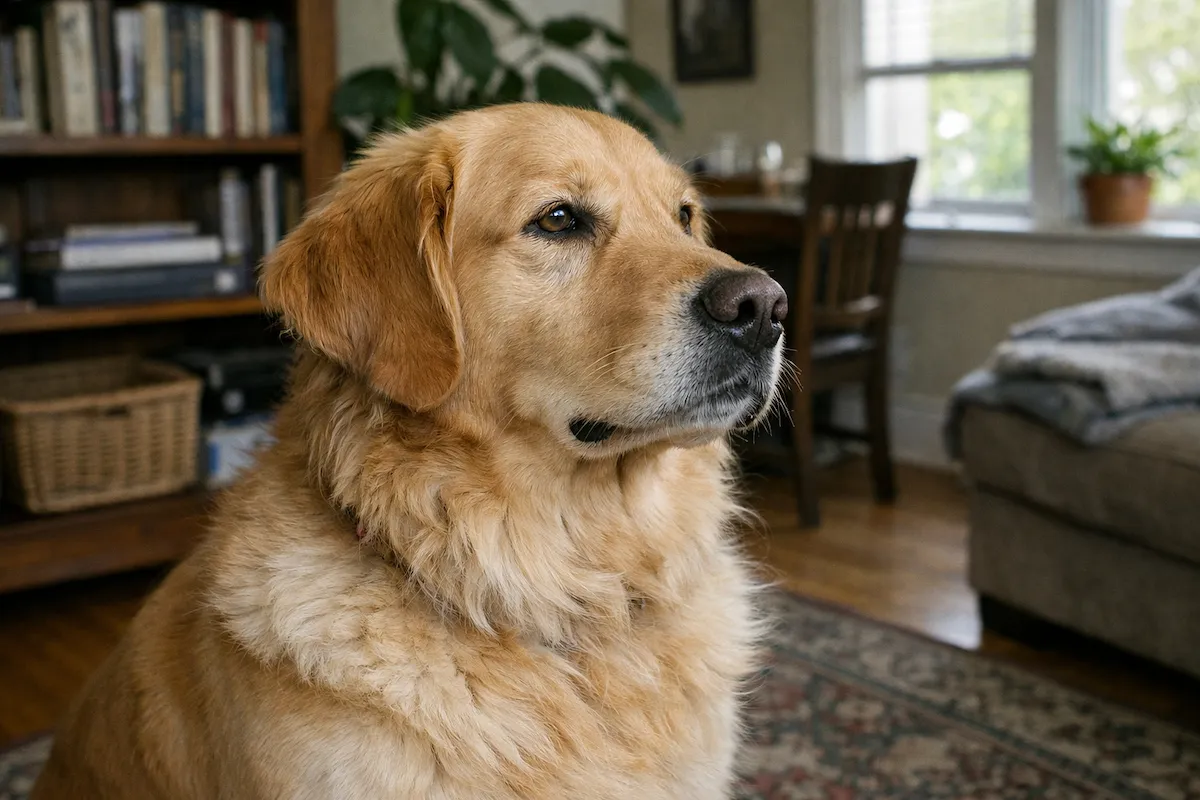
Dogs Perceive More Than We Notice
Dogs rely on senses that work very differently from human perception.
They can detect:
- Subtle sounds that humans cannot hear
- Faint movements in the distance
- Small changes in light or shadow
- Environmental cues that are easy to overlook
What looks like “nothing” to us may be meaningful to the dog.
This is especially true in quiet environments where small signals become more noticeable.
Focused Attention Without Movement
Sometimes staring is simply a form of focused attention.
Instead of reacting immediately, the dog pauses to observe. This can happen when:
- The dog is processing a new stimulus
- Something is uncertain or unfamiliar
- The dog is deciding whether to respond
In these moments, stillness is part of the process — not a sign of confusion.
Low-Level Environmental Monitoring
Dogs do not completely switch off their awareness when resting. Even in calm states, they continue to monitor their surroundings.
This can appear as:
- Looking toward a specific area
- Watching without reacting
- Remaining still but alert
This type of observation is subtle and often mistaken for staring at nothing.
A dog that is quietly watching may be processing the environment, not disengaging from it.
Internal Processing and Mental State
Not all staring is directed outward. Sometimes it reflects internal processing — a phase where the dog is not actively reacting to the environment, but is still mentally engaged.
After stimulation — such as a walk, play, training, or social interaction — the brain does not immediately return to a neutral state. Instead, it continues to process recent experiences.
This is a normal part of how the nervous system organizes information:
- New sensory input is sorted and interpreted
- Experiences are integrated into memory
- The body gradually shifts from activity to rest
During this phase, outward behavior may slow down or pause entirely.
This can look like:
- Stillness without clear focus
The dog is not actively watching anything specific. The gaze may appear soft or slightly unfocused, as if attention is turned inward rather than toward the environment. - Reduced responsiveness
The dog may take longer to respond to cues or interaction. This is not ignoring — it reflects that processing is still happening, leaving less capacity for immediate response. - Short periods of “zoning out”
The dog may seem briefly disconnected, neither engaging nor reacting. These moments are usually temporary and resolve on their own as processing completes.
In these moments, the dog is not reacting to the environment — it is processing it internally.
This state often appears after periods of higher stimulation. The more input the dog has experienced, the more processing is required afterward.
Importantly, this is different from true rest.
- Processing → quiet but mentally active
- Rest → physically and mentally relaxed
If the dog is not given enough time for this transition, it may remain in a partially active state — neither fully engaged nor fully relaxed.
Over time, this can lead to patterns such as:
- Frequent “staring” moments
- Difficulty settling into deeper rest
- Delayed reactions to earlier stimulation
What looks like staring into space is often a visible pause between activity and rest — a moment where the dog is still processing what it has experienced.
When Staring Is Linked to Overstimulation
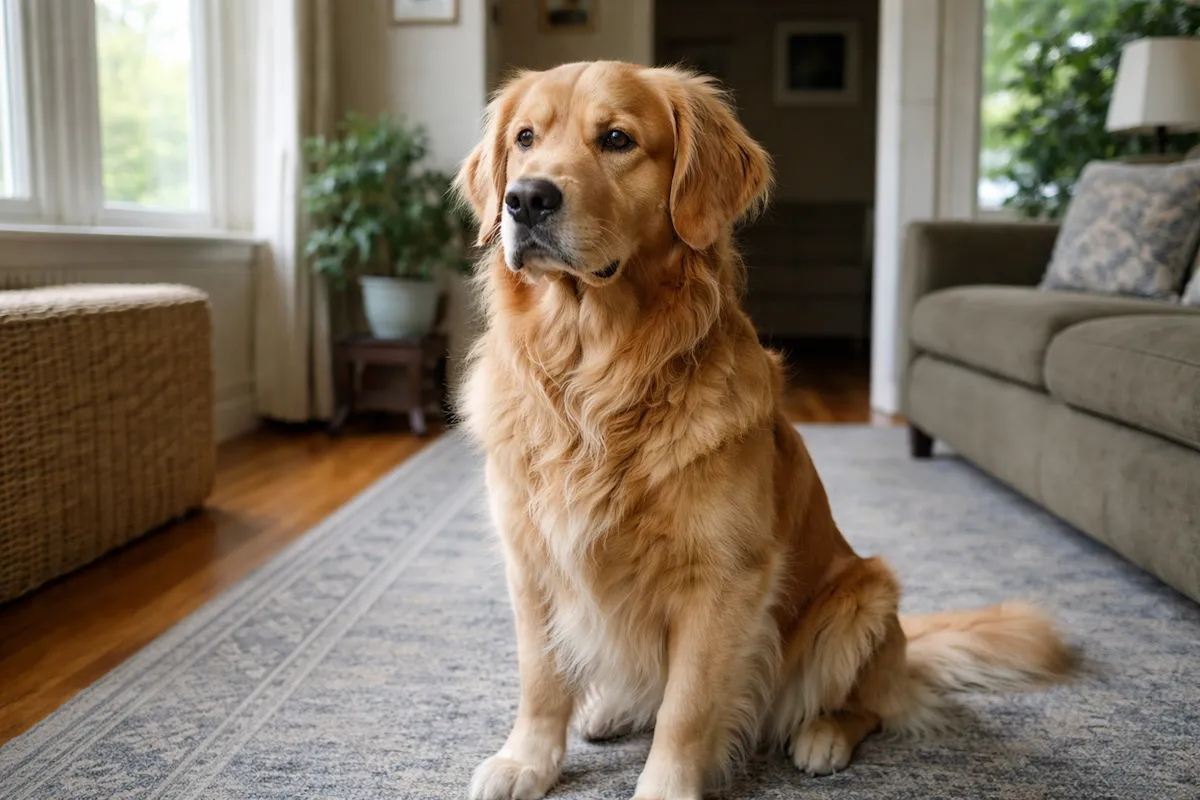
If your Golden Retriever stares frequently, especially after activity, it may be related to overstimulation.
When the nervous system is overloaded:
- External reactions decrease
- Movement slows down
- Attention narrows
This can create a state where the dog appears calm but is not fully relaxed.
Staring can sometimes be a quiet sign that the dog is overwhelmed, not disengaged.
Why This Behavior Feels Unusual to Owners
Humans tend to associate stillness with rest and attention with visible engagement.
When a dog is still but focused, it does not fit easily into these expectations.
This is why staring can feel unusual — it is a state between action and rest.
When Staring Is Normal
Occasional staring is a natural part of how dogs process information.
It is usually not a concern when:
- The dog remains relaxed overall
- Behavior returns to normal afterward
- There are no signs of distress or confusion
When to Pay More Attention
Occasional staring is a normal part of how dogs observe and process the world. However, when it becomes frequent, prolonged, or part of a larger pattern, it may be worth looking more closely at what is happening beneath the surface.
The key is not the behavior itself, but the context in which it appears and what accompanies it.
Frequent or prolonged staring may be worth observing more closely if it is combined with:
- Difficulty settling
If your Golden Retriever often struggles to fully relax — even after activity — and staring appears during these periods, it may indicate that the nervous system is not completing the transition into rest. - Increased alertness or tension
A dog that stares while holding a slightly tense posture, reacting quickly to small sounds or movements, may be in a state of low-level vigilance rather than calm observation. - Reduced responsiveness
If the dog seems slower to respond, less engaged, or briefly “unreachable” during these moments, it can reflect cognitive overload or ongoing internal processing. - Other signs of stress or overload
Subtle signals such as lip licking, yawning, shifting position frequently, or difficulty maintaining calm behavior may appear alongside staring.
In these cases, the behavior may reflect a broader pattern rather than an isolated moment.
It can be helpful to look at timing:
- Does it happen after walks or busy environments?
- Does it appear more often in the evening?
- Does it increase after social interaction or activity?
When staring consistently follows periods of stimulation, it often points to incomplete processing or overstimulation rather than random behavior.
Another important factor is frequency and duration:
- Short, occasional moments → usually normal
- Frequent or prolonged episodes → worth observing more closely
This does not necessarily mean something is wrong, but it suggests that the dog may be experiencing more input than it can comfortably process.
When staring appears alongside difficulty settling, tension, or reduced responsiveness, it is often not just observation — it is a signal that the dog’s internal state needs more balance.
How to Support a More Balanced State
Reduce Excess Stimulation
Limit environments or activities that create continuous input without recovery.
Allow Quiet Processing Time
After activity, give your dog space to settle without interaction.
Observe Patterns Instead of Isolated Moments
Look at when and how often staring occurs, rather than focusing on a single instance.
A balanced dog can shift naturally between attention and rest, without becoming stuck in between.
Final Thoughts
A Golden Retriever that stares at “nothing” is rarely reacting to nothing — it is responding to subtle input or processing what it has experienced.
By understanding this behavior, you can better recognize when your dog is simply observing — and when it may need more support to fully relax.
Author: XPETSI Editorial Team