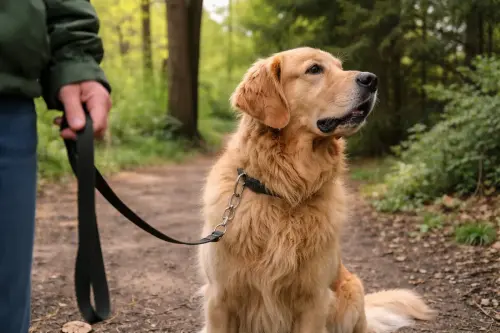
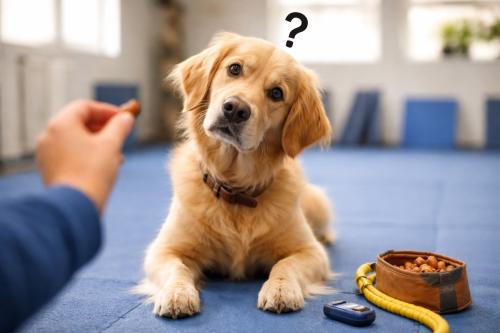
Life with a Golden Retriever often means living with a dog who greets the world with full-body enthusiasm. Their excitement around people can be warm and joyful — but when that excitement turns into jumping on guests, strangers, or family members, everyday interactions can start to feel chaotic. What begins as affectionate puppy behavior may gradually become a habit that feels difficult to manage.
When a Golden Retriever jumps on people, it is rarely a sign of dominance or bad intent. In most cases, it reflects excitement, emotional sensitivity, and difficulty regulating energy during social moments.
This article explains why Golden Retrievers jump on everyone, how to understand the emotional roots of this behavior, what common mistakes accidentally make it worse, and how to help your dog greet people in a calmer, more balanced way.
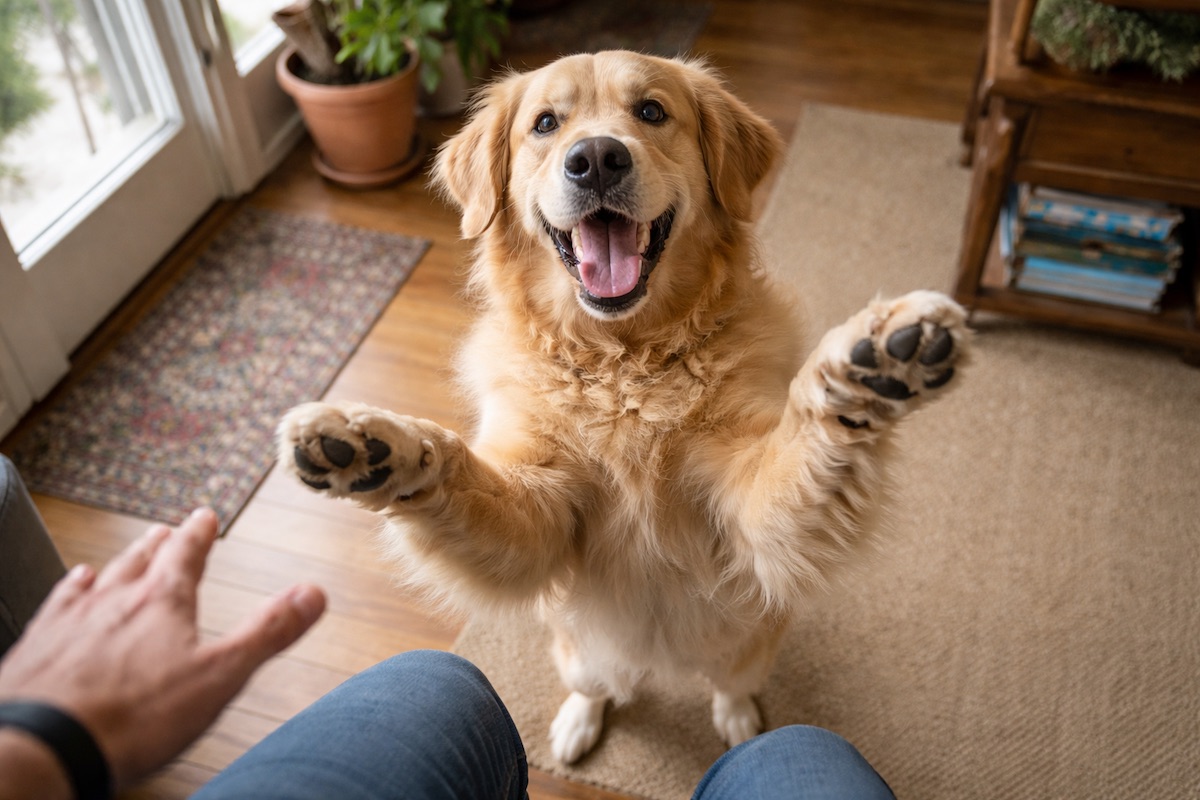
Why Jumping Is So Common in Golden Retrievers
Golden Retrievers are social working dogs bred to cooperate closely with humans. Their natural tendency is to seek connection, physical contact, and emotional feedback. Greeting behavior often reflects this deep social drive.
Jumping usually develops because:
- The dog becomes overwhelmed by excitement
- Physical closeness feels rewarding and natural
- Early puppy greetings were unintentionally reinforced
- The dog struggles to regulate emotional arousal
- Social interaction triggers anticipation and energy spikes
What looks like disobedience is often emotional overflow. The dog is not trying to misbehave — they are trying to connect.
The Emotional Side of Jumping Behavior
For many Golden Retrievers, greetings activate strong emotional responses. Their nervous system shifts into a high-arousal state where movement, vocalization, and physical contact feel almost automatic.
This state can include:
- Rapid tail wagging and body movement
- Difficulty responding to familiar cues
- Short bursts of vocalization
- Loss of spatial awareness
- Intense focus on the person entering the space
Instead of choosing to jump, the dog may feel internally compelled to release energy through physical interaction.
Excitement is not the problem itself. The challenge appears when the dog has not learned how to transition from excitement into calm greeting behavior.
Why Jumping Gets Worse Over Time
Unintentional Reinforcement
If a puppy jumps and receives attention — even negative attention — the behavior often becomes stronger. Talking, touching, or pushing the dog away can still feel rewarding.
Inconsistent Greeting Rules
Some family members allow jumping while others discourage it. This creates confusion, making self-regulation harder for the dog.
High Social Sensitivity
Golden Retrievers are extremely responsive to emotional energy. Loud greetings, sudden movement, or excited voices can increase arousal instantly.
Lack of Calm Greeting Practice
Many dogs are trained in obedience or play skills but never practice structured social interactions. Without rehearsal, excitement becomes the default response.
Jumping often continues not because the dog refuses to learn, but because calm greetings were never clearly taught or consistently reinforced.
Normal Friendly Jumping vs Stress-Driven Overexcitement
| Behavior | Friendly Excitement | Overarousal |
|---|---|---|
| Duration | Brief jumping, then settling | Persistent jumping and pacing |
| Response to cues | Responds after a moment | Ignores familiar commands |
| Body language | Loose and playful | Frantic or tense |
| Recovery | Calms within minutes | Remains hyper for long periods |
Recognizing this difference helps owners respond with clarity instead of frustration.
Common Mistakes That Make Jumping Worse
Pushing the Dog Away
Physical contact can feel like engagement, encouraging the dog to try again.
Repeating Commands in a Loud Voice
Raised emotional intensity often increases arousal instead of improving focus.
Greeting the Dog With Excitement
High-energy welcomes teach the dog that social moments should feel explosive.
Expecting Instant Calmness
Self-regulation is a learned skill. Many Golden Retrievers need time and practice to develop it.
Trying to suppress excitement without teaching alternative behavior often leads to frustration for both dog and owner.
How to Help a Golden Retriever Stop Jumping on People
Teach Calm Greeting Rituals
Create predictable greeting patterns. Ask visitors to enter quietly and avoid immediate eye contact or touch.
- Pause before interacting
- Reward four paws on the floor
- Use soft, slow movements
This helps the dog understand that calm behavior leads to connection.
Practice Emotional Transitions
Short exercises that move from excitement into stillness can improve regulation over time. For example, play briefly, then guide the dog into a calm resting position.
Reinforce Neutral Behavior
Notice moments when your dog greets people calmly or chooses to sit. Quiet reinforcement builds new habits.
Dogs repeat behaviors that bring emotional clarity. Calm greetings must feel just as rewarding as excited ones.
Reduce Greeting Pressure
If jumping is intense, temporarily limit chaotic social situations. Gradual exposure helps prevent overwhelming the nervous system.
Stay Emotionally Consistent
Golden Retrievers respond strongly to human energy. Calm body language and predictable responses help them regulate faster.
Why Punishment Rarely Works
Jumping is driven by emotion, not defiance. Harsh corrections can increase anxiety or confusion, making social situations more stressful.
When emotional pressure increases, self-control often decreases. Building calm structure is more effective than adding intensity.
How Long Does It Take to Improve Greeting Behavior?
Some Golden Retrievers show progress within days when routines change. Others need several weeks of consistent practice to develop new emotional habits.
Improvement usually happens gradually:
- Jumping becomes less intense
- Recovery becomes faster
- The dog begins offering calmer greeting choices
When to Seek Professional Support
Consider guidance from a qualified trainer if:
- Jumping leads to accidental injuries
- The dog becomes overly frantic or mouthy
- Greeting behavior escalates despite routine changes
- You feel unsure how to manage social situations safely
Final Thoughts
A Golden Retriever that jumps on everyone is usually expressing joy, anticipation, and emotional sensitivity — not disrespect.
By teaching calm greeting patterns, reducing social pressure, and reinforcing balanced interaction, many dogs learn to express friendliness in a more manageable way. Instead of trying to eliminate enthusiasm, the goal is to help your dog discover that connection can feel calm as well as exciting.
With patience and consistency, jumping often transforms into softer, more confident social behavior — allowing your Golden Retriever’s friendly nature to shine without overwhelming the people around them.
Author: XPETSI Editorial Team