Many owners of intelligent dog breeds notice a puzzling pattern at home. Even after walks, play, or training, their dog may begin pacing around the house — moving from room to room, circling through familiar paths, and appearing unable to settle. At first, this behavior is often interpreted as excess energy or boredom. But in highly intelligent dogs, pacing indoors often reflects something deeper.
When intelligent dogs pace around the house, it is often a sign that the brain remains active even though the body is ready to rest.
This article explores why smart dogs sometimes struggle to settle indoors, what pacing behavior may indicate about a dog’s internal state, how daily routines can unintentionally increase this pattern, and what helps restore a healthier balance between engagement and recovery.
Why Intelligent Dogs Pace Indoors
Pacing is not always a sign of a problem. Many dogs move around occasionally to check their environment or follow familiar routines. However, in highly intelligent dogs, repeated pacing can appear when the nervous system remains mentally active even during quiet moments.
Unlike more easygoing breeds, intelligent dogs often process their surroundings continuously. They notice subtle sounds, small movements, and changes in human behavior. This constant awareness can make indoor environments surprisingly stimulating.
When the brain continues scanning for information or purpose, the body may stay in motion even when the dog is physically tired.
Pacing does not always mean the dog needs more exercise. Sometimes it means the mind has not fully switched off yet.
The Link Between Intelligence and Restlessness
Many intelligent breeds were historically developed for work that required observation, quick decision-making, and constant interaction with humans.
Examples include:
- Herding dogs that monitored livestock movement
- Working dogs that responded to subtle human signals
- Guarding breeds that remained alert to environmental changes
These roles rewarded continuous attention. As a result, some intelligent dogs develop a strong habit of staying mentally engaged with their surroundings.
Inside modern homes, where no clear task exists, that engagement sometimes transforms into restless movement.
Common Reasons Intelligent Dogs Pace Around the House
Unresolved Mental Activation
After stimulating activities such as training, play, or long walks, the body may be tired while the brain remains active. If the dog does not experience a clear transition into rest, mental engagement can continue.
Pacing may appear during this period as the dog attempts to regulate their internal state.
Anticipation of Interaction
Highly engaged dogs often learn that watching their owner closely leads to interaction, training, or play. Over time, they may begin anticipating activity even when none is planned.
This anticipation can make quiet moments feel incomplete. The dog continues moving as if waiting for something to happen.
For many intelligent dogs, pacing is less about seeking activity and more about seeking clarity.
Difficulty Transitioning From Activity to Rest
Some dogs struggle to move smoothly between states of engagement and relaxation. Without predictable transitions, the nervous system may remain partially activated long after activity ends.
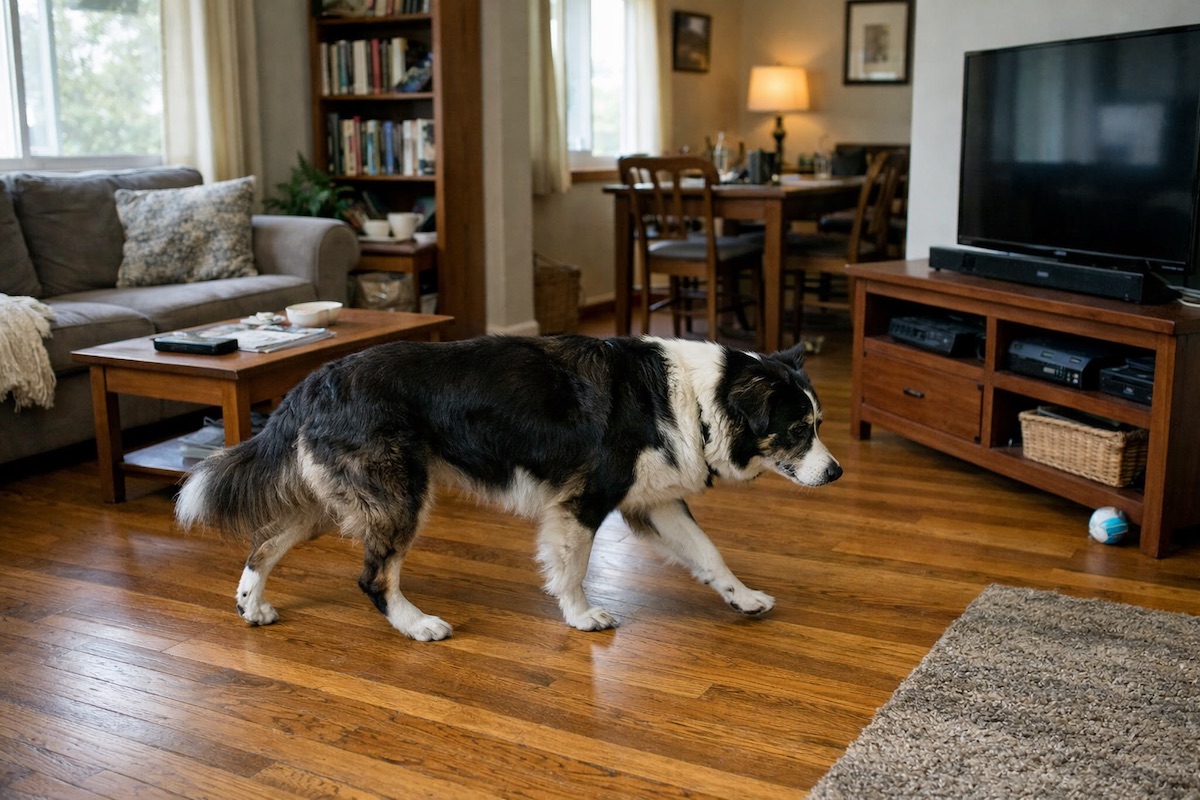
Instead of lying down immediately, the dog may walk through the house repeatedly before eventually settling.
Environmental Monitoring
Highly observant dogs often monitor the household environment closely. Sounds outside, movement in other rooms, or subtle changes in the owner's behavior may keep their attention engaged.
Pacing can occur as the dog checks different parts of the home while maintaining awareness of potential stimuli.
How to Recognize Restless Pacing
Occasional movement indoors is normal. However, pacing related to mental activation usually shows several consistent patterns.
- Walking the same paths repeatedly
- Moving between rooms without clear purpose
- Lying down briefly and then standing again
- Watching the owner or environment while pacing
- Appearing tired but unable to remain still
The key difference between normal movement and pacing is repetition. When the same pattern repeats continuously, the dog may be struggling to settle mentally.
Why Increasing Exercise Does Not Always Fix Pacing
Many owners assume that pacing means the dog needs more physical activity. While exercise is important, adding more stimulation does not always solve the issue.
In some cases, excessive stimulation can prolong mental activation. The dog becomes physically exhausted but mentally alert, making it even harder to relax afterward.
This is why some highly intelligent dogs appear calm during activity but restless once the activity ends.
Restlessness after exercise often indicates that the nervous system needs recovery, not additional stimulation.
Helping Intelligent Dogs Settle Indoors
Create Predictable Transitions
Clear endings to walks, training sessions, and play help the dog understand when activity has finished. Small routines — such as slowing down before entering the house or guiding the dog to a resting spot — can help the brain shift toward relaxation.
Encourage Calm Behavior
Rewarding moments when the dog naturally relaxes helps reinforce stillness. Quiet praise or gentle acknowledgement can teach the dog that calm behavior is valuable.
Reduce Background Pressure
Constant cues, commands, or interaction can maintain mental activation. Allowing periods of neutral presence — simply sharing space without direction — helps the dog experience true downtime.
Build Daily Structure
Predictable routines reduce anticipation. When activity and rest occur at consistent times, the dog learns when engagement is expected and when relaxation is appropriate.
Structure helps intelligent dogs feel secure enough to stop monitoring their environment constantly.
When Pacing May Indicate Stress
Although pacing often relates to mental activation, it can occasionally signal stress or discomfort.
Consider consulting a veterinarian or behavior professional if pacing is accompanied by:
- Sudden behavioral changes
- Excessive vocalization
- Signs of pain or discomfort
- Nighttime restlessness
In most cases, however, pacing in intelligent dogs reflects a temporary difficulty shifting from engagement into rest.
Final Thoughts
Intelligent dogs do not pace around the house because they are difficult or disobedient. Often, they are simply navigating the challenge of turning off a highly active mind.
For smart dogs, learning how to rest can be just as important as learning how to work.
When daily routines include clear transitions, predictable structure, and real downtime, many intelligent dogs gradually become calmer indoors. Over time, pacing often fades as the dog learns that quiet moments are not uncertain — they are simply part of a balanced life.
Author: XPETSI Editorial Team