If you’ve come across chayote while cooking and your dog is watching closely, it’s natural to wonder whether sharing a small piece is safe. Chayote is a mild, watery squash used in many cuisines — but does that mean it’s okay for dogs?
The short answer is: yes, dogs can eat chayote in small amounts, but there are a few important things every dog owner should know before offering it.
What Is Chayote?
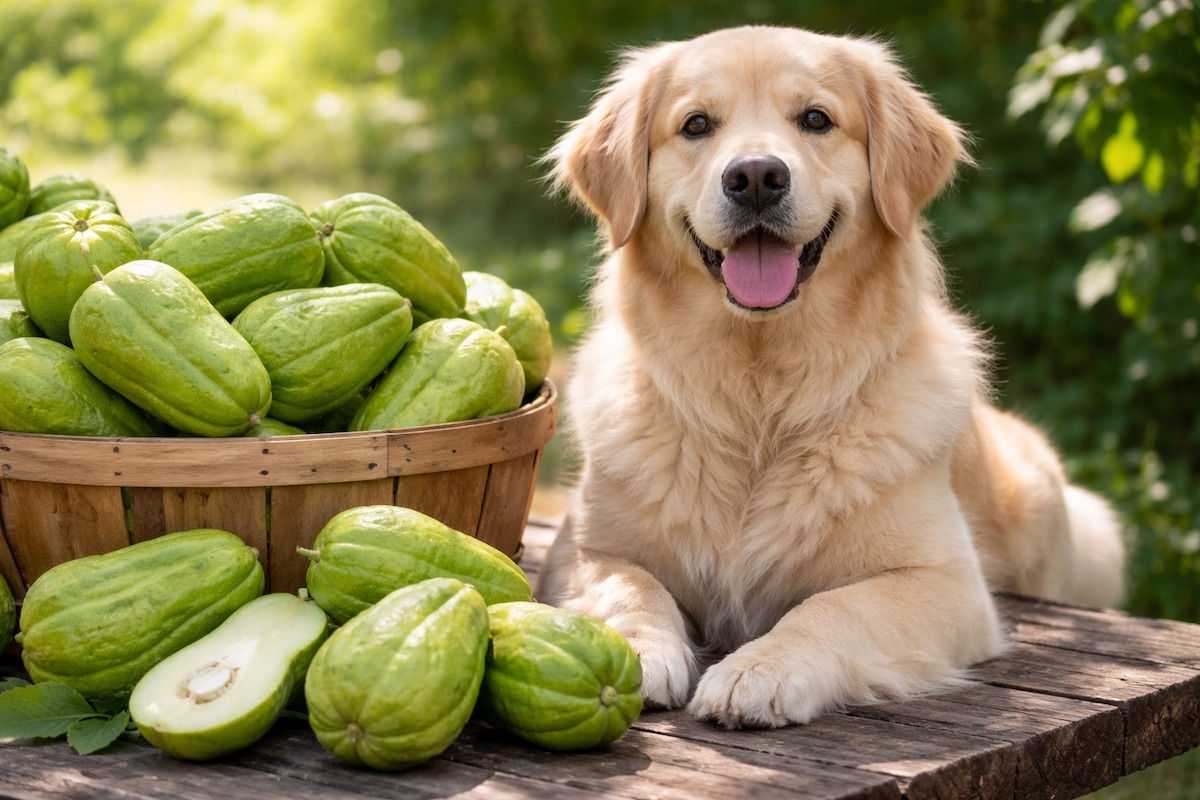
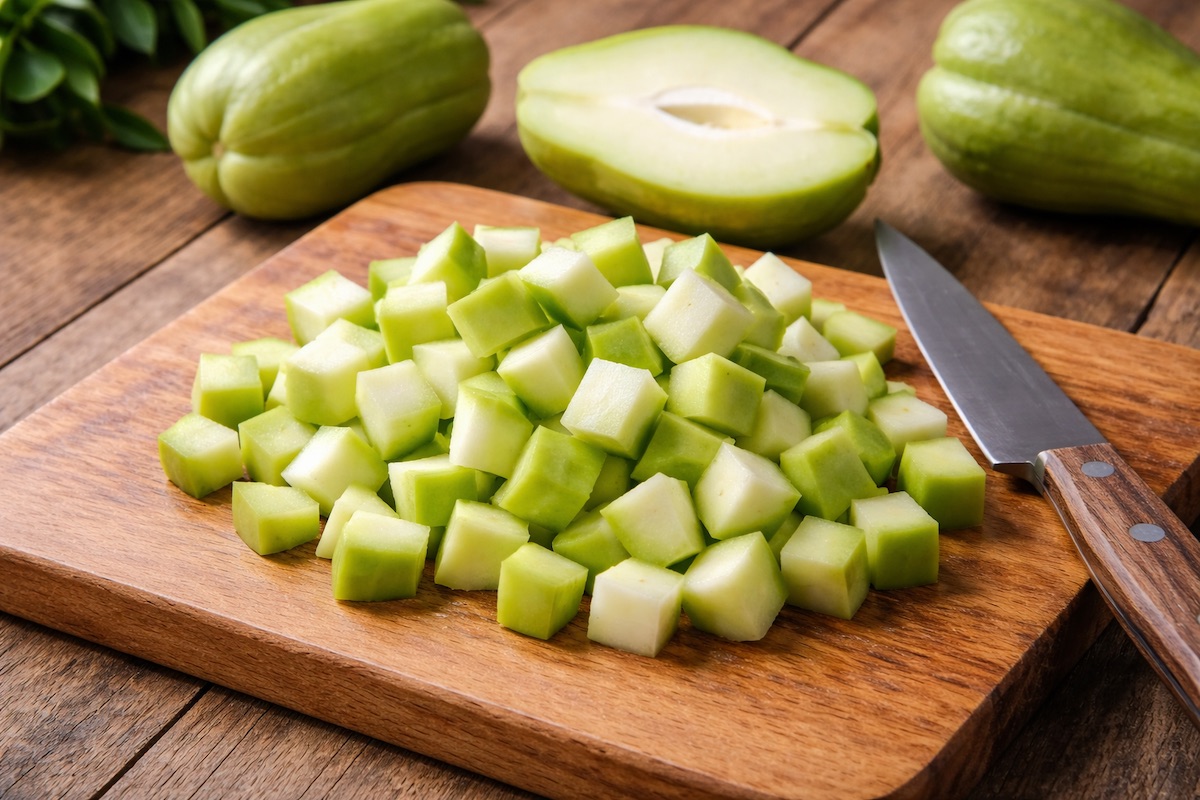
Chayote (sometimes called vegetable pear or mirliton) is a type of squash with pale green skin and crisp, light flesh. It’s commonly eaten cooked, but it can also be used raw in salads. Because chayote is mild and mostly water, some owners consider it as a possible dog-friendly vegetable.
Is Chayote Safe for Dogs?
Chayote is generally safe for dogs when properly prepared and given in moderation. It is considered non-toxic, low in fat, and not known for containing compounds that are dangerous to dogs. Still, “safe” does not mean it should become a regular part of your dog’s diet.
Potential Benefits of Chayote for Dogs
Chayote isn’t a major nutritional powerhouse for dogs, but it may offer a few mild benefits when served correctly.
High Water Content
Chayote is mostly water, which can make it a refreshing snack, especially during warm weather.
Low in Calories
Because it’s low in calories, chayote can be an option for dogs who need lighter treats.
Mild Texture (When Cooked)
When cooked and served plain, chayote becomes softer and is easier for most dogs to digest.
Possible Risks of Feeding Chayote to Dogs
Even though chayote is not toxic, there are still a few risks to keep in mind.
Raw Chayote Can Be Hard to Digest
Raw chayote is firm and fibrous. Some dogs may experience stomach upset if they eat it uncooked.
Choking Risk
Large or hard pieces can be difficult for dogs to chew properly, especially for small breeds or fast eaters.
Added Ingredients Are the Real Danger
Chayote is often cooked with salt, oil, garlic, onions, or spices. These additions are not safe for dogs. If you share chayote, it should be plain and unseasoned.
Can Dogs Eat Raw or Cooked Chayote?
Cooked Chayote (Best Option)
Cooked chayote is generally the safest choice. Steaming or boiling makes it softer, easier to chew, and easier to digest. Always serve it plain.
- Steamed or boiled
- No seasoning
- Soft texture
Raw Chayote
Raw chayote is not toxic, but it may be harder to digest. If you offer raw chayote, use very small pieces and watch how your dog responds. In most cases, cooked chayote is the better choice.
Can Dogs Eat Chayote Skin or Seeds?
It’s best to remove both before feeding chayote to your dog:
- Skin: Tough and fibrous, so it’s harder to chew and digest.
- Seed: Not known to be toxic, but removing it reduces choking and digestive risk.
How to Serve Chayote Safely to Dogs
If you decide to share chayote with your dog, keep it simple:
- Cook it first (steam or boil)
- Serve it plain (no salt, oil, or spices)
- Remove the skin and seed
- Cut into small, soft pieces
- Offer only a small amount
Chayote should be an occasional snack, not a regular food.
How Much Chayote Can Dogs Eat?
Chayote should only make up a very small portion of your dog’s overall diet. Think of it as a taste, not a meal. Most of your dog’s nutrition should come from a balanced dog food designed for their life stage and needs.
Is Chayote Safe for Senior Dogs?
Senior dogs can be more sensitive to new foods due to changes in digestion and dental health. While chayote is not toxic to dogs, it is not always the best treat choice for senior dogs, especially if it is served raw.
Raw chayote is firm and fibrous, which may be difficult for older dogs to chew and digest. This can increase the risk of choking or mild digestive upset. Senior dogs may also be more sensitive to fiber-rich foods, which can lead to gas or loose stools.
If chayote is offered to a senior dog, it should be fully cooked, plain, peeled, and cut into very small, soft pieces. Even then, it should be given only occasionally and in small amounts.
In many cases, softer and more easily digestible dog-approved vegetables or treats are a safer and more comfortable option for senior dogs than chayote.
Can Puppies Eat Chayote?
Puppies often have more sensitive stomachs than adult dogs. While chayote is not toxic, it’s usually best to avoid giving it to puppies, or only offer a tiny amount of well-cooked, plain chayote if your puppy already handles vegetables well.
Signs Your Dog Didn’t Tolerate Chayote Well
If your dog doesn’t tolerate chayote, you may notice mild digestive upset such as diarrhea, gas, vomiting, or a reduced appetite. If that happens, stop feeding chayote and return to your dog’s normal diet.
Chayote vs Other Squash for Dogs
Compared to other squash options, chayote is mild and watery. It’s generally safe, but it may not be as useful as more commonly recommended dog-friendly vegetables like pumpkin or cooked carrots. Chayote can still be a light snack when prepared properly.
FAQ
Can dogs eat chayote every day?
No. Chayote should be an occasional treat, not a daily food.
Can dogs eat chayote soup?
Only if it’s completely plain. Most soups contain salt, onions, garlic, or spices, which are not dog-safe.
Is chayote poisonous to dogs?
No, chayote is not considered poisonous to dogs.
Can dogs eat chayote with other vegetables?
Plain chayote mixed with other dog-safe vegetables is usually fine as long as everything is cooked and unseasoned.
What if my dog ate a lot of chayote?
Large amounts may cause stomach upset. Monitor your dog and avoid feeding chayote again if it doesn’t agree with them.
Final Verdict: Can Dogs Eat Chayote?
Yes, dogs can eat chayote — but only in small amounts and only when it’s cooked and plain. Chayote isn’t harmful, but it isn’t necessary either. Served properly, it can be a light, occasional snack. Served raw, seasoned, or in large amounts, it may cause digestive issues.
Author: XPETSI Editorial Team