Kiwi fruit is widely known as a healthy snack for humans, packed with vitamin C, fiber, and antioxidants. But when dog owners see their pets showing interest in this bright green fruit, a common question arises: can dogs eat kiwi fruit safely, or is it dangerous for them? While kiwi is not toxic to dogs, there are important considerations regarding portion size, preparation, and individual sensitivity that every owner should understand.

This article explores whether kiwi is safe for dogs, its potential health benefits, possible risks, recommended serving sizes, and when it should be avoided altogether.
Is Kiwi Safe for Dogs?
Yes, dogs can eat kiwi fruit in small amounts, provided it is properly prepared. Kiwi flesh is not poisonous to dogs, and many dogs can digest it without problems. However, kiwi should never be considered a regular part of a dog’s diet. It is best treated as an occasional treat rather than a daily snack.
The main concerns with kiwi are not toxicity, but digestive sensitivity and choking hazards. Dogs have different digestive systems than humans, and foods that seem harmless to us can cause stomach upset in dogs if introduced improperly.
Nutritional Benefits of Kiwi for Dogs
Kiwi fruit contains several nutrients that can be beneficial for dogs when consumed in moderation.
- Vitamin C: Supports immune health and helps fight inflammation.
- Dietary fiber: Aids digestion and supports healthy bowel movements.
- Potassium: Helps maintain proper muscle and nerve function.
- Antioxidants: Protect cells from oxidative stress.
While dogs can naturally produce their own vitamin C, small amounts from fruit sources may provide additional support, especially for active or aging dogs.
Potential Risks of Feeding Kiwi to Dogs
Despite its nutritional value, kiwi also carries some risks if fed incorrectly or in excessive amounts.
High Fiber Content
Kiwi is rich in fiber, which can cause diarrhea, gas, or stomach cramps if a dog eats too much. Dogs that are not accustomed to fruit may experience digestive upset even from small portions.
Natural Sugars
Kiwi contains natural sugars that can contribute to weight gain if consumed frequently. Dogs with diabetes or obesity should avoid kiwi entirely unless approved by a veterinarian.
Choking Hazard
Whole kiwi slices or large chunks can pose a choking risk, especially for small breeds. Always cut kiwi into small, manageable pieces.
Skin and Seeds
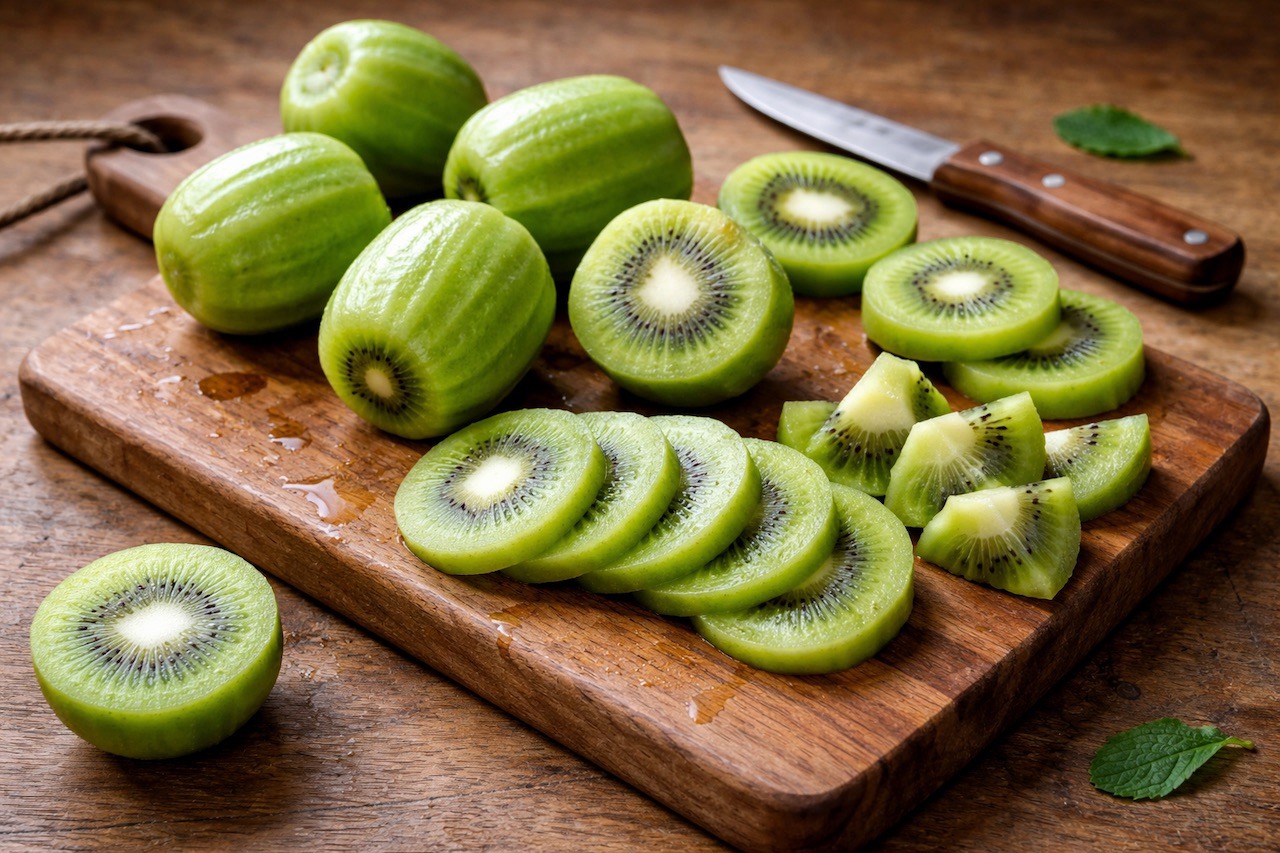
The fuzzy skin of a kiwi is difficult for dogs to digest and may cause gastrointestinal irritation. Seeds, while small, can also contribute to digestive discomfort. Kiwi should always be peeled and cleaned before serving.
How Much Kiwi Fruit Can a Dog Eat?
Dogs can usually eat kiwi in small amounts, but portion size matters more than the fruit itself. Kiwi is acidic and fairly fibrous, so a “good” serving is the smallest amount that gives a taste without upsetting the stomach. For most dogs, that means starting with a bite or two of peeled kiwi and watching for soft stool, gas, or vomiting before offering it again.
A practical rule of thumb is to keep kiwi as an occasional treat and stay well under 10% of your dog’s daily calories. Small dogs may do best with 1–2 small cubes (or a thin slice) once in a while, medium dogs with a few cubes, and large dogs with several cubes—always peeled and cut into dog-safe pieces. Because kiwi is slippery and can be a choking risk, avoid giving big chunks, and skip it entirely for dogs that gulp food quickly.
If your dog has a sensitive stomach, pancreatitis history, chronic diarrhea, or is on a special diet, kiwi should be limited or avoided. Too much kiwi can cause digestive upset simply from the fiber and acidity, and the safest approach is “treat-sized, not bowl-sized.” When in doubt, choose a blander fruit (like small pieces of banana) or ask your vet for a portion suggestion based on your dog’s weight and health.
Can Puppies Eat Kiwi Fruit?
Puppies have more sensitive digestive systems than adult dogs, making kiwi a risky choice for them. While kiwi is not toxic, puppies are more likely to experience diarrhea or stomach upset from new foods.
If kiwi is offered at all, it should be in extremely small quantities and only after the puppy is eating a stable, well-balanced diet. Many veterinarians recommend avoiding fruit treats altogether during the early growth stages.
Can Senior Dogs Eat Kiwi Fruit Safely?
Senior dogs can eat kiwi fruit safely in small amounts, but only if it’s prepared correctly and offered occasionally. Kiwi is rich in vitamin C, fiber, and antioxidants, which may support immune health and digestion in older dogs. However, because senior dogs often have more sensitive stomachs, kiwi should never be a daily treat and must be given in very limited portions.
One important concern for senior dogs is digestive tolerance. Kiwi contains natural acids and a relatively high amount of fiber, which can cause stomach upset, gas, or loose stools in older dogs with slower digestion. Always remove the skin, as it is tough and difficult to digest, and cut the fruit into very small, soft pieces to reduce choking risk and strain on the digestive system.
Kiwi may also not be suitable for senior dogs with certain health conditions, such as diabetes, kidney disease, or frequent gastrointestinal issues. The natural sugars can affect blood sugar levels, and excess potassium may be problematic for dogs with kidney concerns. Before adding kiwi to a senior dog’s diet, it’s best to treat it as an occasional snack and monitor for any negative reactions after the first serving.
Are There Dogs Who Should Not Eat Kiwi?
Some dogs should not eat kiwi under any circumstances:
- Dogs with diabetes or blood sugar issues
- Dogs with sensitive stomachs or food allergies
- Dogs prone to pancreatitis
- Overweight or obese dogs
In these cases, even small amounts of fruit can cause more harm than benefit.
Can Dogs Eat Kiwi Fruit with Seeds
In most cases, dogs can eat small amounts of kiwi fruit with the seeds, because kiwi seeds are tiny and usually pass through the digestive tract without causing problems. The bigger issue is rarely the seeds themselves — it’s the portion size, the fiber/sugar load, and whether your dog has a sensitive stomach. If you’re offering kiwi for the first time, start with a very small piece and watch for mild stomach upset (soft stool, gas, or vomiting).
Kiwi seeds can become more of a concern for dogs that are very small, dogs that tend to gulp food without chewing, or dogs with a history of digestive inflammation. While obstruction from kiwi seeds alone is unlikely, swallowing big chunks of kiwi (especially with peel attached) can irritate the stomach or contribute to constipation/diarrhea because kiwi is high in fiber. To reduce risk, serve kiwi as peeled bite-size pieces and avoid giving large slices that a dog might swallow whole.
Avoid kiwi with seeds if your dog has known GI issues (pancreatitis history, chronic diarrhea, inflammatory bowel disease), if your dog is on a prescription diet, or if your vet has told you to avoid higher-fiber fruits. Also skip kiwi completely if you notice any signs of an allergic reaction (itching, facial swelling, hives) or repeated vomiting/diarrhea. When in doubt, choose safer, low-risk fruits (like a few pieces of cucumber or a small amount of peeled apple without seeds) and ask your vet which treats fit your dog’s health profile.
How to Safely Feed Kiwi to Your Dog
If you decide to offer kiwi as a treat, proper preparation is essential.
Step-by-Step Preparation
- Choose ripe, fresh kiwi fruit
- Wash thoroughly to remove pesticides
- Peel off the skin completely
- Cut into very small pieces
- Serve plain, without sugar or additives
Never feed canned, dried, or sweetened kiwi products to dogs.
Recommended Serving Size
| Dog Size | Recommended Amount | Frequency |
|---|---|---|
| Small dogs | 1–2 small cubes | Once every 1–2 weeks |
| Medium dogs | 2–3 small cubes | Once every 1–2 weeks |
| Large dogs | 3–4 small cubes | Once every 1–2 weeks |
Kiwi should never replace balanced dog food or healthier treat options.
Signs of Kiwi Intolerance in Dogs
After feeding kiwi, watch your dog closely for signs of intolerance:
- Vomiting
- Diarrhea
- Excessive gas
- Loss of appetite
- Lethargy
If symptoms persist or worsen, contact your veterinarian immediately.
Kiwi vs Other Fruits for Dogs
Compared to other fruits, kiwi is neither the best nor the worst option for dogs.
- Safer options: blueberries, apple slices (no seeds), watermelon
- Riskier options: grapes, raisins, cherries
- Occasional treats: kiwi, mango, pineapple
Variety is less important than moderation and safety.
Can Dogs Eat Kiwi Every Day?
No, dogs should not eat kiwi every day. Daily consumption increases the risk of digestive upset and unnecessary sugar intake. Even healthy dogs benefit more from consistent, species-appropriate nutrition than from frequent fruit snacks.
Kiwi is best reserved for rare occasions as a novelty treat.
FAQ: Dogs and Kiwi Fruit
Is kiwi toxic to dogs?
No, kiwi is not toxic, but it must be fed in moderation and prepared correctly.
Can dogs eat kiwi skin?
No, kiwi skin is hard to digest and may cause stomach irritation.
Can dogs eat dried kiwi?
No, dried kiwi contains concentrated sugars and preservatives that are unsafe for dogs.
What should I do if my dog eats too much kiwi?
Monitor for digestive symptoms and contact a veterinarian if vomiting or diarrhea occurs.
Is kiwi better than other fruits for dogs?
Kiwi offers some benefits but is not superior to safer fruits like blueberries or apples.
Final Verdict: Should Dogs Eat Kiwi Fruit?
Kiwi fruit can be safe for dogs when served in very small amounts, properly prepared, and offered only occasionally. While it provides some nutritional benefits, it also carries risks related to digestion and sugar content.
For most dogs, kiwi is neither necessary nor especially beneficial compared to other dog-safe fruits. Responsible moderation and careful observation are key to ensuring your dog stays healthy and happy.
Author: XPETSI Editorial Team