Chicken is one of the most popular proteins in dog food, treats and homemade meals. Many puppy owners wonder whether they can safely feed chicken to their young dog — and if raw, cooked, boiled or shredded options are best. While chicken can be a healthy and nutritious part of a puppy’s diet, there are important safety rules every owner should know.
This guide explains which types of chicken are safe, which should be avoided, how much a puppy can eat and how to introduce this protein without upsetting your puppy’s sensitive digestive system.
Is Chicken Safe for Puppies?
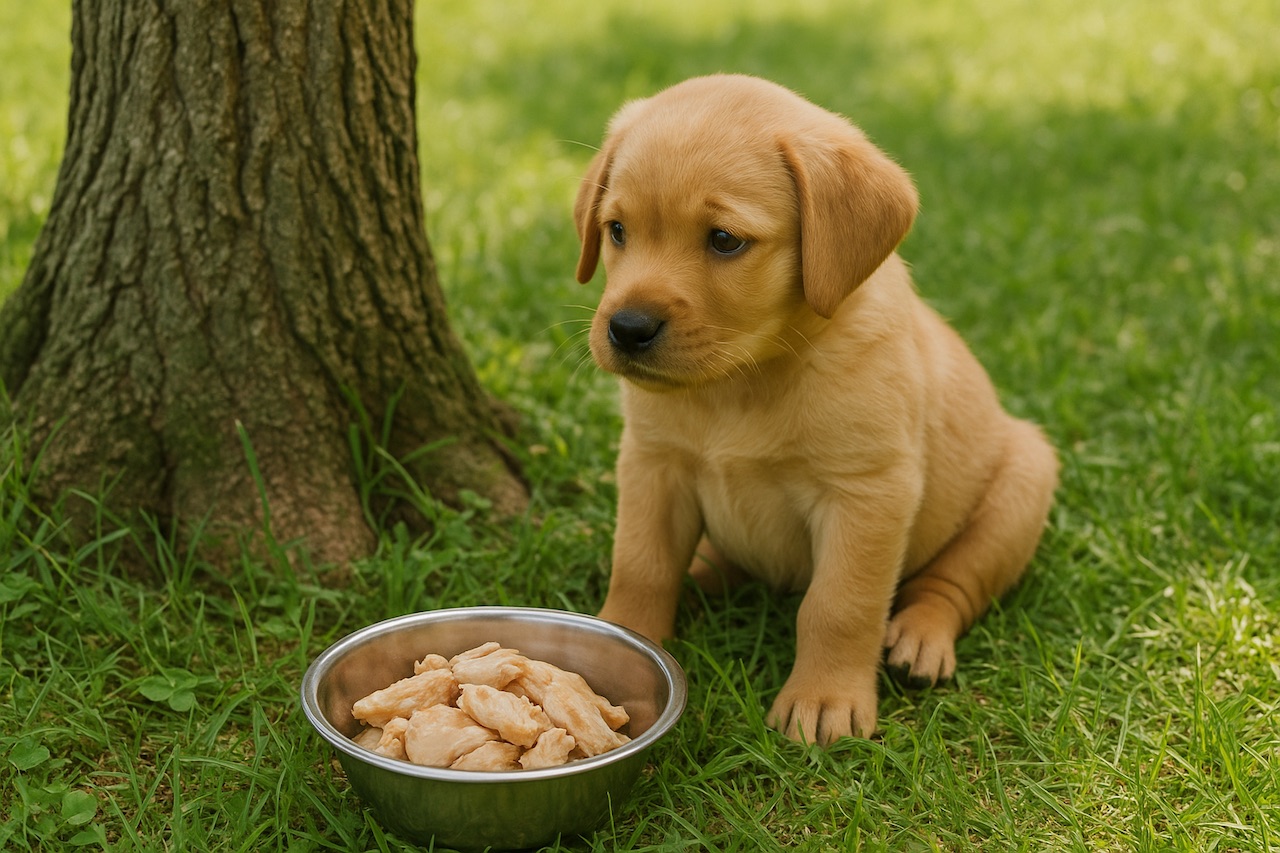
Yes, chicken is generally safe for puppies and often recommended due to its lean protein, gentle flavor and high digestibility. Many high-quality puppy foods already contain chicken as the primary ingredient.
However, the safety depends on how the chicken is prepared. Young puppies have sensitive stomachs and immune systems that are still developing, so not all forms of chicken are appropriate.
Cooked Chicken for Puppies (Best & Safest Option)
Cooked chicken is the safest and most recommended form for puppies. It’s easy to digest, low in fat and provides high-quality protein essential for muscle and tissue development.
Best ways to cook chicken for puppies:
Boiled chicken — gentle on the stomach, no added fat
Baked chicken — clean, simple and nutritious
Steamed chicken — retains moisture and nutrients
Always remove the skin and bones. Chicken skin is too fatty for puppies, and bones — even cooked — are extremely dangerous.
Can Puppies Eat Raw Chicken?
No, raw chicken is not recommended for puppies.
Raw chicken carries a higher risk of harmful bacteria such as Salmonella and Campylobacter, which puppies are less equipped to fight than adult dogs. Their immune and digestive systems are still developing, making foodborne illnesses more likely.
Even owners who follow raw diets usually wait until the puppy is older, fully vaccinated and has a more stable gut.
Can Puppies Eat Chicken Bones?
No. Never feed chicken bones to a puppy.
Both cooked and raw chicken bones can splinter and cause:
Internal injuries
Choking
Digestive blockages
Broken teeth
Bones are one of the biggest emergency vet risks for young dogs.
Best Parts of Chicken for Puppies
The safest, healthiest cuts of chicken include:
Chicken breast — lean, ideal for sensitive stomachs
Chicken thigh (skinless) — slightly richer, very flavorful
Shredded chicken — perfect for mixing with kibble
Ground chicken — easy to digest for small-breed puppies
How to Introduce Chicken to a Puppy’s Diet
Start slowly. Puppies react strongly to sudden diet changes.
Begin with 1–2 teaspoons for small puppies or 1–2 tablespoons for medium/large puppies.
Mix with their regular puppy food.
Watch for signs of digestive upset: gas, diarrhea, vomiting.
If tolerated, increase gradually over several days.
Avoid using chicken as a full meal replacement unless approved by a vet — puppies need balanced nutrition, not just protein.
Portions by Weight
| Puppy Weight | Safe Portion of Cooked Chicken | Notes |
|---|---|---|
| 2–5 lbs (1–2.2 kg) | 1–2 teaspoons | Start extra slow for toy breeds |
| 6–10 lbs (2.7–4.5 kg) | 1–2 tablespoons | Mix with kibble for balance |
| 11–20 lbs (5–9 kg) | 2–3 tablespoons | Introduce gradually over 3–5 days |
| 21–30 lbs (9.5–14 kg) | 3–5 tablespoons | Can be used as topper or training treat |
| 31–50 lbs (14–23 kg) | ¼–½ cup | Not a full meal replacement |
When Chicken Becomes a Problem for Puppies
Even safe foods can cause issues in certain situations.
| Problem | Why It Happens | What To Do |
|---|---|---|
| Diarrhea or loose stool | Sudden new food or too much chicken | Reduce portions, slow reintroduction, offer bland diet |
| Vomiting | Sensitivity, allergies, rich cuts | Stop feeding chicken, consult vet if repeated |
| Itching or skin redness | Possible chicken allergy | Switch protein (turkey, salmon), monitor symptoms |
| Choking hazard | Feeding bones or large chunks | Always shred meat; never offer bones |
| Bacterial infection | Raw or undercooked chicken | Seek veterinary help; avoid raw chicken in the future |
Health Benefits of Chicken for Puppies
High-quality lean protein supports muscle growth
Amino acids help brain and tissue development
Mild flavor suits sensitive stomachs
Boiled chicken can help during digestive upset
Easy to use for training and food toppers
Safe Portions by Weight
| Puppy Weight | Safe Daily Portion of Cooked Chicken | Notes |
|---|---|---|
| 2–5 lbs (0.9–2.2 kg) | 1–2 tablespoons (0.5–1 oz) | Use as treat only; avoid replacing balanced meals |
| 6–10 lbs (2.7–4.5 kg) | 2–3 tablespoons (1–1.5 oz) | Shred chicken into tiny pieces to prevent choking |
| 11–20 lbs (5–9 kg) | 3–6 tablespoons (1.5–3 oz) | Mix with puppy food; avoid giving plain chicken regularly |
| 21–30 lbs (9.5–13.5 kg) | ¼–½ cup (3–4 oz) | Keep chicken under 10% of daily calories |
| 31–40 lbs (14–18 kg) | ½–¾ cup (4–5 oz) | Only skinless, boneless, fully cooked chicken |
| 41–50 lbs (18.5–22.5 kg) | ¾–1 cup (5–6 oz) | Avoid seasoning, oils, salt, garlic or onion |
| 50+ lbs (22.5+ kg) | 1 cup (6–8 oz) | Consult vet if using chicken as main protein |
When Chicken Becomes a Problem
| Warning Sign | Possible Cause | What to Do |
|---|---|---|
| Vomiting or diarrhea | Food intolerance, allergy, or contaminated chicken | Stop feeding chicken and contact your vet if symptoms persist |
| Itching, red skin, ear infections | Possible chicken allergy | Eliminate chicken and switch to another protein |
| Refusing regular puppy food | Puppy gets “spoiled” by chicken | Reduce chicken portions; mix gradually with kibble |
| Choking or coughing | Bone fragments accidentally consumed | Seek emergency veterinary care immediately |
| Greasy or loose stools | Too much fat (e.g., skin or fatty pieces) | Use only lean, skinless chicken |
| Sudden lethargy or fever | Bacterial infection from raw chicken | See a veterinarian right away |
FAQ About Puppies Eating Chicken
Is cooked chicken safe for puppies?
Yes. Plain, fully cooked chicken without seasonings, skin or bones is safe for most puppies. It’s a great source of lean protein and can be mixed into puppy food or used as a training treat.
Can puppies eat raw chicken?
Raw chicken is generally not recommended for puppies because their immune systems are still developing. Raw meat can contain harmful bacteria such as Salmonella or Campylobacter, which pose a higher risk to young dogs.
Can puppies eat chicken bones?
No. Cooked chicken bones splinter easily and can cause choking, intestinal blockages or punctures. Raw bones are also risky for puppies due to softer teeth and developing digestive systems.
How much chicken can a puppy eat per day?
Chicken should be a supplement to complete puppy food — not a replacement. Usually, chicken treats should make up no more than 10% of daily calories. Larger puppies can eat slightly more; small breeds should eat smaller portions.
Can I give my puppy chicken every day?
You can include small amounts of cooked chicken daily as long as most nutrition still comes from balanced puppy food. Chicken alone does not provide the vitamins and minerals puppies need for growth.
Is chicken good for puppies with sensitive stomachs?
Yes, cooked chicken (usually with rice) is often used for temporary digestive upset. However, long-term feeding should be guided by your veterinarian.
Can puppies have chicken skin?
No. Chicken skin is high in fat and can cause digestive issues or even pancreatitis in sensitive puppies.
Can puppies eat fried or seasoned chicken?
Absolutely not. Spices, salt, garlic, onion, oils and breading can be dangerous for puppies. Always serve chicken plain and unseasoned.
What if my puppy has a chicken allergy?
Chicken allergies do occur. If your puppy shows itching, ear infections, redness, vomiting or diarrhea after eating chicken, stop feeding it and ask your vet about allergy testing or hypoallergenic diets.
Is chicken broth safe for puppies?
Yes, if it’s homemade and salt-free. Store-bought broths often contain onions, garlic and high sodium, which are unsafe for dogs.
Chicken can be a healthy, puppy-friendly protein when prepared correctly. Stick to cooked, plain, skinless meat — no seasoning, sauces, oils or bones. Introduce chicken slowly, watch your puppy’s reaction and always aim for balance by pairing chicken with a complete puppy diet.
If you ever notice signs of allergies or digestive trouble, consult your veterinarian. With the right approach, chicken can be a delicious and nutritious addition to your puppy’s meals.
Author: XPETSI Editorial Team