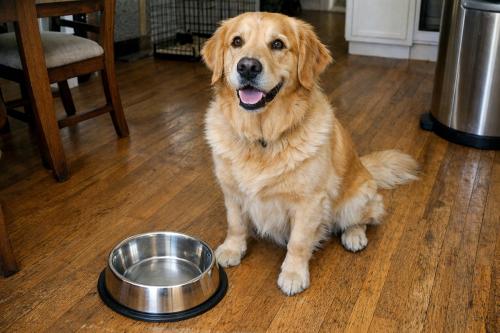
For many Golden Retriever owners, counter-surfing begins as an unexpected discovery. A carefully prepared meal left unattended for a moment may suddenly vanish, leaving behind confusion rather than obvious mischief. These situations can feel puzzling, particularly when the dog appears attentive, responsive, and generally well-mannered in other areas of daily life.
Food-stealing behavior is rarely a simple matter of disobedience. More often, it reflects a combination of strong natural motivation, environmental opportunity, and subtle emotional or cognitive influences that shape how the dog responds to everyday situations.
This guide looks beyond surface explanations to explore why Golden Retrievers are especially inclined toward counter scavenging, how to recognize the difference between curiosity and emerging habit patterns, and what realistic adjustments can help reduce the behavior while preserving trust and emotional balance.
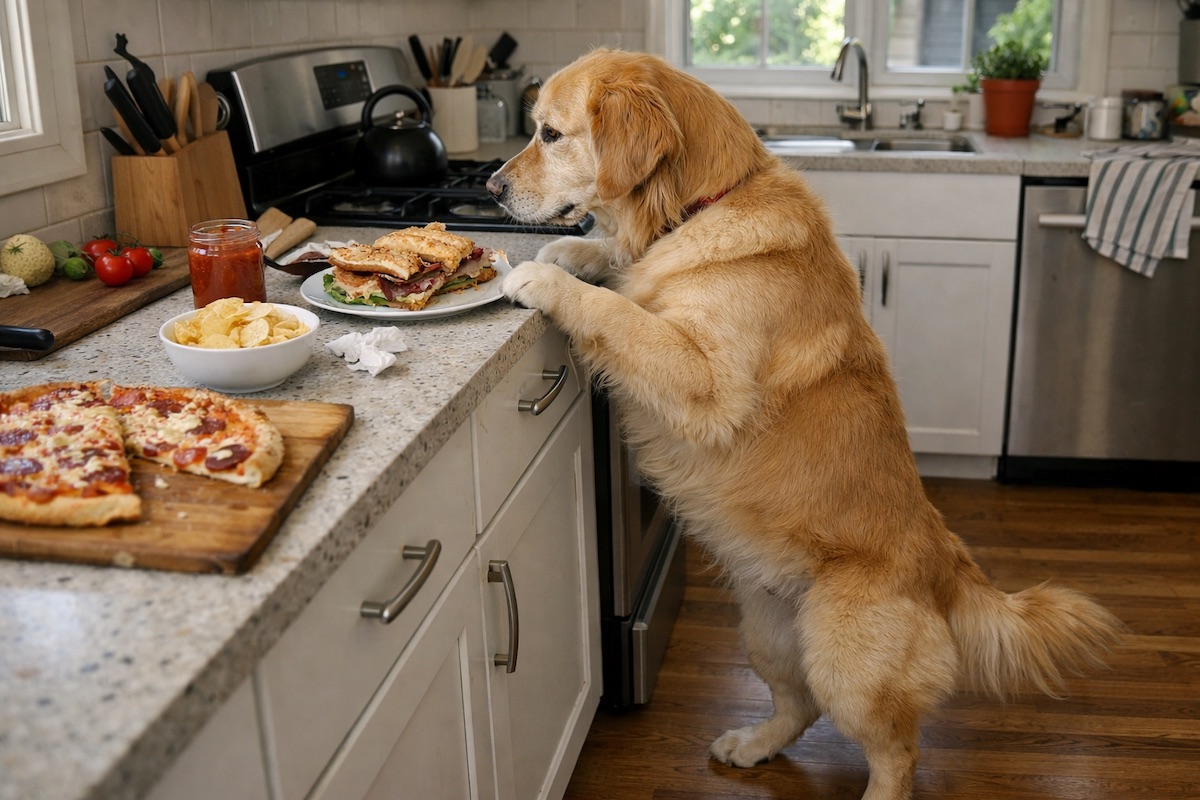
Why Golden Retrievers Steal Food From Counters
Strong Food Motivation
Golden Retrievers are naturally food-motivated dogs. Their history as working companions included reward-based training and cooperative tasks, which strengthened their interest in food as a meaningful resource.
When food is visible and accessible, many dogs experience an instinctive urge to investigate. This behavior is not always about hunger — it is often about opportunity.
Learning Through Success
Dogs repeat behaviors that work. If a Golden Retriever successfully steals food even once, the experience can strongly reinforce the behavior. The dog learns that counters are valuable places to explore.
From the dog’s perspective, counter-surfing is highly logical: minimal effort can lead to a powerful reward.
Boredom or Lack of Mental Engagement
Intelligent dogs sometimes create their own stimulation when daily life feels predictable or under-engaging. Searching for food can become a self-reinforcing activity that relieves internal tension or curiosity.
This pattern often appears when physical exercise is present but meaningful mental engagement is limited.
Unclear Household Boundaries
Inconsistent rules around food can increase confusion. For example:
- Sometimes feeding scraps from the kitchen
- Allowing the dog near food preparation areas
- Leaving food unattended frequently
Without clear structure, the dog cannot easily understand which situations permit access and which do not.
Anticipation and Emotional Arousal
Some Golden Retrievers become highly excited around food preparation. The smells, sounds, and movement in the kitchen can activate anticipation, making impulsive behavior more likely.
Counter-stealing often increases when the nervous system is already stimulated by excitement or uncertainty.
Normal Curiosity vs Problematic Counter-Stealing
| Behavior | Normal Interest | Developing Habit |
|---|---|---|
| Exploration | Occasional sniffing | Persistent searching |
| Response to cues | Moves away easily | Ignores owner presence |
| Frequency | Rare | Daily or repetitive |
| Emotional tone | Curious | Impulsive or tense |
Understanding this difference helps owners respond early before the behavior becomes deeply ingrained.
Why Punishment Often Makes Counter-Stealing Worse
Many owners react with frustration or correction after food is stolen. However, delayed punishment can confuse the dog and increase anxiety rather than improve understanding.
If consequences appear unpredictable, some dogs may begin stealing food more quickly or secretly.
Instead of reducing the behavior, tension can increase anticipation and impulsivity.
How to Help a Golden Retriever Stop Stealing Food From Counters
Remove Opportunities
The most effective first step is environmental management. Keeping food out of reach, clearing counters, and supervising kitchen access reduces rehearsal of the behavior.
Dogs learn faster when unwanted habits are not repeatedly practiced.
Create Clear Kitchen Boundaries
Teaching the dog where to rest during food preparation can reduce impulsive exploration. Consistent cues such as guiding the dog to a mat or resting area help establish predictable expectations.
Structure reduces temptation by replacing uncertainty with clear guidance.
Increase Meaningful Mental Engagement
Short thinking activities — scent games, structured training, or food puzzles — provide safe outlets for curiosity and problem-solving. Engaged dogs are less likely to create their own stimulation through scavenging.
Use Food Rewards Intentionally
Random treats from the counter area can reinforce attention toward food preparation spaces. Deliver rewards in structured contexts instead, such as training sessions or calm resting moments.
Teach Impulse Control Skills
Exercises that build patience and emotional regulation help reduce impulsive behavior. Simple tasks like waiting before receiving food or choosing calm behavior around distractions can gradually improve self-control.
Lower Emotional Arousal Around Meals
Calm feeding routines reduce excitement and anticipation. Slower preparation, predictable timing, and relaxed interaction help the nervous system stay balanced.
When Counter-Stealing May Signal Deeper Issues
If the behavior appears suddenly or becomes extreme, consider broader contributing factors such as:
- Sudden routine changes
- Increased anxiety or stress
- Insufficient mental engagement
- Nutritional imbalance
Addressing the underlying cause often leads to more lasting improvement than focusing only on the behavior itself.
Final Thoughts
Golden Retrievers that steal food are not being “naughty.” They are responding to opportunity, instinct, and emotional state.
By reducing temptation, increasing structured engagement, and creating predictable household boundaries, many owners see gradual improvement. Instead of trying to control every moment, focus on building clarity and emotional balance.
When daily life feels stable and mentally satisfying, the urge to search for food on counters often fades naturally.
Author: XPETSI Editorial Team