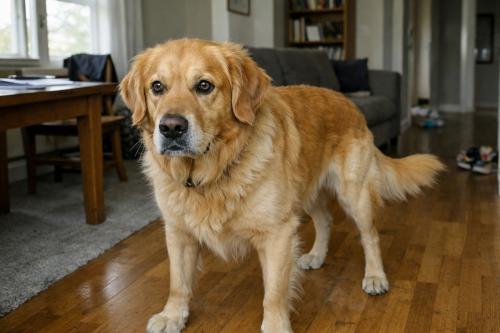
Walking a Golden Retriever is usually associated with enthusiasm and forward movement — until the dog suddenly stops. Some owners describe it as “planting,” where the dog freezes in place, refuses to move, or even sits or lies down mid-walk. This behavior can feel confusing or frustrating, especially when it appears without an obvious reason.
When a Golden Retriever refuses to walk, it is rarely stubbornness. In most cases, the dog is responding to something in their emotional or sensory environment.
Understanding why your dog stops during walks can help you respond more effectively and prevent the behavior from becoming a repeated pattern.
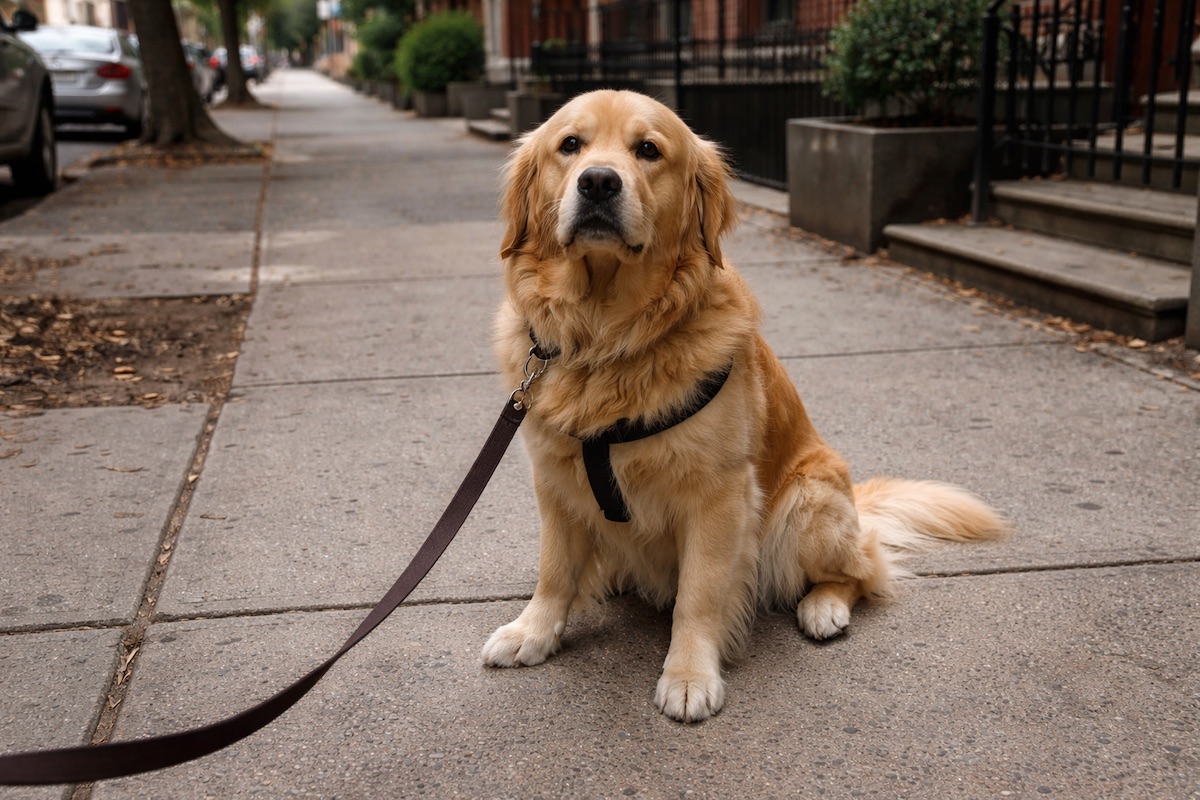
Is It Normal for a Golden Retriever to Stop Walking?
Occasional pauses during a walk are completely normal. Dogs stop to process smells, observe their surroundings, or take short breaks. However, when stopping becomes frequent, prolonged, or difficult to interrupt, it often signals something deeper than simple curiosity.
A dog that consistently refuses to move is usually communicating discomfort, uncertainty, or overload — not defiance.
Common Reasons Golden Retrievers Refuse to Walk
Overstimulation From the Environment
Busy streets, unfamiliar places, or constant movement can overwhelm a sensitive dog. When too much information arrives at once, the nervous system may respond by “freezing.”
This is a natural coping mechanism — the dog pauses because continuing forward feels too intense.
Fear or Uncertainty
New environments, sudden noises, or negative past experiences can make a dog hesitant to move. Even subtle changes — such as different lighting, weather, or unfamiliar routes — may trigger caution.
In these situations, stopping is a form of self-protection.
Mental Fatigue
Long walks, intense training sessions, or highly stimulating days can lead to cognitive exhaustion. A dog that appears physically capable may simply need a mental break.
Sometimes stopping is not resistance — it is the dog’s way of saying, “I need a pause.”
Lack of Motivation or Engagement
If walks feel repetitive or lack meaningful interaction, some dogs may disengage. This can happen when there is little variation in routes, pace, or opportunities to explore.
Physical Discomfort or Health Issues
Pain, fatigue, or underlying medical conditions can cause a dog to slow down or stop entirely. Joint discomfort, paw sensitivity, or digestive issues may reduce willingness to move.
If the behavior appears suddenly or worsens over time, a veterinary check is recommended.
Learned Behavior
If stopping leads to a preferred outcome — such as turning back home, being carried, or receiving attention — the dog may begin repeating the behavior.
Different Types of “Stopping” Behavior
| Type of Stop | Possible Meaning |
|---|---|
| Brief pause, then continues | Normal exploration |
| Freezing and scanning | Overstimulation or uncertainty |
| Sitting or lying down | Fatigue or emotional overload |
| Pulling backward | Fear or avoidance |
Observing body language helps identify the underlying cause.
Signs the Issue Is Emotional, Not Behavioral
- Ignoring familiar cues outdoors
- Tense or rigid body posture
- Frequent scanning of the environment
- Difficulty resuming movement after stopping
- Increased sensitivity to noise or movement
When stopping is linked to emotional state, increasing pressure usually makes the behavior worse.
How to Help a Golden Retriever That Refuses to Walk
Reduce Environmental Pressure
Many dogs stop walking not because they refuse to cooperate, but because the environment feels overwhelming. Busy streets, unpredictable noises, or unfamiliar places can quickly overload the nervous system. Starting in quieter areas — such as calm parks or familiar routes — allows the dog to process the environment without pressure.
As confidence improves, you can gradually introduce more complex settings. The key is progression, not exposure. A dog that feels safe will move more willingly than one that feels forced to cope.
Slow Down the Walk
Fast-paced, goal-oriented walking can increase tension, especially for sensitive dogs. Slowing down gives your Golden Retriever time to observe, sniff, and understand their surroundings. These pauses are not distractions — they are part of how dogs process the world.
When the pace matches the dog’s comfort level, movement becomes more natural and less resistant. Many dogs begin to walk again on their own once pressure is reduced.
Use Gentle Encouragement, Not Force
Pulling the leash or trying to drag the dog forward often increases resistance. From the dog’s perspective, this adds pressure to an already uncomfortable situation. Instead, use soft encouragement — step slightly forward, change direction, or invite movement with a calm voice.
Small rewards for even minimal forward steps can help rebuild confidence. The goal is to create cooperation, not compliance under pressure.
Build Positive Associations
When stopping becomes frequent, it is important to reconnect walking with positive emotional experiences. This can include treats, relaxed interaction, or simply choosing routes where the dog feels comfortable.
Consistency matters more than intensity. Over time, predictable positive outcomes help the dog feel safer moving forward.
Keep Walks Shorter if Needed
Long walks can become overwhelming if the dog is already struggling. Shorter, successful walks build confidence more effectively than pushing through longer distances. Ending on a calm, positive note reinforces the idea that walking is manageable and safe.
Gradually increasing duration as the dog becomes more comfortable helps avoid setbacks.
Progress comes from reducing pressure, not increasing it. Confidence grows when the dog feels safe enough to move — not when they are forced to continue.
Use Predictable Start and End Signals
Clear routines around the beginning and end of walks can reduce uncertainty. Simple rituals — such as putting on the leash calmly, starting from the same location, or ending the walk in a predictable way — help the dog understand what to expect.
Predictability lowers anxiety and makes transitions smoother.
Allow Recovery Breaks
If your dog stops, it may be a sign they need a moment to process. Instead of immediately encouraging movement, allow a short pause. Standing calmly or sitting nearby gives the dog space to reset.
Many dogs resume walking naturally once the pressure to move is removed.
Support Emotional Stability Throughout the Day
Walking behavior is influenced by the dog’s overall emotional state. If the day includes high levels of stimulation, inconsistent routines, or limited rest, the dog may struggle more during walks.
Balanced daily structure — including calm periods, predictable engagement, and quality rest — often improves walking behavior indirectly.
Check for Physical Discomfort
If refusal to walk appears suddenly, becomes more frequent, or is accompanied by stiffness, limping, or reluctance to move, a medical cause should be considered. Joint discomfort, paw sensitivity, or internal discomfort can all affect willingness to walk.
A veterinary check ensures that physical factors are not contributing to the behavior.
Common Mistakes Owners Make
- Forcing the dog to continue walking
- Interpreting stopping as stubbornness
- Increasing intensity instead of reducing stimulation
- Ignoring early signs of discomfort
Misinterpreting emotional signals can turn a temporary issue into a long-term pattern.
Final Thoughts
A Golden Retriever that refuses to walk is not being difficult — they are communicating something important about how they feel.
By paying attention to emotional state, adjusting the environment, and building positive, predictable routines, most dogs gradually regain confidence and willingness to move.
Instead of asking how to make your dog walk, it can be more helpful to ask: What is my dog experiencing right now — and how can I make it easier?
Author: XPETSI Editorial Team