Walks with a Golden Retriever often feel joyful and energetic — until the dog suddenly starts grabbing leaves, sticks, trash, or anything else found on the ground. Many owners feel frustrated or worried when their dog seems determined to eat everything outside. This behavior can range from mild curiosity to a persistent habit that feels difficult to control.
Eating random objects outdoors is not always about hunger. In many Golden Retrievers, it reflects curiosity, stress regulation, sensory exploration, or learned patterns from early experiences.
This article explains why Golden Retrievers eat things during walks, how to distinguish normal exploration from concerning behavior, and what practical steps can help your dog develop safer and calmer habits outside.
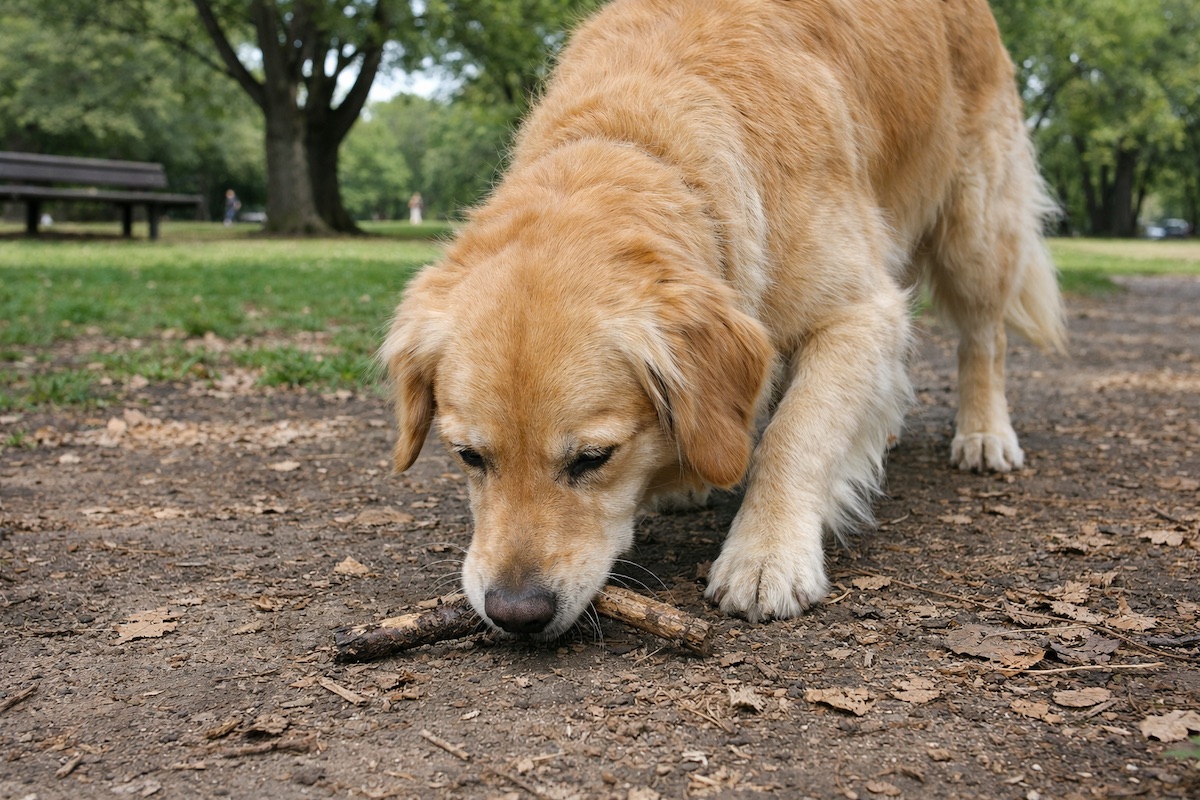
Is It Normal for Golden Retrievers to Eat Things Outside?
Some level of environmental exploration is completely normal for dogs. Golden Retrievers use their mouths to investigate textures, smells, and unfamiliar objects. Puppies and young dogs are especially likely to pick up or chew items during walks.
The behavior becomes a concern when the dog:
- Swallows non-food items frequently
- Actively searches for objects to eat
- Ignores owner cues or food rewards
- Shows digestive upset or discomfort afterward
Occasional curiosity is normal. Persistent object-eating may signal emotional imbalance, boredom, or learned coping strategies.
Common Reasons Golden Retrievers Eat Everything Outside
Sensory Exploration
Golden Retrievers are naturally curious dogs that experience the world through scent and taste. Picking up leaves, sticks, or debris can simply be part of environmental learning. Young dogs especially may experiment with textures as a way of gathering information.
Boredom or Mental Understimulation
If walks feel repetitive or lack meaningful engagement, the dog may create their own stimulation. Chewing or swallowing objects provides sensory feedback and temporary excitement.
This behavior can increase when physical exercise is present but mental engagement is limited.
Anxiety or Emotional Regulation
Some dogs eat objects outdoors as a coping mechanism. Chewing or mouthing items can help release nervous tension in stimulating environments.
What looks like misbehavior may actually be a self-soothing strategy when the dog feels overwhelmed.
Learned Reward Patterns
If a dog receives strong attention every time they grab something — even negative attention — the behavior may become reinforced. Some Golden Retrievers quickly learn that picking up objects leads to interaction.
Hunger or Feeding Imbalance
Although less common, genuine hunger or inconsistent feeding routines can increase food-seeking behavior outdoors.
Instinctive Scavenging Tendencies
Retrievers were bred to use their mouths actively. Some individuals show strong oral drive and naturally enjoy carrying or chewing objects.
Normal Curiosity vs Problematic Object-Eating
| Behavior | Normal Exploration | Concerning Pattern |
|---|---|---|
| Frequency | Occasional | Constant searching |
| Response to cues | Can release objects | Ignores commands |
| Swallowing | Rare | Frequent ingestion |
| Emotional tone | Playful curiosity | Compulsive or tense |
Understanding motivation helps determine whether the issue is training-related, emotional, or medical.
Risks of Eating Random Objects Outdoors
While some objects are harmless, others can cause serious problems. Potential risks include:
- Gastrointestinal blockage
- Toxic ingestion
- Choking hazards
- Digestive irritation
If your Golden Retriever shows vomiting, lethargy, loss of appetite, or abdominal discomfort after walks, contact a veterinarian.
How to Help a Golden Retriever Stop Eating Everything Outside
Increase Meaningful Mental Engagement During Walks
Many Golden Retrievers pick up objects simply because their brain is under-engaged or overstimulated. Adding short, structured thinking moments during walks helps channel curiosity into safer behavior. You can pause occasionally to practice simple cues, hide small treats in grass for scent searches, or encourage calm observation of the environment.
These activities give the dog a sense of purpose and reduce the need to create stimulation by chewing random objects. Mental engagement works best when it is brief, predictable, and followed by relaxed walking rather than constant demands.
Teach a Reliable “Leave It” Cue
A strong “leave it” cue is one of the most effective safety tools for outdoor scavenging. Begin training indoors with low-value distractions before gradually introducing real-world challenges. Reward the dog the moment they choose to disengage — not after they have already picked something up.
Consistency is key. If the cue sometimes leads to frustration or conflict, the dog may ignore it. When practiced calmly and reinforced positively, it helps build impulse control and trust during walks.
Adjust Walk Pace and Structure
Walk rhythm strongly influences behavior. Fast, linear walks often increase excitement and reduce the dog’s ability to process cues. Slowing down allows the nervous system to regulate and lowers impulsive decisions like grabbing objects from the ground.
Predictable routes, gentle transitions between movement and pauses, and opportunities for sniffing help the dog stay emotionally balanced. Structured calm walking reduces the urge to constantly search for stimulation.
Provide Safe Oral Outlets
Golden Retrievers have a natural need to carry and chew objects. Bringing a safe toy or chew item during walks can satisfy this instinct in a controlled way. Some dogs relax significantly when they have something appropriate in their mouth.
Rotating safe items keeps them interesting without creating excessive excitement. This strategy works especially well for young or highly energetic dogs.
Maintain Consistent Feeding Routine
Dogs that feel uncertain about food availability may become more focused on scavenging outdoors. Feeding at predictable times and offering nutritionally balanced meals helps reduce food-seeking urgency.
A well-structured feeding routine also stabilizes energy levels and emotional state, making impulsive outdoor behavior less likely.
Reduce Emotional Pressure
Tension during walks can increase compulsive behaviors. Constant corrections, leash pulling, or frustration may push the dog into a reactive mindset where grabbing objects becomes a coping strategy.
Calm handling, softer communication, and clear expectations create a safer emotional environment. When stress decreases, many dogs naturally make better choices.
Build Impulse Control Gradually
Impulse control develops over time through small successes. Practice exercises such as waiting before crossing streets, pausing before receiving treats, or choosing to walk past mild distractions. These skills strengthen decision-making capacity in real situations.
A dog that learns to pause and think is less likely to act impulsively when encountering interesting objects outdoors.
Limit Access to High-Risk Areas Temporarily
If scavenging behavior is severe, temporarily avoiding heavily littered parks or busy sidewalks can prevent rehearsal of unsafe habits. Training is often more effective in cleaner, quieter environments where the dog can succeed more easily.
Gradual exposure to more complex environments should happen only after basic skills become reliable.
Monitor Health and Nutritional Factors
Occasionally, excessive scavenging may relate to digestive discomfort, nutritional imbalance, or medical conditions. If the behavior appears suddenly or becomes extreme, consulting a veterinarian can help rule out underlying causes.
Physical well-being strongly influences behavioral stability.
Balanced stimulation — including mental engagement, emotional safety, and clear structure — helps many Golden Retrievers develop safer and more confident outdoor habits over time.
Common Mistakes Owners Make
- Punishing curiosity instead of redirecting behavior
- Allowing inconsistent rules about objects
- Increasing physical exercise without mental engagement
- Creating tension through constant leash corrections
Clear structure and calm redirection usually work better than frustration or force.
When to Seek Professional Help
Consult a trainer or veterinarian if your Golden Retriever:
- Swallows dangerous objects repeatedly
- Shows obsessive scavenging behavior
- Displays digestive problems after walks
- Becomes aggressive when items are removed
Final Thoughts
Golden Retrievers that eat everything outside are often not being stubborn — they are exploring, coping, or responding to unmet emotional or mental needs.
By understanding the motivation behind the behavior and adjusting routines, engagement, and training clarity, many owners see gradual improvement. Safer habits develop not only through commands, but through balanced stimulation, emotional stability, and predictable daily structure.
Author: XPETSI Editorial Team