A lot of Golden Retriever owners say that their dog has trouble staying focused. Even in simple situations, attention changes quickly, going from a sound to a smell to something moving in the distance. What looks like a lack of focus in a dog is often a bigger problem with how the dog interacts with its surroundings.
Many people think that this behavior is due to bad training or being stubborn. In reality, distraction is often a normal reaction to being stimulated or feeling a certain way.
A distracted dog is not ignoring you — it is responding to a world that constantly pulls its attention in different directions.
Understanding why your Golden Retriever gets distracted so easily can help you see what is happening beneath the surface.
Attention Is Limited
Dogs do not have unlimited attention. At any given moment, they can only process a certain amount of information. This capacity is flexible, but it is never infinite.
When the environment is simple, most of that attention can be directed toward you. But as the environment becomes more complex, attention is divided between multiple inputs.
This division happens automatically — the dog does not choose to ignore you. The brain simply allocates attention where it feels most necessary or relevant.
When the environment becomes more complex, attention is split between:
- Smells in the environment
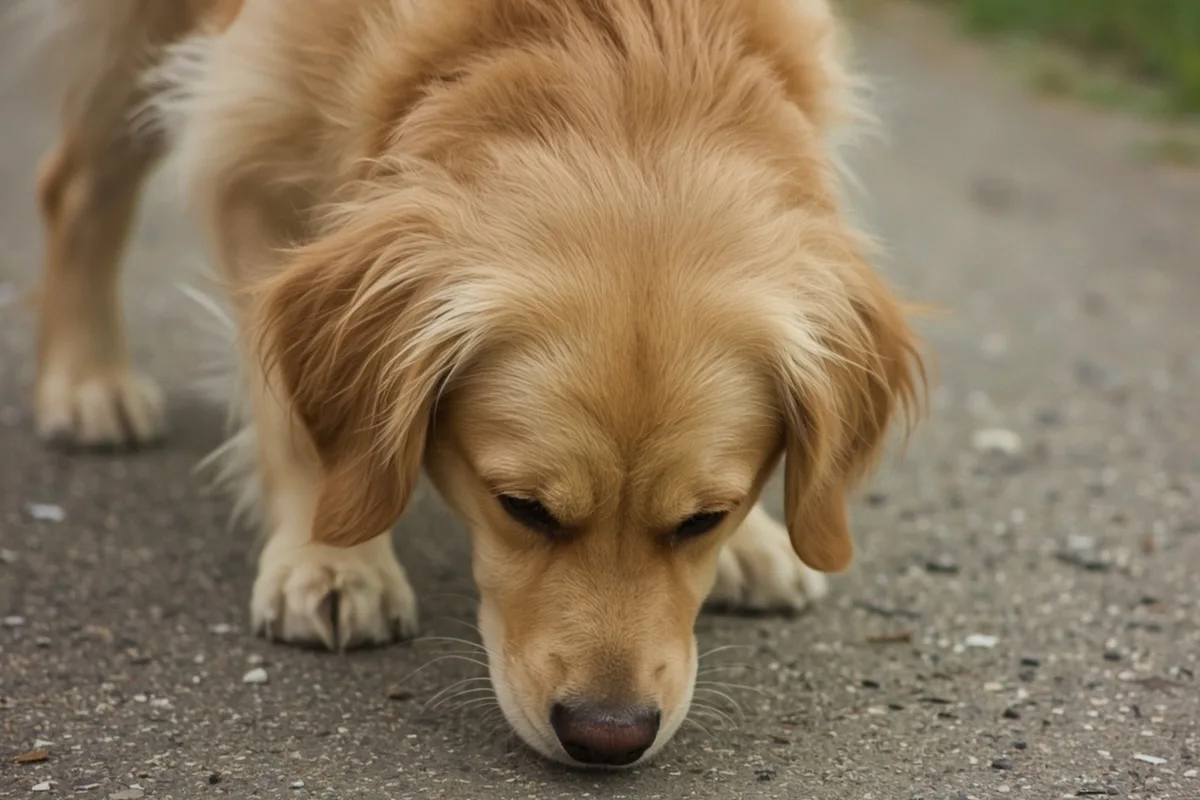
For dogs, scent is a primary source of information. Each smell contains detailed data about other animals, people, and events. Processing scent alone can take a large portion of attention. - Movement of people and animals
Motion naturally draws focus. Even small movements in the distance can interrupt attention and redirect it away from you. - Sounds and environmental changes
Unexpected or unfamiliar sounds trigger monitoring behavior. The dog must quickly assess whether something is relevant or important. - Internal state and emotional responses
Excitement, uncertainty, or overstimulation also consume attention. The dog is not only processing the environment, but also managing its own internal state.
As these inputs increase, attention becomes fragmented.
Instead of being focused on one thing, the dog’s attention shifts rapidly between multiple sources. This creates the appearance of distraction, even though the dog is actively processing everything around it.
It can be helpful to think of attention as a limited resource:
- Low stimulation → more attention available for you
- High stimulation → less attention available for you
This is why a dog can respond perfectly at home but struggle outside. The difference is not knowledge — it is how attention is distributed.
Distraction is not a lack of focus — it is competition for attention. The more the environment demands, the less attention remains available for you.

Golden Retrievers Are Naturally Attentive
Golden Retrievers are highly observant and responsive dogs. They are designed to notice changes and react quickly.
This means they are more likely to:
- Notice subtle environmental changes
- Respond to movement and sound
- Stay mentally engaged with surroundings
While this makes them adaptable, it also makes them more sensitive to distraction.
Stimulation Overloads Attention
In stimulating environments, the brain must process more information than usual.
As this load increases:
- Focus becomes less stable
- Attention shifts more frequently
- Responsiveness decreases
This is especially noticeable outside, where input is constant and unpredictable.
The more the dog has to process, the harder it becomes to stay focused on a single thing.
Emotional State Shapes Focus
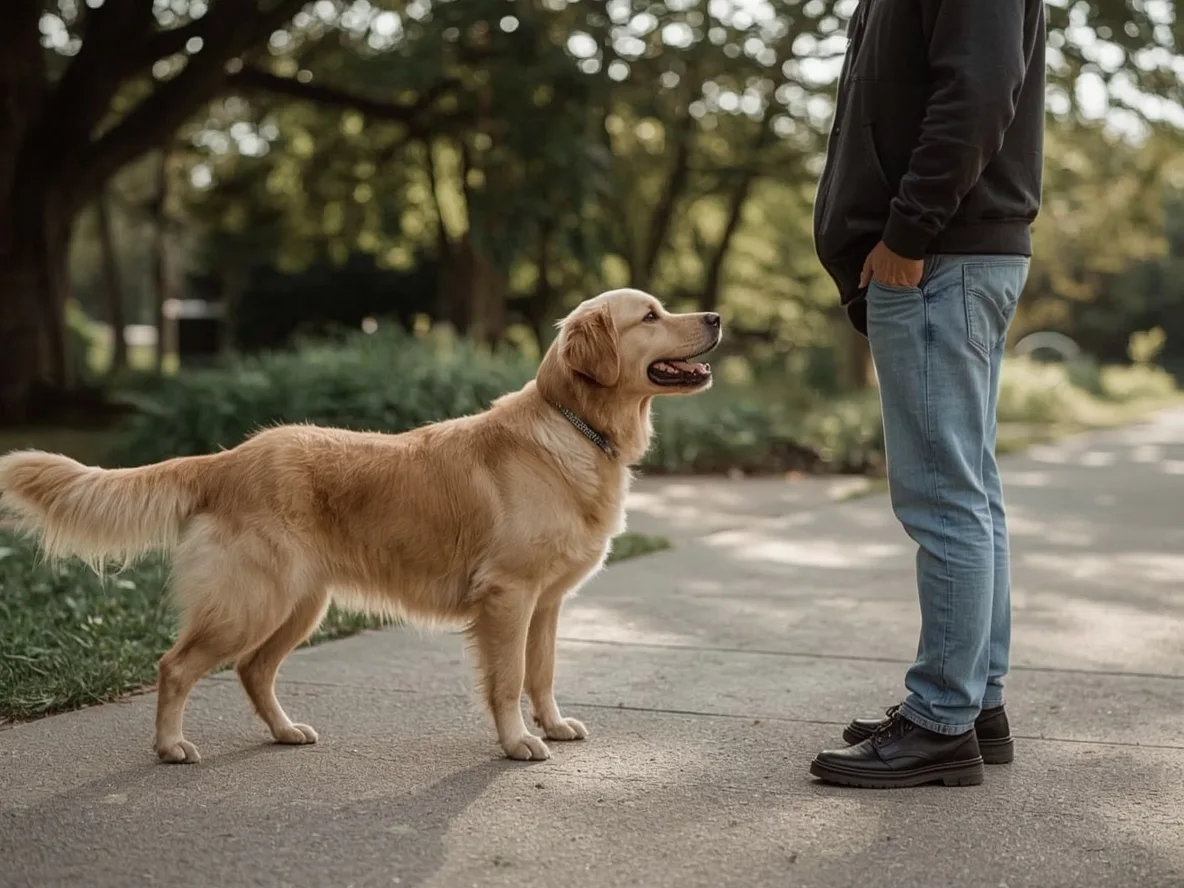
Attention is strongly influenced by how the dog feels. Focus is not a fixed skill that works the same way in every situation — it changes depending on the dog’s internal state.
This means that even a well-trained Golden Retriever may appear focused in one moment and distracted in another, simply because the emotional context has changed.
- Excited → attention becomes scattered
Excitement increases energy and engagement, but reduces stability. The dog becomes highly responsive to multiple stimuli at once — movement, smells, sounds — and shifts attention quickly between them. Instead of focusing, it reacts. - Uncertain → attention shifts to monitoring
When the dog is unsure, its priority changes from interaction to awareness. It begins scanning the environment, watching for changes, and staying alert. In this state, attention is directed outward for safety, not toward the owner. - Overstimulated → attention becomes inconsistent
When too much input accumulates, the nervous system reduces its ability to process new information efficiently. The dog may briefly focus, then lose it, respond inconsistently, or miss signals entirely.
In all of these states, attention is not absent — it is redirected or fragmented.
It can be helpful to think of focus as something that depends on internal conditions:
- Calm state → stable, flexible attention
- Activated state → reactive, shifting attention
- Overloaded state → reduced or inconsistent attention
This explains why a dog may respond well at the beginning of a walk but become more distracted over time. As stimulation builds, emotional state shifts — and attention changes with it.
It also explains inconsistency:
- Responds sometimes, ignores other times
- Focused in quiet areas, distracted in busy ones
- Engaged early, unfocused later
These patterns are often misinterpreted as stubbornness or lack of training. In reality, they reflect changing internal conditions.
Even a well-trained dog may struggle to focus if the emotional state does not support it. Reliable attention comes from stability, not just repetition.
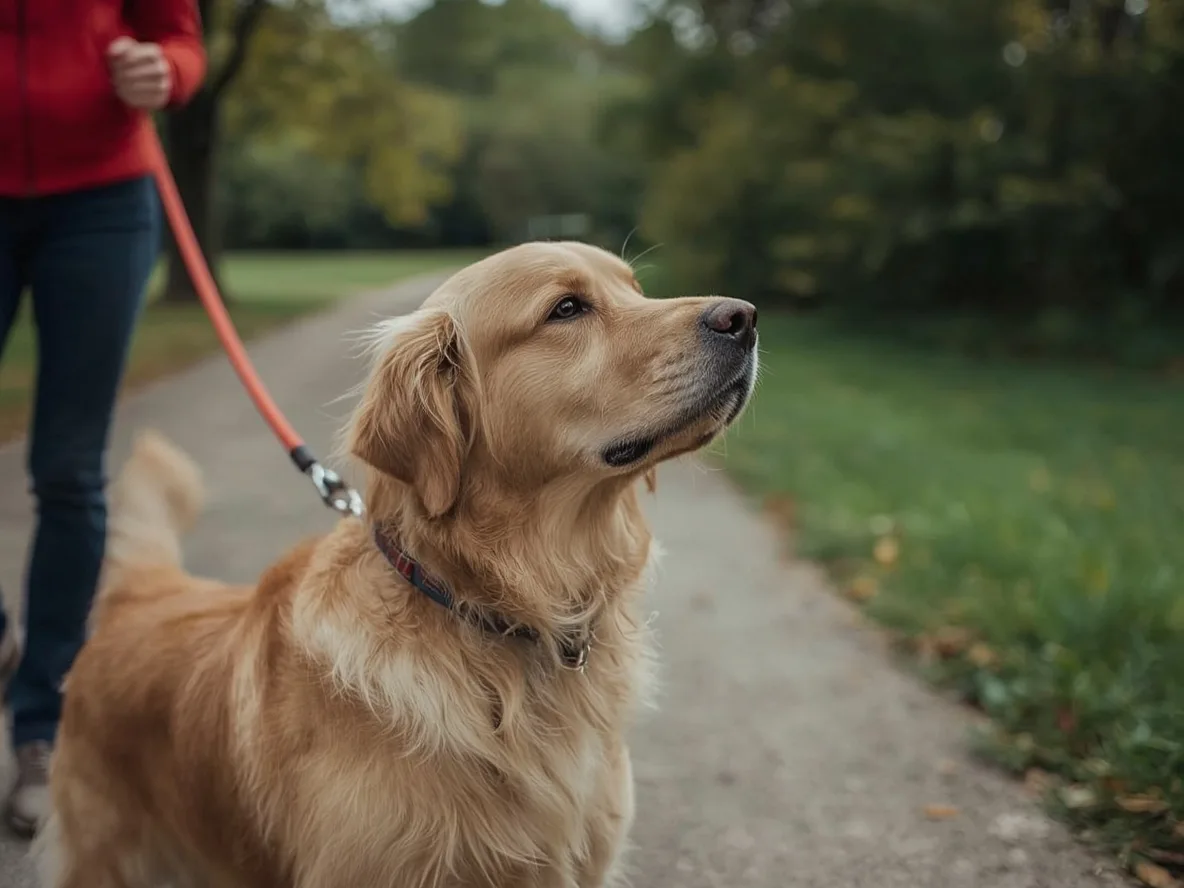
Scent Overrides Everything
For dogs, smell is one of the most powerful forms of information.
When your Golden Retriever detects an interesting scent:
- Attention narrows onto that scent
- Other inputs become less important
- Verbal cues may not register fully
This is not distraction in the usual sense — it is deep focus in another direction.
Why Distraction Builds Over Time
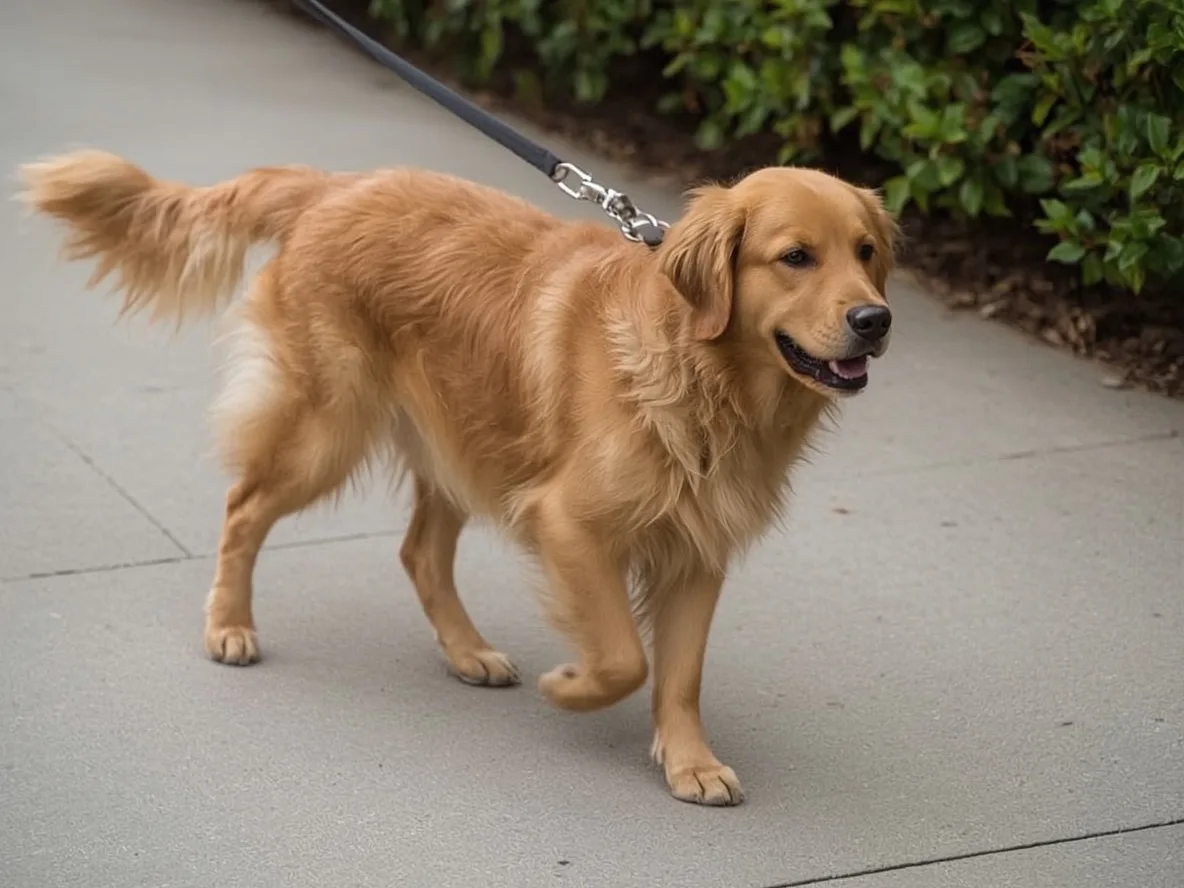
Distraction is not always immediate. It often builds gradually as stimulation accumulates.
At the start of an activity, your dog may be focused. But as input increases:
- Processing load rises
- Attention becomes fragmented
- Focus becomes harder to maintain
This is why dogs often appear more distracted later in a walk or activity.
What looks like inconsistency is often the result of increasing mental load over time.
How This Affects Daily Behavior
Frequent distraction can influence other behaviors:
- Ignoring cues outside
- Difficulty settling after activity
- Increased reactivity to small triggers
- Dependence on constant stimulation
These patterns are often connected rather than separate issues.
How to Support Better Focus
Improving focus is not about forcing attention — it is about creating conditions where attention becomes possible. When the environment, stimulation level, and internal state are balanced, focus naturally becomes more stable.
Instead of trying to compete with the environment, the goal is to reduce pressure and support clarity.
Reduce Environmental Complexity
Start in quieter environments where your dog does not have to process too much at once. This allows attention to remain more stable and available.
Rather than expecting focus everywhere, think in levels:
- Low stimulation → easier focus
- Moderate stimulation → manageable focus
- High stimulation → limited focus
By working within environments your dog can handle, you prevent attention from becoming overwhelmed before it even begins.
Allow Processing Time
Dogs need time to disengage from what they are already processing. When attention is pulled toward a smell, sound, or movement, it does not immediately return on its own.
Instead of repeating cues or increasing pressure, allow a pause:
- Let the dog finish investigating
- Give space for attention to reset
- Avoid interrupting intense focus too abruptly
This creates a smoother transition back to you.
Balance Activity and Recovery
Focus decreases when stimulation accumulates without recovery. Even positive activity can reduce attention if it is continuous.
Balance is essential:
- Active periods → exploration, movement, interaction
- Recovery periods → slower pace, quiet observation, minimal input
Without recovery, attention becomes fragmented and less reliable over time.
Build Predictable Patterns
Consistency reduces the need for constant environmental scanning. When your dog understands the rhythm of an activity, it does not need to monitor everything as closely.
This can include:
- Similar walking routes or starting points
- Predictable pacing (active → slow → active)
- Consistent transitions between movement and pauses
Predictability creates a sense of stability, which supports attention.
Focus improves when the dog’s internal state supports it — not when pressure increases. When the environment becomes manageable and the dog feels stable, attention follows naturally.
Final Thoughts
A Golden Retriever that gets distracted easily is not lacking discipline — it is responding to a rich and stimulating environment with limited attention capacity.
By understanding how attention works, you can help your dog develop more stable focus — not by forcing it, but by supporting the conditions that make it possible.
Author: XPETSI Editorial Team