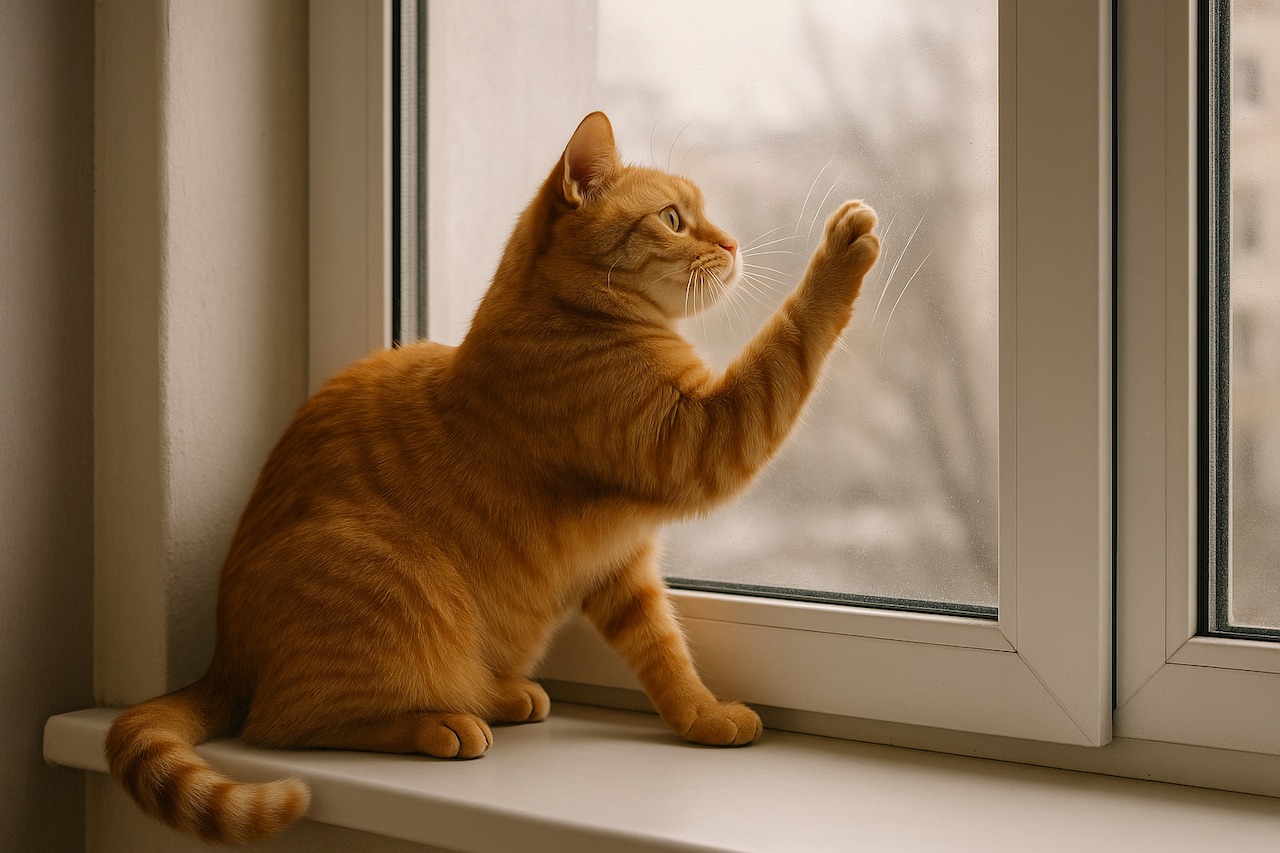
Cats are mysterious, instinct-driven animals, and some of their behaviors seem especially strange to humans. One of the most puzzling habits is when a cat scratches or paws at the windows, but only during the nighttime hours. This behavior can sound disruptive, appear obsessive, or even seem like your cat is reacting to invisible things outside. In reality, window scratching has clear explanations rooted in a cat’s instinct, territory management, sensory perception, and emotional needs. In this extended guide, we will explore why cats do it, when it becomes a concern, and how to gently stop or redirect the behavior without stressing your pet.
Understanding the Feline Instinct Behind Nighttime Window Scratching
Nighttime activates a cat’s natural hunting rhythm. Cats are crepuscular, meaning they are most active during dawn and dusk, and their senses remain sharp after sunset. When the world becomes quieter and darker, your cat becomes more alert to subtle movements, sounds, and scents. Windows become a sensory hotspot, and that is why many cats suddenly fixate on them.
1. Nocturnal Activity Outside Triggers the Instinct to Investigate
At night, wildlife becomes active—moths flutter around lights, birds move in trees, and small mammals come closer to buildings. Cats can see and hear far better than humans in low light, which means they notice movements you do not. Scratching at the window becomes a form of “attempted interaction,” similar to pouncing or chasing.
Insects landing on the glass
Reflections of outdoor lights
Shadows of passing animals
Sounds from outside that echo differently at night
To your cat, this is a rich source of stimulation. Scratching the window is simply their way of participating.
2. Territory Marking Amplifies at Night
Even indoor cats fiercely protect their perceived territory. Windows act as “territorial borders,” where indoor scent meets outdoor air. At night, outdoor animals like stray cats, raccoons, or dogs become active, and your cat may sense or smell them.
Scratching the window serves as a territorial gesture, leaving visual streaks and, more importantly, scent marks from the glands in their paws.
3. Cats Use the Window as an Outlet for Pent-Up Energy
Many cats nap extensively during the day when their humans are busy. With minimal stimulation or physical activity, they accumulate energy reserves. At night—right when you want peace—your cat suddenly “wakes up” ready to explore, patrol, and play.
Pawing at the window becomes a physical and mental outlet.
The Sensory Reasons Cats Scratch Windows
4. Reflections and Light Patterns Stimulate the Predatory Mind
Cats are highly sensitive to reflective surfaces. At night, windows transform into mirrors—showing lights, their own reflection, or movements behind them. A cat may scratch the window because:
They think their own reflection is another animal.
They detect flickering lights from cars or street lamps.
They see internal household movement reflected outward.
For a predator, this is irresistibly engaging.
5. The Texture of Glass Encourages “Tapping” and “Paw-Testing”
Cats explore objects with their paws, whiskers, and nose. A window provides a unique feedback sensation—smooth, cold, hard, and resonant. When they scratch the glass, they receive:
A satisfying tapping sound
A vibration through the paw pads
A bounce of reflection or shadow
This multi-sensory feedback loop encourages repeating the behavior.
Emotional and Behavioral Causes
6. Nighttime Anxiety or Overstimulation
Some cats experience anxiety when the environment becomes too quiet or when their human goes to sleep. Windows offer a distraction from this discomfort. The cat scratches because:
They feel restless
They seek reassurance through noise or activity
They are trying to get your attention
Anxious cats often repeat the window scratching every night, forming a habit.
7. Attention-Seeking Behavior
If your cat has learned that scratching the window brings you into the room—whether to comfort or scold—they may repeat it intentionally. Cats do not distinguish between positive and negative attention; all attention is reinforcement.
8. A Desire to Go Outside
Indoor-only cats sometimes express frustration by pawing at barriers that restrict access to the outside world. The window represents:
Fresh scents
Wind changes
Wildlife
Freedom
If the behavior increases in intensity over time, the cat may be craving more stimulation than they receive indoors.
When Window Scratching Becomes a Problem
Scratching is not harmful by itself, but repeated nighttime window activity can indicate stress or unmet needs. Look for warning signs such as:
Panting or heavy breathing
Tail flicking aggressively
Vocalization paired with window scratching
Attempts to climb curtains or blinds
Abrasion on paw pads
If your cat seems overstimulated or distressed, deeper behavioral management may be needed.
How to Stop Cats from Scratching Windows at Night
1. Increase Daytime Physical Activity
Active play sessions help deplete your cat’s energy before night falls. Try:
Feather wand toys
Laser play (brief sessions to avoid frustration)
Interactive puzzle feeders
2. Provide Nighttime Enrichment
Stimulation reduces window fixation. Night-friendly enrichment includes:
A motion toy left running in a safe corner
A cat tower near an interior wall rather than a window
A treat-dispensing ball
3. Block Access to the Window
Simple environmental changes may solve the problem:
Close curtains or blinds fully
Use blackout curtains to reduce reflections
Move furniture that allows window access
4. Reduce Outside Triggers
You cannot control wildlife, but you can limit what the cat sees by:
Placing frosted film on the lower part of windows
Turning off outdoor lights that attract insects
5. Address Emotional Needs
If anxiety is the cause, provide:
A consistent nighttime routine
A warm bed in a quiet location
Comforting pheromone diffusers
Common Reasons Cats Scratch Windows at Night
| Reason | What It Means | Suggested Fix |
|---|---|---|
| Seeing animals or insects outside | Predatory instinct activated | Close blinds, block exterior lights |
| Territory marking | Your cat senses outdoor threats | Provide safe indoor territories |
| Excess energy | Daytime inactivity | Increase playtime |
| Own reflection | Mistaken identity | Use blackout curtains |
| Anxiety or boredom | Emotional discomfort | Night enrichment & routine |
FAQ
Why does my cat scratch the window when it is completely dark?
Your cat may be reacting to sound rather than sight. They can hear animals moving outside even when you cannot.
Is window scratching dangerous?
Not usually, but excessive scratching may cause stress or damage to paw pads.
Can this behavior be trained away?
Yes. With enrichment, routine, and environment adjustments, most cats stop nighttime window scratching within 2–4 weeks.
Should I punish my cat for scratching windows?
No. Punishment increases anxiety and worsens the behavior. Always use redirection instead.
Final Thoughts
Nighttime window scratching is a natural part of feline instinct, triggered by nocturnal activity, sensory stimulation, reflections, or emotional needs. By understanding the root causes and providing the right stimulation and environment, you can reduce or eliminate the behavior entirely. With patience and a few adjustments, both you and your cat can enjoy peaceful nights again
Author: XPETSI Editorial Team