Cats do many quirky things, but few behaviors surprise owners as much as seeing their cat lick a phone screen. Whether your pet gently taps the device with its tongue or enthusiastically polishes the glass, this habit is far more common than most people realize. While it might look funny or harmless, it has fascinating behavioral, sensory, and emotional roots. In this extended guide, we will explore why cats lick phone screens, what it means for their health and well-being, and how to gently redirect the behavior if needed.
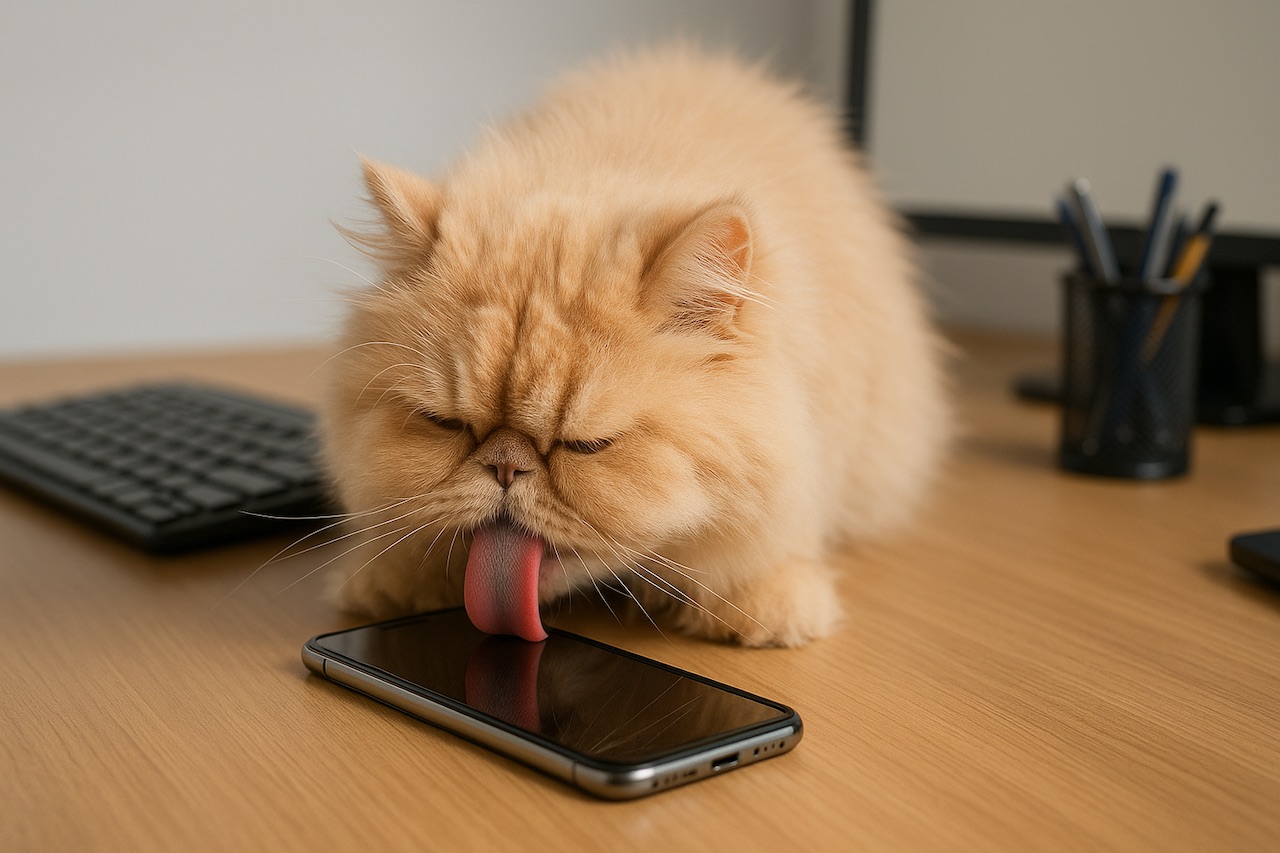
Understanding Why Cats Lick Surfaces
Licking is deeply embedded in feline biology. Cats lick to clean themselves, express affection, gather information, relieve stress, or explore unfamiliar textures. When your phone enters this mix of instincts, the result may be unusual but not necessarily alarming. However, the reasons behind licking can vary widely—from curiosity to nutritional deficiencies—so understanding the context is essential.
Main Reasons Cats Lick Phone Screens
1. Your Phone Smells Like You
Your phone is an extension of your presence. It carries natural skin oils, traces of your scent, and even microscopic food particles. Cats rely heavily on scent for bonding and communication, so when your cat licks your phone, it may be showing affection or reinforcing a social connection. Licking objects that smell like the owner is common in kittens and adult cats with strong attachment bonds.
2. Taste Residue or Food Particles on the Screen
Humans constantly touch their phones after eating, cooking, or handling snacks. Even if you clean your screen regularly, tiny residues can remain. Cats have sensitive tongues capable of detecting minute traces of flavor. If your cat associates the phone with interesting tastes, it may return to it repeatedly.
3. Cats Are Attracted to the Texture and Temperature of Glass
Phone screens have a smooth, cold texture that feels intriguing to cats. Many cats enjoy licking windows, mirrors, and metal surfaces for the same reason. Glass can stimulate their curiosity, offering a unique sensation compared to their fur and toys.
4. Reflection and Movement Captivate Cats
Screen glare, reflections, or moving images may spark a prey or play response. Cats often chase light beams, shadows, and reflections. Licking might be an exploratory behavior where the cat attempts to “understand” the moving light via taste—one of their key sensory tools.
5. Attention-Seeking Behavior
If your cat notices that licking your phone gets a strong reaction—whether laughter, surprise, or verbal feedback—it may repeat the behavior to gain attention. Cats quickly learn what behaviors generate quick responses from humans. A phone is often associated with moments when the owner is distracted, so licking it may be your cat’s way of reclaiming your focus.
6. Stress Relief or Self-Soothing
Some cats lick objects when stressed, anxious, or overstimulated. The repetitive motion of licking releases endorphins, providing emotional comfort. Your phone, which smells like you, may serve as a soothing anchor during times of stress.
7. Pica Behavior
Pica is a condition where cats lick or chew non-food items such as plastic, fabric, cardboard, or metal. It may be linked to dietary deficiencies, boredom, stress, or underlying health issues. If your cat licks many non-food surfaces—not just your phone—it could be an early sign of pica and might require veterinary evaluation.
8. The Screen Is Warm and Glows
Many cats are drawn to warmth. A recently used phone generates mild heat, which combined with a bright screen can attract curious cats. The glowing surface may simulate the movement of small animals or insects.
9. Moisture Attraction
Cats sometimes lick condensation, water droplets, or surfaces with moisture. If your phone has smudges from your breath or fingerprints with humidity, a cat may lick them instinctively.
Is It Safe for Cats to Lick Phone Screens
While occasional licking is usually harmless, repeated contact with phone surfaces can expose your cat to bacteria, chemicals, and cleaning agents. Phones are statistically one of the dirtiest objects humans own, harboring thousands of microorganisms. Additionally, screen protectors, adhesives, and oils may irritate a cat’s mouth or stomach.
Below is a detailed table outlining potential risks:
| Potential Risk | Why It Matters | What Owners Should Do |
|---|---|---|
| Bacteria Exposure | Phones accumulate germs from hands, bags, public places. | Clean screen daily using pet-safe products. |
| Chemical Residues | Certain cleaners or disinfectants may be toxic to cats. | Use alcohol-based, unscented wipes; avoid phenols. |
| Glue or Adhesive Ingestion | Screen protectors contain adhesives harmful when consumed. | Monitor screen damage; replace protectors if peeling. |
| Pica Behavior | Persistent licking may signal nutritional or behavioral issues. | Consult vet if licking becomes excessive. |
| Choking Hazards | Cats may ingest loose fragments from phone cases. | Use high-quality cases without detachable parts. |
What This Behavior Says About Your Cat
Although licking a phone is unusual, it can reveal interesting aspects of your cat’s personality and emotional state. Some cats are naturally more curious and exploratory, while others use licking as a coping mechanism or a bonding gesture. Understanding these signals can help strengthen your relationship with your pet.
Affection and Attachment
If your cat primarily licks items that smell like you—your hands, clothes, or phone—it may be expressing affection. Cats groom members of their social group as a bonding ritual.
Curiosity and Intelligence
Cats that investigate objects with their tongues tend to be highly inquisitive. They use multiple senses to gather data: sight, smell, touch, and taste. For such cats, the phone offers a combination of interesting textures and scents.
Stress or Overstimulation
Stress-related licking often happens during loud events, changes in the home, or when the cat feels ignored. Identifying and reducing stress triggers can significantly improve their well-being.
Lack of Environmental Enrichment
If your cat frequently licks non-food objects, it might be under-stimulated. Indoor cats require toys, climbing spaces, scratchers, and problem-solving activities to stay mentally healthy.
How to Stop Your Cat From Licking Your Phone
If the behavior happens occasionally, it may not require intervention. But if licking becomes frequent or obsessive, you can gently redirect your cat using the methods below.
Create Boundaries
Keep your phone out of your cat’s reach when not in use. Store it in drawers, bags, or shelves. Avoid leaving it on low tables where cats commonly rest.
Increase Play and Enrichment
Offer more structured playtime with feather wands, laser toys, and puzzle feeders. Mental stimulation reduces attention-seeking and repetitive behaviors such as licking.
Use Cat-Safe Deterrents
Sprays with bitter apple or citrus scents can discourage licking, but only if your cat tolerates them. Never spray directly on your phone—apply a minimal amount to the phone case only.
Provide Sensory Alternatives
Offer safe objects your cat can lick or chew, such as:
- Freeze-dried treats
- Catnip-coated toys
- Textured licking mats
- Interactive feeders with soft surfaces
Check for Nutritional Deficiencies
If pica behavior is suspected, a veterinarian may recommend blood tests to evaluate vitamin or mineral imbalances. Dietary supplements or switching food brands can sometimes resolve compulsive licking.
Reduce Stress and Provide Comfort
Identify stressors such as loud noises, new pets, or environmental changes. Calming pheromone diffusers, hiding spots, and predictable routines help anxious cats feel secure.
When Phone-Licking Becomes a Problem
Most phone-licking is harmless curiosity. But excessive or compulsive licking may signal something deeper. The table below helps identify when the behavior requires professional attention.
| Sign of a Problem | Possible Cause | Recommended Action |
|---|---|---|
| Cat licks many non-food objects | Pica, stress, boredom, dietary imbalance | Schedule vet visit; increase enrichment |
| Cat becomes aggressive when phone is removed | Resource fixation or anxiety | Gradual redirection needed; behavior consult |
| Cat ingests plastic or adhesive | Compulsive behavior | Urgent vet evaluation |
| Licking becomes more frequent over time | Stress or environmental triggers | Identify stressor; improve environment |
| Cat shows digestive issues after licking | Toxic residue or bacteria | Seek veterinary advice promptly |
How to Clean Your Phone Safely if Your Cat Licks It
Since your cat may continue to explore the screen occasionally, proper cleaning helps reduce health risks. Choose simple, cat-safe methods:
- Use 70% isopropyl alcohol wipes without fragrances.
- Avoid harsh chemicals, phenols, or ammonia-based cleaners.
- Remove screen protectors if adhesive begins peeling.
- Clean the phone after meals to remove food residue.
- Store the phone in a sanitized case that can be washed separately.
Even if your phone appears clean, bacteria accumulate quickly. Regular cleaning benefits both you and your cat.
Should You Be Concerned About Behavioral Issues
In most cases, your cat licking your phone is simply a blend of affection, curiosity, and sensory exploration. But owners should monitor patterns. If licking is combined with stress signals—such as over-grooming, hiding, or decreased appetite—it may indicate anxiety. Behavioral modification, environmental changes, and veterinary consultation can significantly help.
Cats express their needs through subtle cues. Understanding the context of licking behavior can offer valuable insights into their emotional world.
How to Strengthen Bonding Without Encouraging Phone Licking
If your cat licks your phone because it craves closeness, you can redirect the bonding experience toward healthier interactions. Try:
- Petting your cat before using your phone
- Offering lap time during quiet moments
- Talking to your cat in a calm voice
- Using grooming brushes to simulate social grooming
- Creating phone-free bonding rituals each day
These routines satisfy your cat’s emotional needs while preventing phone-licking from becoming a learned habit.
FAQ
Why does my cat lick my phone after I use it
Your cat detects your scent and natural oils on the screen. Phones also retain traces of food and warmth, which attract curious cats.
Is licking a phone harmful to cats
Mild, occasional licking is usually safe, but frequent licking increases exposure to bacteria and chemicals. Clean your phone regularly and monitor behavior.
Does licking mean my cat has pica
Not always. Pica involves persistent licking of a wide range of non-food items. If your cat licks other objects, consult your veterinarian.
Why does my cat lick screens but not other objects
The smooth texture, reflections, and taste residues on screens make them especially interesting to cats.
How can I stop my cat from licking my phone
Increase enrichment, keep the phone out of reach, provide licking alternatives, and clean the screen frequently to remove attractive scents.
Final Thoughts
A cat licking a phone screen may look strange, but the behavior often reflects affection, curiosity, sensory exploration, or mild stress relief. While generally harmless, it’s important to maintain good hygiene and monitor patterns to ensure the behavior doesn’t escalate into pica or compulsive licking. With gentle redirection, environmental enrichment, and consistent bonding, you can keep your cat engaged and safe while reducing its interest in your phone.
Author: XPETSI Editorial Team