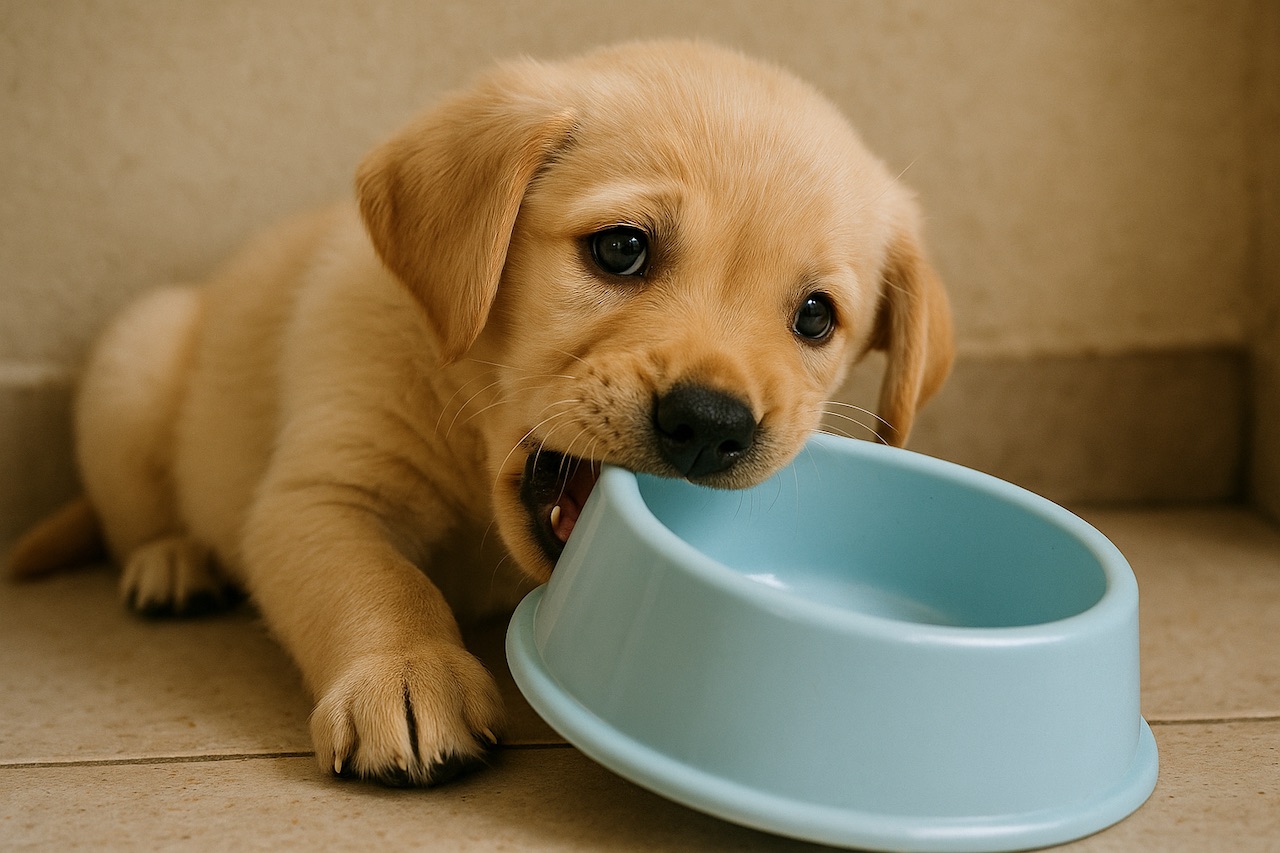
Puppies explore the world with their mouths. If your young dog keeps chewing, tipping, or even carrying its water bowl around the house, you are not alone. Thousands of new puppy owners notice this curious behavior and wonder whether it is normal or a sign of stress, teething, boredom, or unmet needs. While chewing is a natural developmental stage, persistent water-bowl chewing can reveal important clues about your puppy’s physical comfort, emotional state, and daily routine.
This extended guide explains why puppies turn their water bowl into a chew toy, how to identify the root cause, when the behavior becomes problematic, and what practical steps you can take to redirect it. With gentle training and structure, most puppies grow out of this habit quickly — but only if owners respond correctly.
Understanding Why Puppies Chew Everything
Before looking specifically at water-bowl chewing, it helps to understand why puppies chew in general. Chewing is one of the main ways puppies gather information about textures, temperature, and scents. Their mouths act as sensory tools. For most puppies, chewing peaks between 2–6 months and can intensify during teething. However, some puppies develop object-specific chewing habits based on environment, attention patterns, and emotional triggers.
When the chewing focuses solely on one object — such as a water bowl — the behavior is usually driven by a combination of instinct and environmental feedback.
The Puppy Brain and Exploration
Young dogs have extremely high curiosity levels. They experiment with everything, especially objects that make noise, move, wobble, or produce interesting sensations. A water bowl, whether metal, plastic, silicone, or ceramic, naturally draws attention because it:
reflects light or makes clinking sounds
moves or slides when nudged
cooling or warming depending on the water inside
contains water, which changes the feeling when bitten
To a puppy, this is a highly stimulating sensory combination. But for owners, it can be messy, frustrating, and sometimes worrying.
Main Reasons Puppies Chew Their Water Bowl
Although each puppy is unique, most cases fall into several common categories. Understanding these helps narrow down the right solution.
1. Teething Discomfort
Teething is the leading reason puppies chew objects intensely. The pressure created by biting a hard surface helps soothe irritated gums. A cold bowl — especially metal — can provide temporary relief. Some puppies chew the rim, others scrape the bottom with their teeth, producing rhythmic sounds that owners often hear at night.
2. Boredom and Pent-Up Energy
Puppies experiencing understimulation often invent their own entertainment. If toys are unavailable, unexciting, or inconsistent, the water bowl becomes a creative alternative. Puppies love activities that produce feedback, such as clinks, splashes, or movement — turning a bowl into a self-rewarding toy.
3. Seeking Attention
Puppies quickly learn which behaviors make their humans react instantly. Picking up or chewing the water bowl usually prompts owners to speak, chase, or grab the object. Even negative attention (saying “No!” or rushing across the room) can reinforce the behavior. For socially driven puppies, attention is the reward.
4. Anxiety or Stress Relief
Chewing has a calming effect on dogs. If a puppy feels insecure, overstimulated, lonely, or unsure of a new environment, it may turn to repetitive chewing for comfort. Stress-related bowl chewing often appears:
after crate time
before or after being left alone
during loud noises (vacuum, kids shouting, construction)
5. Bowl Texture, Noise, and Movement Are Intriguing
Different bowl materials create different sensory experiences. Many puppies prefer bowls that:
slide across the floor like a chase toy
make metallic sounds when bitten
have edges easy to grip
feel cool on the gums
Plastic and silicone bowls are even more enticing because they compress slightly under pressure, mimicking chew toys.
6. Instinctive Carrying Behavior
Some puppies have retrieving or carrying instincts. Breeds like Labradors, Golden Retrievers, Border Collies, and German Shepherds often pick up objects simply because carrying satisfies a natural drive. A lightweight bowl becomes an easy target.
7. Hunger or Water Curiosity
Sometimes puppies chew the bowl because they associate it with food or hydration. If meals aren’t structured or water access is inconsistent, the bowl becomes a point of focus or anticipation.
8. Not Enough Chew Alternatives
If a puppy lacks appropriate outlets, anything — including the water bowl — becomes fair game.
Should You Be Concerned?
Most bowl-chewing is normal and temporary. However, some situations warrant caution or intervention. If chewing escalates, becomes obsessive, or leads to ingestion of plastic fragments, it can pose real health risks.
Red Flags to Watch For
swallowing plastic or rubber pieces
blood on gums from chewing sharp edges
vomiting after chewing bowls
intense frustration when prevented from chewing
chewing combined with pacing or whining
Common Triggers and What They Mean
| Trigger | What It Suggests | What Owners Can Do |
|---|---|---|
| Chewing right after meals | Excitement, leftover hunger, or food association | Add slow feeders, provide chew toys after eating |
| Chewing late at night | Boredom or self-soothing before sleep | Add pre-bed playtime and safe nighttime chews |
| Carries bowl around | Retrieving instincts or attention-seeking | Teach “bring it” as a game; reward with toys instead |
| Only chews plastic bowls | Texture preference or teething pleasure | Switch to stainless steel or ceramic |
| Chews when left alone | Separation anxiety or stress | Practice short departures, calming routines, enrichment |
How to Stop Puppies From Chewing Their Water Bowl
You don’t need harsh corrections. Instead, focus on redirection, structure, and reducing the bowl’s appeal as a chewable object.
1. Switch to a Heavy, Chew-Proof Bowl
Lightweight bowls are easy to drag and chew. Consider:
weighted stainless-steel bowls
ceramic bowls with rubber bases
non-slip, non-tip designs
2. Provide Proper Chew Outlets
Offer several textures:
nylon bones
rubber toys
rope toys
cooling teething toys
Rotate toys weekly to maintain novelty.
3. Add More Mental and Physical Stimulation
Puppies who are understimulated will always invent activities. Include:
short training sessions
snuffle mats
interactive toys
structured play periods
4. Use Predictable Feeding and Drinking Routines
Consistency reduces bowl fixation. Ensure your puppy has fresh water at all times and meals at the same hours each day.
5. Reinforce Calm Behavior
Reward your puppy when it sits or lies near the bowl without chewing. Positive reinforcement changes habits faster than corrections.
6. Avoid Emotional Reactions
If you rush toward the puppy or speak loudly, you reinforce the behavior. Stay calm, remove the bowl silently, and replace it with a chew toy.
When Puppies Grow Out of Bowl-Chewing
Most puppies stop chewing their bowls between 6–12 months as teething ends and self-control improves. However, habits reinforced over time may persist. Early training prevents long-term patterns. If the chewing continues beyond a year or escalates into obsessive behavior, consider a veterinary or behaviorist evaluation for underlying stress or anxiety.
FAQ
Is it harmful if my puppy chews a plastic bowl?
Plastic fragments can be swallowed and may cause digestive issues. Switch to stainless steel or ceramic if your puppy targets plastic specifically.
Should I remove the water bowl when I am not supervising?
No. Puppies need constant access to water. Instead, use a heavy, non-tip bowl or a wall-mounted option.
Do some breeds chew bowls more than others?
Yes. Retrievers, herding breeds, working breeds, and high-energy mixes often engage in bowl-carrying and object-oriented chewing more often.
Why does my puppy chew only at night?
Nighttime chewing is usually related to boredom, lack of structure before bedtime, or self-soothing before sleep.
Can training fix bowl-chewing quickly?
Most puppies respond within 1–3 weeks if given proper redirection, structure, and appropriate chew options.
Final Thoughts
Chewing a water bowl may look odd, but for puppies it is a natural behavior tied to teething, curiosity, instinct, and emotional needs. Rather than correcting the puppy harshly, the best approach is to provide safe chew alternatives, enrich the environment, and remove the rewarding aspects of bowl chewing. With patience and structure, most puppies stop this behavior as they mature.
A calm, enriched puppy rarely feels the need to turn its bowl into a chew toy. By understanding your puppy’s motivations and adjusting the environment, you help them develop healthy habits that last a lifetime.
Author: XPETSI Editorial Team