If your cat suddenly runs out the door, slips through an open window, or disappears during a stressful moment, it can feel frightening and overwhelming. The first reaction is often panic — but understanding how cats behave when they become lost is far more important than reacting quickly without a plan.
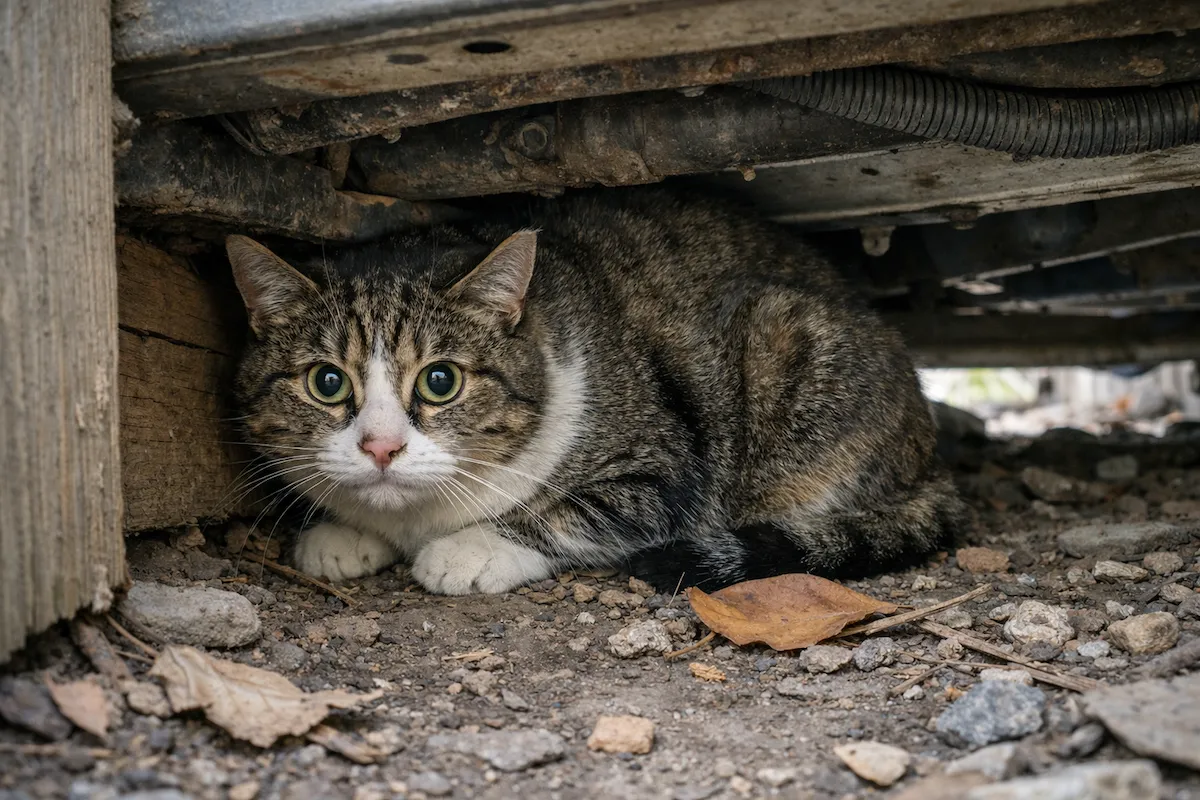
Most lost cats do not run away — they hide. Their behavior is driven by fear, not exploration.
In many cases, especially with indoor cats, they remain very close to the place they escaped. The outcome of the search depends less on speed alone and more on whether your actions match how cats behave when they feel unsafe.
This guide explains what to do in the first minutes and hours, how search strategy changes depending on your cat, and which common actions can unintentionally make the situation worse.

Indoor vs Outdoor Cats: Why the Strategy Changes
Search strategy depends heavily on whether your cat is indoor-only or has outdoor experience.
| Cat Type | Typical Behavior |
|---|---|
| Indoor cat | Hides very close (often within 50–100 meters), silent and motionless |
| Outdoor cat | May travel farther, follow familiar routes, or get trapped |
Most indoor cats are found extremely close to home — but only if searched correctly.
Start Searching Immediately Near Your Home
The first hour is critical — but the way you search matters more than how fast you move.
Indoor cats typically hide within 100–300 feet of where they escaped, often in silence.
A scared cat does not respond like a normal cat — it may ignore your voice completely.
Within the first 10–20 minutes:
- Search slowly and quietly, not quickly.
- Check low, dark, enclosed spaces.
- Pause often and listen instead of constantly calling.
Fast movement, loud calling, or panic can push a hiding cat deeper into hiding.
Before Going Outside — Check Your Home Thoroughly
Cats can hide in surprisingly small or unexpected places, especially when frightened. Many “lost” cats are later found inside the home after hours or even days.
- Closets, drawers, and cabinets
- Under beds, sofas, and inside furniture
- Laundry machines or storage boxes
- Behind appliances or inside open compartments
Always confirm your cat is truly outside before expanding your search.
Why Cats Don’t Come When Called
Many owners expect their cat to respond to their voice — but in a stress state, cats behave differently.
When frightened, a cat’s nervous system shifts into survival mode:
- They freeze instead of moving
- They stay silent to avoid detection
- They ignore familiar sounds, including their owner
A cat not responding does not mean they are far away — it often means they are very close but too scared to move.
Check Common Hiding Spots
Lost indoor cats almost always hide rather than run. They choose small, dark, enclosed areas that feel safe.
- Bushes and shrubs
- Under decks, porches, or stairs
- Garages, sheds, and storage spaces
- Under cars or inside wheel wells
Use a flashlight even during the day — a cat’s eyes reflect light and can reveal their position.
Use Familiar Scents — Not Just Food
When stressed, cats prioritize safety over food. Strong smells or large amounts of food may attract other animals rather than help your cat.
More effective options:
- Your worn clothing
- Your cat’s bed or blanket
- A familiar resting spot near the escape point
Familiar scent signals safety — which is what a frightened cat is looking for.
Ask Neighbors to Check Their Property
Many lost cats end up trapped in nearby structures without anyone realizing it.
- Garages and sheds
- Basements or crawl spaces
- Under decks or patio furniture
Provide neighbors with a clear, recent photo and ask them to check carefully — not just visually, but inside enclosed areas.
When to Search: Timing Matters
Cats are more likely to move when the environment feels safe.
- Early morning and dusk: best for active searching
- Daytime: best for checking hiding spots
At night, use a flashlight and move slowly — avoid noise and sudden movements.
Cats often wait until everything is quiet before moving or revealing themselves.
Create a Safe Return Point
Some cats return on their own once they feel safe enough.
- Place bedding or clothing outside
- Keep the area quiet and familiar
- Leave a small amount of food and water (not excessive)
Post Lost Cat Alerts Online
Online visibility helps reach people nearby quickly.
- Facebook local groups
- Nextdoor
- PawBoost
- Local lost pet communities
Use a clear photo where your cat is standing or walking — not sleeping or partially hidden.
Contact Local Shelters and Clinics
If someone finds your cat, they may take them to a shelter or veterinarian.
- Provide photos and description
- Share microchip information if available
- Check regularly, not just once
Consider Using a Humane Trap
If your cat is extremely shy or has been missing for more than 24–48 hours, a humane trap may be necessary.
Use it carefully and monitor frequently to avoid unnecessary stress or capturing other animals.
What NOT to Do
| Do Not | Why |
|---|---|
| Shout or chase | Increases fear and pushes cats deeper into hiding |
| Search too aggressively | Creates pressure and prevents movement |
| Shake food far from home | May pull the cat away from safe areas |
| Leave large amounts of food | Attracts wildlife and other animals |
| Assume the cat is far away | Most indoor cats stay very close |
The biggest mistake is searching in a way that increases fear instead of reducing it.
FAQ About Finding a Lost Cat
How far do indoor cats usually go when they escape
Most indoor cats stay very close to home. Many hide within 100–300 feet of where they escaped, and often even closer. Because they are unfamiliar with the outdoors, they tend to freeze, hide in small enclosed spaces, and avoid movement until they feel completely safe.
How long can a lost indoor cat survive outside
Indoor cats can survive outdoors for several days or longer if they find shelter and avoid danger. Many are found within the first 24–72 hours, but some remain hidden for days before returning. Early, calm, and focused searching significantly improves the chances of a safe recovery.
Will my cat come back on their own
Often yes. Many cats return when the environment becomes quiet and they feel safe enough to move. Familiar scents near the home can help guide them back. However, waiting passively is not recommended — active but calm searching greatly increases success.
Should I call my cat’s name while searching
Yes, but keep your voice calm, soft, and familiar. Loud calling or shouting can increase fear and cause the cat to remain hidden. Gentle, natural tones are more likely to feel safe to a frightened cat.
Why does my cat not respond when I call
When scared, cats enter a survival state. They often freeze, stay silent, and ignore familiar sounds — including their owner’s voice. This does not mean your cat is far away. In many cases, they are nearby but too frightened to respond.
Is it true that cats become silent when they are scared
Yes. Frightened cats often remain completely silent to avoid attracting attention. They may not meow even if they hear you. That’s why slow searching, listening carefully, and checking hiding spots is more effective than relying on vocal responses.
When should I contact local shelters
Contact shelters within the first 24 hours and continue checking regularly. Provide clear photos, description, and microchip information if available. Cats are sometimes brought in days later, so ongoing contact is important.
Should I put my cat’s litter box outside
In most cases, it is not recommended. Litter boxes can attract other animals, which may scare your cat away from the area. A better option is to place familiar bedding or your worn clothing near the home to create a safe scent signal.
Do posters and flyers still work
Yes, especially in residential neighborhoods. Use a clear photo where your cat is standing or walking, include a phone number, and specify the exact location where the cat went missing. Visibility increases the chances someone nearby will recognize your cat.
When should I consider using a humane trap
Consider a humane trap if your cat is very shy, has been missing for more than 24–48 hours, or has been seen but refuses to approach. Traps can be effective when used calmly and monitored closely.
Is it safe to search at night
Yes, but it should be done calmly. Cats are more likely to move at night or during early morning and dusk when the environment is quieter. Use a flashlight, move slowly, and avoid creating noise or pressure.
What if my cat is microchipped
This significantly increases the chance of recovery. Make sure your contact details are up to date and notify the microchip registry that your cat is missing so they can flag your pet.
How long should I continue looking
Continue searching consistently. Many cats return within a few days, but some take longer — even a week or more. Persistence, routine checks, and maintaining a calm approach are key to success.
Final Thoughts
A lost cat is usually not far — but it may be too scared to show itself.
The most effective approach is calm, quiet, and focused on how cats behave under stress. Instead of searching harder, it is often more important to search smarter.
In many cases, success comes not from covering more distance, but from slowing down and creating conditions where your cat feels safe enough to return.
Author: XPETSI Editorial Team