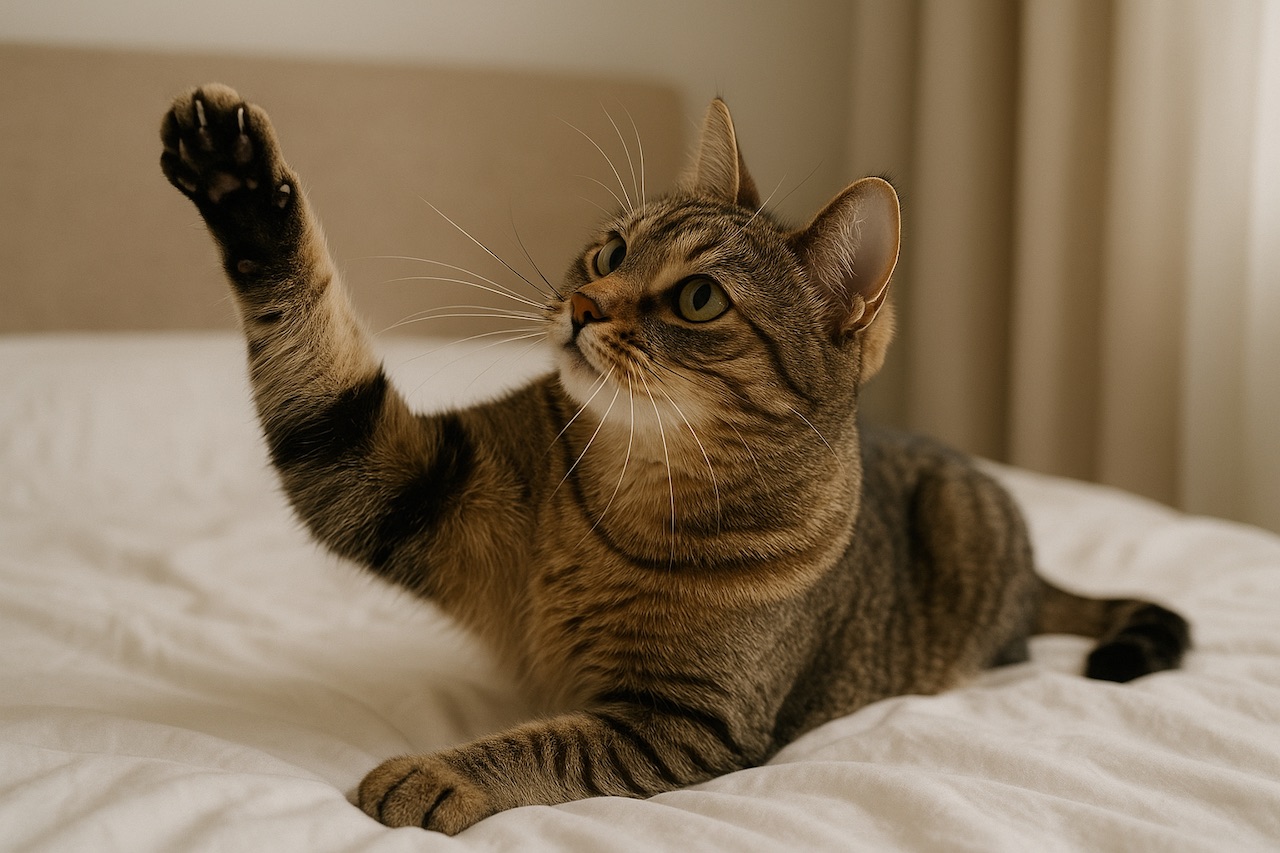
Many cat owners wake up to the gentle (or not-so-gentle) tap of a paw on their face. Whether it’s a soft pat, a curious poke, or a full-on paw press to your cheek, this behavior is surprisingly common among cats. While it may feel mysterious—or even slightly alarming at 3 a.m.—your cat’s nightly face-touching usually has logical explanations rooted in feline instincts, communication patterns, and emotional bonding.
This article explains why cats touch their owners’ faces during sleep, what each type of touch might mean, how to respond, and when this behavior could signal stress or a health concern.
The Most Common Reasons Cats Touch Your Face at Night
Cats are subtle communicators who rely on body language, scent, and touch. At night, when the house is quiet and you're least distracted, your cat may try to communicate several things at once.
1. They Want Attention
Cats are experts at getting what they want, and touching your face is one of the most effective strategies they’ve figured out. If your cat wants affection, petting, or company, they may tap your cheek or nose to wake you up.
Signs this is the reason:
Purring loudly while touching you
Immediately rubbing their head against your face after you wake
Lying very close to your pillow
2. Your Cat Is Hungry
If your cat routinely taps your face before breakfast time, the message is clear: “I’m hungry—get up.” Cats remember routines extremely well, and if they associate you with food, they will remind you even earlier than needed.
Typical signs:
Quick tapping with a sense of urgency
Meowing right after the tap
Running toward the kitchen once you move
3. Bonding and Affection
Face-touching can be an intimate gesture. Cats show affection in many subtle ways—kneading, slow blinking, head-butting—and touching your face may be their way of expressing trust and deep emotional connection.
Why the face specifically?
Your face carries your scent
Cats greet other cats nose-to-nose
They recognize your breathing and sounds
It's the warmest and most expressive part of your body
If your cat rests a paw gently on your cheek or chin, this is often a sign of love.
4. They’re Checking if You’re Awake
Cats are strategic. If they want something from you—company, food, entertainment—they may touch your face just to confirm whether you’re conscious. Paw taps are their version of “Hey…? You up?”
Often paired with:
Staring at you closely
Ears pointed forward
Small chirps or soft meows
5. Scent Marking You as "Theirs"
Cats have scent glands in their paws. When they touch your face, they may be reinforcing social bonding by marking you as part of their family group. This is especially common in multi-cat households where scent-mixing is part of group identity.
Face-touching in this context is gentle, slow, and confident.
6. They’re Seeking Warmth
Your face emits heat—especially your breath. Cats who love warmth may touch or lean against your face because it's the warmest accessible area in bed.
This is especially common in:
Hairless breeds like Sphynx
Small or young kittens
Cold-weather seasons
7. Your Cat Wants to Smell or Inspect You
Cats rely heavily on scent to understand their environment. A sleeping owner presents a calm, predictable source of smells. Cats might touch your face to:
Sniff your breath (smell tells them how you feel)
Identify unfamiliar scents from outside
Confirm you are “safe”
It might feel odd, but this behavior is deeply instinctual.
8. They’re Bored or Restless at Night
Some cats are ready to play at dawn (or earlier). A bored cat will often wake you by touching your face to initiate interaction.
Common signs:
Zoomies before or after tapping
Bringing toys to your bed
Repetitive tapping or pawing
9. Anxiety, Stress, or Reassurance-Seeking
Cats can develop nighttime anxiety due to noises, changes in routine, new pets, or household tension. Touching your face may be an attempt to seek comfort and proximity.
If this is the case, your cat may:
Sleep very close to your head
Touch you repeatedly throughout the night
Hide or cling during the day as well
10. Attention-Seeking Behavior Reinforced Over Time
If you’ve ever woken up and fed or petted your cat after a face tap, your cat has already learned the lesson:
“Touching your face works.”
Cats repeat behaviors that get results. Even accidental reinforcement is enough to form a strong nighttime habit.
Why Cats Touch Your Face While You Sleep
| Reason | What It Means | Typical Signs |
|---|---|---|
| Attention-seeking | Your cat wants interaction | Purring, tapping, staring |
| Hunger | Asking for an early breakfast | Urgent taps, meowing |
| Affection | Emotional bonding | Soft paw, no claws, purring |
| Scent marking | Claiming you as family | Slow taps, rubbing head after |
| Boredom | Seeking play or stimulation | Tap → zoomies or playfulness |
| Anxiety | Reassurance-seeking | Clinginess, staying close |
How to Reduce Nighttime Face-Touching
1. Create a Strong Pre-Bed Routine
Include interactive play, feeding, and quiet bonding time to help your cat wind down.
2. Increase Daytime Enrichment
Bored cats are much more likely to wake their owners at night.
3. Feed a Small Meal Right Before Bed
This reduces early-morning hunger-driven tapping.
4. Provide Warm Sleeping Spots
Cat beds near radiators or heated pads discourage bed invasions.
5. Ignore Face-Tapping When Possible
Do not reinforce the behavior with immediate attention.
When Face-Touching Becomes a Problem
| Behavior | Possible Cause | When It’s a Problem | What Owners Should Do |
|---|---|---|---|
| Persistent pawing at your face | Attention-seeking or anxiety | When it interrupts sleep regularly or becomes demanding | Increase daytime play, ignore nighttime pawing, give structured attention |
| Waking you by tapping your cheek | Hunger or routine expectation | If the cat wakes you too early or becomes fixated on the habit | Adjust feeding schedule, use auto-feeders, avoid reinforcing behavior |
| Pawing near your eyes or nose | Curiosity or scent-marking | If claws cause scratches or irritation | Trim claws regularly, redirect with soft toys, avoid face proximity during play |
| Touching your face while kneading | Comfort-seeking or kitten-like bonding | When kneading becomes painful or obsessive | Offer a blanket to knead, place hands gently aside, provide calming routines |
| Nighttime pawing combined with meowing | Loneliness, overstimulation or separation stress | If it escalates or becomes nightly | Increase enrichment, create cozy sleeping zones, keep bedtime consistent |
| Pawing followed by light biting | Overstimulation or boundary-testing | If biting becomes frequent or intense | Stop interaction immediately, avoid overstimulating areas, reward calm behavior |
| Touching your face to wake you multiple times per night | Disrupted routine or insufficient activity | When your sleep quality is affected | Increase evening play sessions, set feeding schedule, close bedroom if needed |
| Touching your face and pacing on the bed | Restlessness or discomfort | If pacing becomes repetitive or anxious | Check for stress triggers, provide calming environment, rule out discomfort |
FAQ About Why Cats Touch Your Face While You Sleep
Is it normal for cats to touch their owner’s face at night?
Yes. Many cats use their paws to communicate or wake their owners gently. It’s common behavior, especially in affectionate or attention-seeking cats.
Why does my cat wake me up by touching my face?
Your cat may want food, attention, warmth, reassurance, or simply want you to change position. Some cats also wake their owners because they follow a natural early-morning routine.
Is face-touching a sign of affection?
Often, yes. Cats may gently place their paw on your cheek to express trust and closeness. Some cats mimic social grooming behavior by reaching toward your face.
Does my cat want something when it touches my face?
Usually. Common reasons include hunger, wanting to play, asking for cuddles, or signaling that your presence comforts them.
Why does my cat touch my face and then run away?
This often indicates playful behavior or an attempt to initiate interaction. It can also be a subtle attention-seeking tactic that your cat has learned works.
Can cats accidentally scratch while touching faces?
Yes. Even gentle cats can accidentally scratch, especially when startled or repositioning. Keeping nails trimmed and giving them alternatives (like tapping your shoulder) can help.
Is my cat checking if I’m alive?
In a way — yes. Cats may gently paw your face to confirm movement, breathing, or simply to check whether you’re awake enough to interact with them.
Does this behavior mean my cat is anxious?
Sometimes. If face-touching is constant, urgent, or combined with pacing or vocalization, your cat may be seeking reassurance or feeling unsettled.
How can I stop my cat from touching my face at night?
Create a consistent nighttime routine, feed your cat before bed, offer warm sleeping spots, and encourage them to settle in their own bed. Ignore nighttime pawing to avoid reinforcing the habit.
Should I allow my cat to sleep near my face?
It’s a personal choice. Many owners enjoy the closeness, but if you’re a light sleeper, have allergies, or worry about scratches, it’s better to guide your cat to a safer sleeping area.
From affection to hunger cues, boredom to bonding, cats touch their owners’ faces at night for many reasons. While sometimes inconvenient, face-tapping is almost always a harmless expression of communication and trust. Understanding your cat’s motivation—and shaping healthy nighttime habits—helps both you and your feline get better sleep.
Author: XPETSI Editorial Team