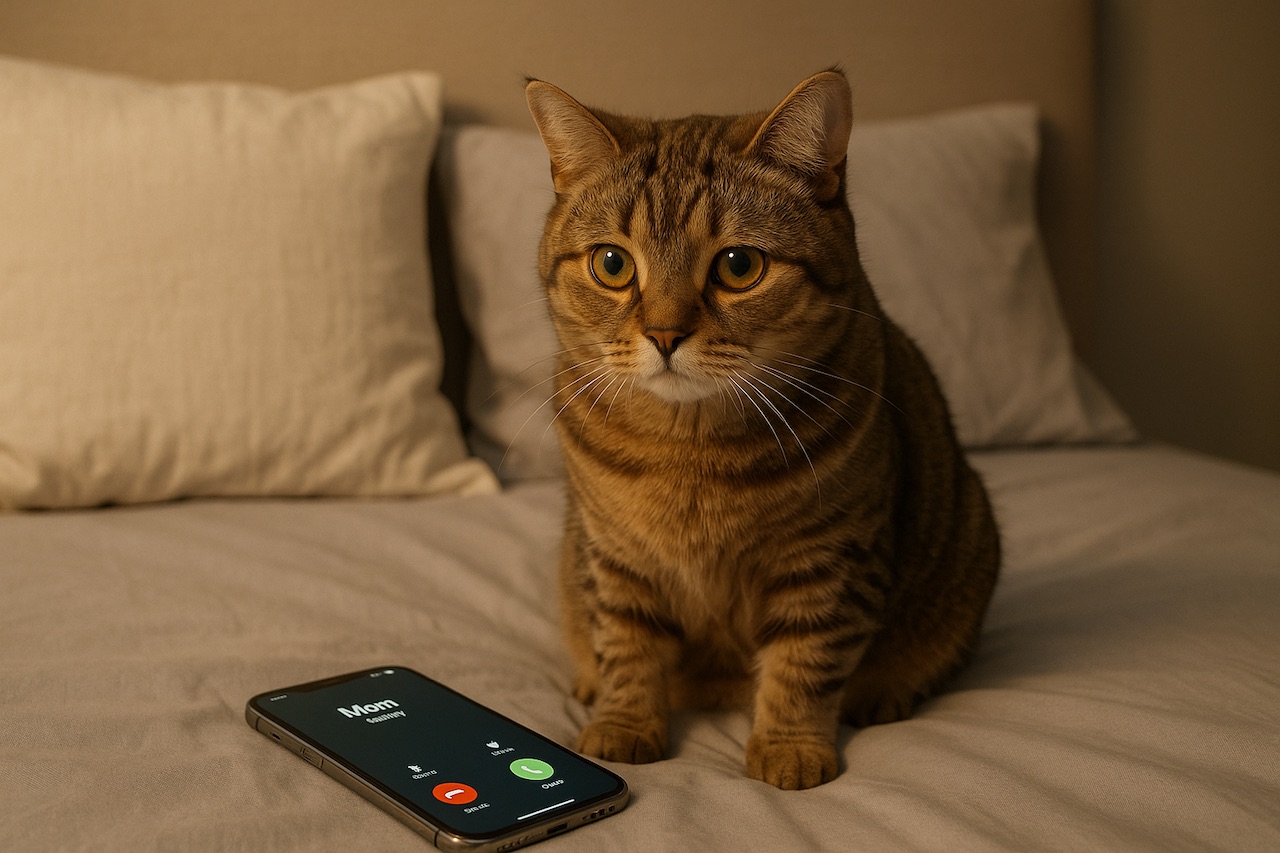
If your cat suddenly becomes vocal the moment you answer a phone call, you're not alone. Many cat owners notice their feline becoming extra chatty, demanding or even disruptive whenever they start speaking on the phone. This behavior may seem funny or confusing, but to your cat, it makes perfect sense.
Cats react strongly to changes in routine, tone of voice and divided attention. When you talk on the phone, your cat hears your voice, senses emotional cues and feels the shift in your focus. This article breaks down the most common reasons cats meow during phone calls and what you can do to manage the behavior.
1. Your Cat Thinks You're Talking to Them
Cats are experts at reading vocal tone and rhythm. When you talk on the phone:
your pitch changes
your tone becomes animated
your attention suddenly shifts
Many cats interpret this as communication directed at them. Since cats learn to associate human speech patterns with interaction (feeding, petting, playtime), they may respond vocally because they think the “conversation” includes them.
2. Your Cat Wants Attention Because You’re Distracted
Cats often meow when they feel ignored — and a phone call means your attention is suddenly elsewhere. Your cat may try to “bring your focus back” by:
meowing loudly
getting in your lap
nudging or pawing at you
interrupting by rubbing against the phone
To a cat, your voice is directed nowhere… which feels wrong. They may try to “correct” the situation by demanding interaction.
3. Your Phone Voice Sounds Different
When speaking on the phone, your voice typically becomes:
higher in pitch
more emotional or expressive
faster or louder
Cats are sensitive to subtle vocal changes. These shifts can confuse or excite your cat, prompting more meows as they try to interpret your emotional state.
4. Your Cat Hears Another Voice They Can’t See
If you're on speaker or video call, your cat may be reacting to the sound of another person who is:
not visible
not physically present
producing unpredictable noises
This mismatch between sound and sight can be unsettling. Some cats meow to investigate; others meow to alert you to a potential “intruder.”
5. Your Cat Associates Phone Calls With Delayed Needs
If your cat has learned that:
you stop petting them during calls
mealtime gets postponed
playtime pauses
you walk around the house while talking
…they may meow in frustration or impatience.
Cats thrive on predictability; a phone call disrupts their expectations.
6. Stress or Overstimulation
Some cats become overstimulated by sudden bursts of human speech. Phone conversations can trigger:
excitement
confusion
anxiety
territorial awareness
If your cat is sensitive or easily startled, phone calls may simply overwhelm them.
7. Your Cat Is Trying to Join the Social Activity
Cats observe human social interactions closely. When you talk to people in real life, they may meow or weave around your legs to participate.
Your phone call is no different — your cat thinks you're engaging in a lively interaction and may want to be part of it.
Common Reasons Cats Meow During Phone Calls
| Reason | What It Means | Typical Behavior |
|---|---|---|
| Thinks you're talking to them | Misreads your speech cues | Responds with meows, vocal replies |
| Wants attention | Feels ignored or replaced | Pawing, jumping, loud meowing |
| Voice changes | Confusion from tone shifts | Alert meows, pacing |
| Hears unseen people | Sound-source mismatch | Staring, investigating, chirping |
| Routine disruption | Calls delay dinner or play | Demanding vocalization |
| Stress or overstimulation | Sensory overload | Low grumbles, restless movements |
| Wants to join the “conversation” | Social engagement attempt | Friendly meows, cuddling |
How to Reduce Phone-Related Meowing
1. Give your cat attention before the call
Play for 5–10 minutes or offer treats to reduce attention-seeking behavior.
2. Keep calls brief during predictable routine times
Try not to take long calls during feeding or play windows.
3. Offer enrichment during calls
Interactive toys, scratchers or puzzle feeders can redirect attention.
4. Avoid reacting to meowing
Negative or positive attention reinforces the behavior. Stay calm and neutral.
5. Create a cozy “call zone”
Place a soft bed or blanket near you, so your cat feels included but calm.
FAQ About Cats Meowing When You Talk on the Phone
Why does my cat start meowing as soon as I begin talking on the phone?
Most cats react to phone conversations because they hear your voice but don’t see who you’re talking to. This creates confusion and can trigger attention-seeking, curiosity or mild stress. Your cat may feel left out of the interaction and vocalize to re-engage with you.
Is my cat jealous when I talk on the phone?
In many cases, yes. Cats often associate your talking voice with communication directed at them. When that attention is suddenly given to a “mysterious voice,” your cat may meow to reclaim your focus.
Do cats think I’m talking to them when I’m on the phone?
Some do. Cats recognize tone, rhythm and patterns of speech. When you speak in your usual “cat-talking” voice, they may assume the words are meant for them and respond naturally.
Why does my cat meow louder when I continue the call?
Louder meowing usually means your cat is escalating attention-seeking behavior. They may feel ignored, overstimulated or confused by the one-sided interaction happening in the room.
Does talking on the phone change my cat’s routine?
It can. If your cat associates your voice with playtime, feeding or cuddling, hearing you speak without offering interaction can be frustrating. This temporary disruption may trigger vocal responses.
Do certain cat personalities react more to phone calls?
Yes. Highly social, talkative, or clingy cats are more likely to vocalize during phone conversations. Breeds like Siamese, Bengals and Orientals are especially known for responding to human voices.
Is my cat stressed when they meow during a phone conversation?
Not always. Sometimes it’s simply curiosity or excitement. But pacing, tail flicking, hiding or excessive meowing may indicate mild stress or confusion caused by the unseen voice.
Why does my cat meow only when I video-call, not during regular calls?
Seeing movement or hearing different voices through the speaker can overstimulate some cats. They may respond to rapid changes in tone, volume or background noise during video calls.
How can I stop my cat from meowing when I’m on the phone?
Offer enrichment or distraction before starting a call: toys, treats, a window perch or a scratching post. You can also shut the door or schedule calls after your cat’s play session.
Should I be worried if this behavior suddenly starts?
If your cat suddenly becomes extremely vocal only during calls, they may be experiencing new anxiety, boredom or jealousy. Ensure their physical and emotional needs are met. If excessive meowing occurs outside calls as well, consider a vet check.
When Phone-Related Meowing Becomes a Problem
| Behavior | What It Might Mean | When It’s a Problem | What You Should Do |
|---|---|---|---|
| Persistent meowing every time you start a call | Attention-seeking or insecurity | When it escalates or happens during every conversation | Increase pre-call play, give attention after calls, reward calm behavior |
| Interrupting calls by climbing, pawing or sitting on you | Separation sensitivity or jealousy | If the cat becomes demanding, clingy or distressed | Offer a comfy spot nearby, use calming toys during calls |
| Meowing loudly at the phone itself | Confusion about voices coming from the device | If it triggers pacing, agitation or hiding | Let the cat explore the phone before calls; reduce speaker volume |
| Scratching or batting at the phone | Frustration or redirected energy | When aggression or destruction increases | Redirect with toys, avoid interacting with your cat using the phone |
| Meowing paired with pacing or tail flicking | Stress or overstimulation from unfamiliar voices | If pacing continues after the call ends | Use white noise, close the door during calls, create a quiet safe zone |
| Trying to stop you from talking | Jealousy or desire for your full attention | When the cat becomes aggressive or anxious | Provide structured daily play, avoid reinforcing demanding behavior |
| Vocalizing after the call is over | Residual stress or overstimulation | If meowing lasts more than 5–10 minutes | Offer treats for calmness, gently pet your cat to reassure them |
| Nighttime phone-related meowing | Routine disruption or anticipation of attention | If it affects sleep or starts occurring nightly | Do calls away from the cat late at night; establish a bedtime routine |
| Aggressive behavior during calls | High frustration or territorial feelings | Any aggression toward you or objects | End the call briefly, remove cat to a calm space, increase enrichment |
| Meowing combined with destructive behavior | Stress, boredom or anxiety | If items get damaged or behavior escalates | Provide puzzle feeders, scratching posts, longer play sessions |
Cats meow during phone calls for many perfectly normal feline reasons — they want attention, feel confused by your altered voice, or simply believe you’re talking directly to them. Understanding the motivation behind this behavior makes it easier to respond gently and effectively.
With patience and small adjustments, your cat will eventually learn to stay calm (or at least quieter!) when you’re on the phone.
Author: XPETSI Editorial Team