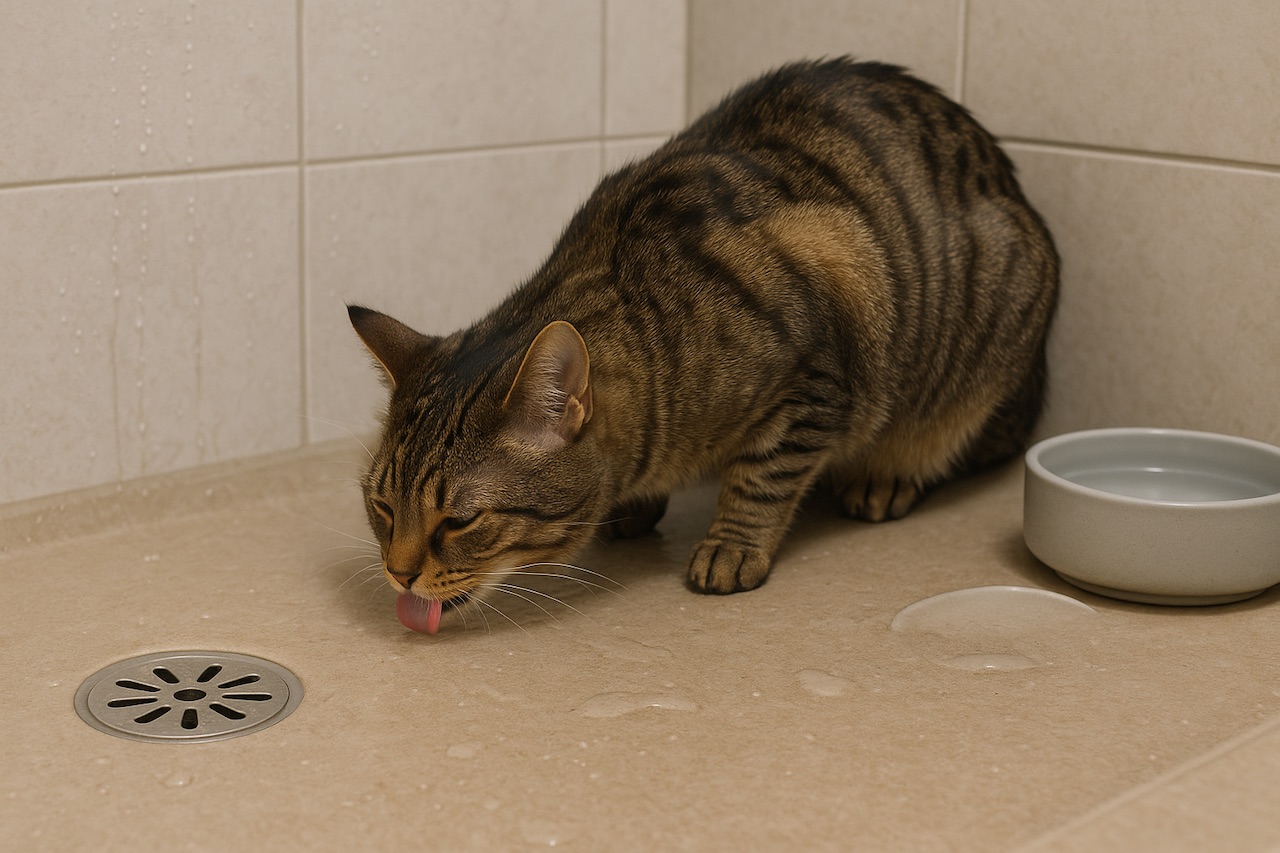
Cats can be mysterious creatures, especially when it comes to their drinking habits. Many owners notice that their cat ignores a perfectly clean water bowl but eagerly rushes to lick droplets from the shower floor. While this behavior may seem strange, it’s actually rooted in instinct, environmental preferences and sensory triggers that shape how cats interact with water.
In this article, we’ll explore why cats prefer shower water, what instincts drive this choice, when it’s harmless and when it may indicate a deeper issue. You’ll also find tips on how to encourage your cat to drink more clean, fresh water from safer sources.
1. Cats Prefer Running or Recently-Moving Water
In the wild, still water is more likely to be contaminated, while moving water — like streams — is safer to drink. Domestic cats have kept this instinct. Even though shower water is not exactly flowing, it is:
freshly deposited (recent movement)
cooler than water in a bowl
perceived as "new" and therefore safer
spread out in thin layers, which allows cats to lap it slowly
Your cat’s brain categorizes shower droplets as “moving water,” making it more appealing than the water sitting in their bowl.
2. Shower Water Is Cold, and Cats Prefer Cooler Temperatures
Even room-temperature water can feel “warm” to a cat, especially if their bowl is placed near a window, heater or sunny area. Water on the shower floor is naturally cooler, especially if it was recently used or exposed to cool tiles.
Cats are highly sensitive to temperature variations and often choose the coolest water available, even if that means drinking from the shower instead of their bowl.
3. Cats Are Attracted to Different Smells in the Bathroom
Bathrooms are rich in scents, and cats rely heavily on smell to make decisions. Shower water often has faint traces of:
soap or shampoo scents
warmth and humidity from recent use
your scent, which increases interest
While these smells are subtle to humans, to cats they are distinct and intriguing. They often prefer novelty — and bathroom scents provide it.
4. Your Cat Enjoys the Ritual of Following You
Cats often follow their owners to the bathroom because it’s a quiet, enclosed space where they can interact without distractions. Drinking from the shower becomes part of the “ritual” of being near you.
If your cat consistently drinks right after you shower, it may be a bonding behavior as much as a hydration one.
5. The Water Bowl May Not Be Ideal
Cats can be surprisingly picky about the shape, placement and cleanliness of their water bowl. Your cat may prefer the shower simply because the bowl doesn’t meet their preferences.
Common reasons cats avoid their bowl:
The bowl is too deep, causing whisker stress.
The water isn't changed frequently enough.
The bowl smells of detergent.
The bowl is too close to their food (cats prefer separation).
The location is noisy or has foot traffic.
The material (plastic, metal) holds unwanted odors.
A few minor adjustments can dramatically increase bowl usage.
6. Bathroom Tiles Provide a Calm, Private Drinking Spot
Cats feel vulnerable when drinking — their heads are down, and vision is limited. Bathroom floors provide:
a quiet, enclosed environment
a cool surface
reduced threats from other pets
a predictable routine
If the bowl is in a busy area (kitchen, living room), your cat may feel safer drinking elsewhere.
7. Your Cat Likes the Texture of Shower Water
Some cats prefer drinking very thin layers of water because it feels closer to licking condensation or dew in the wild. Shower droplets mimic that experience.
This is especially common in cats that also love licking:
bathtub edges
windows after rain
water dripping from faucets
condensation on tiles
8. Behavioral Reinforcement: It Works, So They Keep Doing It
If your cat has successfully hydrated from the shower several times, the behavior becomes reinforced. Cats repeat actions that have predictable outcomes — especially if they enjoy the routine or environment.
9. Some Cats Find Shower Water “Tastier”
Bathroom water may taste different due to:
temperature differences
freshness
tile or air humidity affecting flavor
the absence of bowl odors
Cats often prefer water that seems “fresh,” and shower droplets match that perception better than standing water.
When Drinking Shower Water Is *Not* Safe
Occasional licking of clean water is fine, but certain situations can be dangerous:
if you use strong cleaning chemicals in the bathtub or shower
if hair dyes or medicated shampoos are present
if mold is present in grout lines
if puddles contain residues from non-pet-safe products
If your cat drinks from the shower daily, it’s important to ensure safe conditions or redirect them to better water sources.
How to Encourage Your Cat to Drink From Their Bowl Again
1. Try a Water Fountain
This is the most effective fix. Flowing water taps into your cat’s natural instincts and feels fresher than still water.
2. Change the Bowl Material
Stainless steel and ceramic bowls retain fewer odors than plastic.
3. Move the Bowl Away From Food
Cats naturally avoid food–water overlap to prevent contamination.
4. Refresh Water Daily (or Twice Daily)
Cats detect subtle scent changes long before humans do.
5. Add Multiple Water Stations
Especially in multi-pet homes, where cats may avoid bowls used by others.
6. Elevate the Bowl
Many cats prefer a raised bowl to reduce neck strain and improve comfort.
7. Offer Ice Cubes on Hot Days
Some cats drink more when water is colder or when they can play with ice.
Does This Mean Your Cat Isn't Drinking Enough?
Not necessarily. Shower water might simply be their preferred option. However, signs of dehydration should be monitored:
dry gums
sunken eyes
lethargy
lack of skin elasticity
If you notice these symptoms, consult a veterinarian and make improvements to water access immediately.
When Shower Drinking Becomes a Problem
| Behavior | What It May Indicate | Recommended Action |
|---|---|---|
| Refuses to drink from any bowl | Possible bowl aversion, dental pain, or dehydration | Replace the bowl, try a fountain, offer filtered water, consult a vet if persistent |
| Obsessively waits at the bathroom door | Fixation or anxiety-driven behavior | Increase enrichment, close bathroom access, add more water stations |
| Drinks from dirty or soapy shower puddles | Risk of chemical ingestion, GI irritation | Rinse shower thoroughly, dry floors after use, supervise bathroom access |
| Increase in overall thirst | Could signal health issues such as diabetes or kidney disease | Schedule a veterinary checkup and monitor water intake |
| Only drinks when you enter the bathroom | Attention-seeking behavior or dependence on routine | Offer accessible water in preferred quiet areas, slowly break the association |
| Sudden change in water habits | Stress, environmental changes, or medical issues | Review recent household changes and consult a vet if unusual patterns continue |
| Attempts to drink immediately after showering | Preference for cool, fresh-tasting water | Offer cooler filtered water in bowls or a pet fountain |
FAQ About Cats Drinking From the Shower Floor
Is it normal for cats to drink from the shower?
Yes. Many cats prefer unusual water sources because they seem fresher, cooler or more interesting than standing bowl water. It’s a common behavior and usually not a sign of a health issue.
Is shower water safe for cats to drink?
In most cases, yes — as long as no harsh cleaning chemicals, shampoos or residues remain in the tub. However, drinking it regularly isn’t ideal because it may contain soap traces or bacteria.
Why does my cat ignore their water bowl?
Your cat may not like the bowl’s location, the smell or taste of stagnant water, the material of the dish, or the temperature of the water. Cats prefer running or recently settled water, which feels fresher.
How can I encourage my cat to drink from their bowl?
Try a stainless-steel or glass bowl, refresh water 1–2 times daily, move the bowl away from food, or offer a cat water fountain. Many cats drink more when the water is moving.
Should I be worried if my cat only drinks in the bathroom?
Not necessarily. However, if this behavior is paired with increased thirst, weight loss or changes in appetite, contact a veterinarian — excessive drinking can be a sign of medical issues.
Why does my cat prefer cold water?
Cats instinctively seek cooler, oxygen-rich water because it feels cleaner. Shower floors often hold cool, thin layers of water that cats naturally find appealing.
Can this behavior indicate stress?
In some cases, yes. Cats may explore the bathroom when stressed because it feels safe, quiet and enclosed. Drinking from the shower can be part of soothing or exploratory behavior.
Is it okay to let my cat into the bathroom after a shower?
Yes, but ensure the surface is not slippery and chemical-free. Always rinse the tub if you've recently used cleaning products.
Should I worry about bacteria from the shower floor?
Occasional drinking is usually harmless, but shower floors can harbor bacteria or mold. Frequent drinking from the shower is not ideal and should be redirected to safer water sources.
When should I call a vet?
If your cat suddenly drinks excessively, refuses water entirely or shows lethargy, vomiting or appetite changes. Sudden shifts in drinking habits can signal underlying medical conditions.
Final Thoughts
When your cat drinks from the shower floor instead of their bowl, it’s usually a combination of instinct, environment and preference. Cats seek fresh, cool, moving water — and in many households, the shower offers exactly that. With a few adjustments and environmental improvements, you can encourage them to drink from safer, cleaner sources while still respecting their natural preferences.
Understanding your cat’s behavior is the key to helping them feel secure, hydrated and comfortable — no matter how quirky their habits may be.
Author: XPETSI Editorial Team